
Before Memmo my notes were scattered across PDFs. Now a workspace pulls everything into one place — I see exactly what's still left to study.
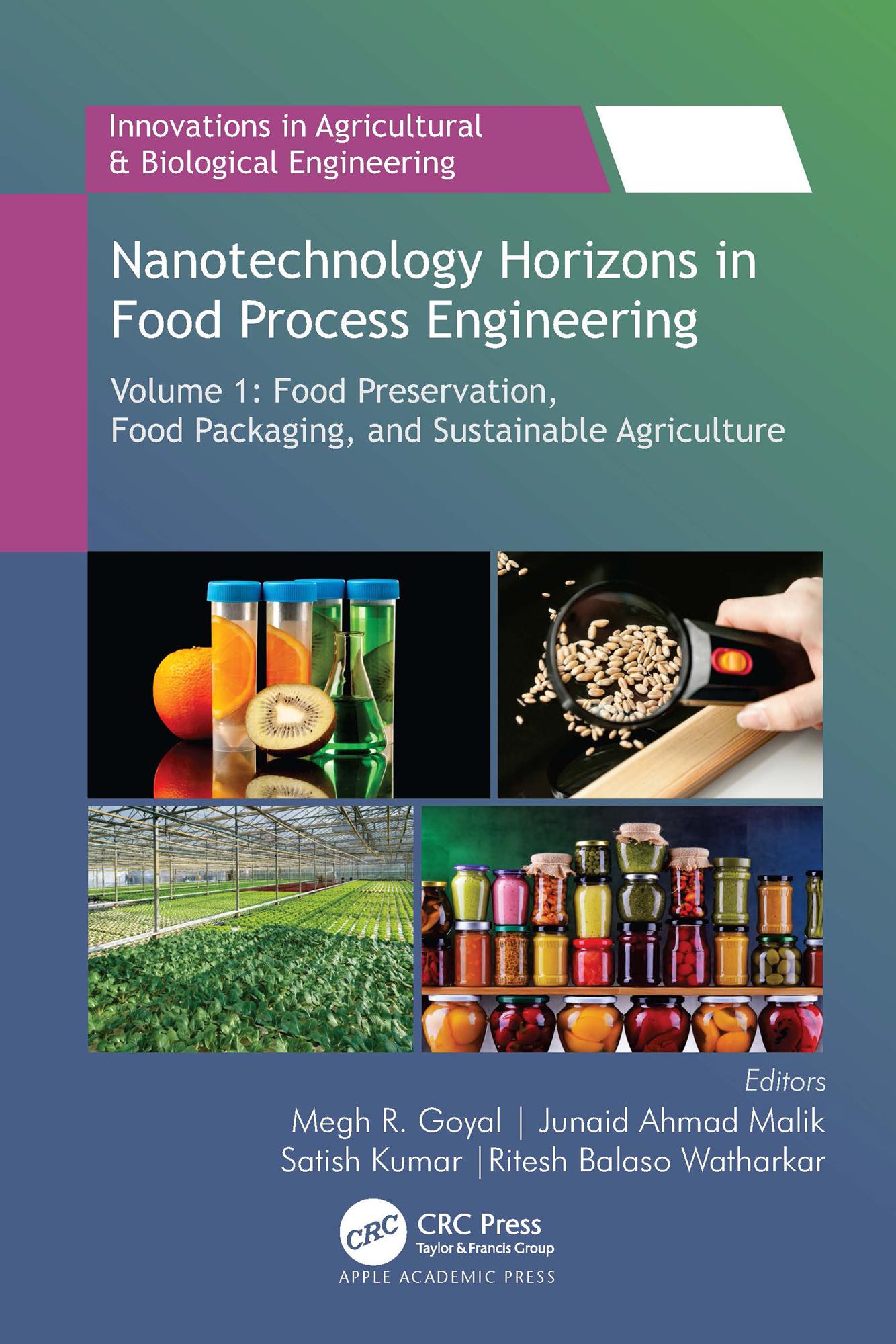
Although nanotechnology has revolutionized fields such as medicine, genetics, biology, bioengineering, mechanics, and chemistry, its increasing application in the food industry is relatively recent in comparison. Nanotechnology in the food industry is now being explored for creating new flavors, extending food shelf life, and improving food protection and nutritional value, as well as for intelligent nutrient delivery systems, “smart” foods, contaminant detection nanodevices and nanosensors, advanced food processing, antimicrobial chemicals, encapsulation, and green nanomaterials.
This new three-volume set addresses a multitude of topical issues and new developments in the field. Volume 1 focuses on food preservation, food packaging, and sustainable agriculture, while Volume 2 looks at nanotechnology in food process engineering, applications of biomaterials in food products, and the use of modern nanotechnology for human health. The third volume explores the newest trends in nanotechnology for food applications for improving food delivery systems.
Together, these three volumes provide a comprehensive and in-depth look at the emerging status of nanotechnology in the food processing industry, explaining the benefits and drawbacks of various methodologies that will aid in the improvement and development of food product sourcing and food hygiene monitoring methods.
Volume 1 discusses emerging nanotechnolgical applications in food processing, packaging, and preservation. It focuses on using nanoparticles for safe and nutritional food production, protecting crops from pests, increasing nutritional value, and providing solutions for various environmental issues. This book especially deals with nanotechnology for controlling plant pathogens, food packaging and preservation, agricultural productivity, wastewater treatment, and bioenergy production.
Volume 2 discusses nanotechnology use in non-thermal techniques such as high-pressure processing (HPP), pulsed electric fields (PEFs), pulsed light, ultraviolet, microwave, ohmic heating, electrospinning, and nano- and microencapsulation. This volume looks at the role and application of minimal processing techniques such as ozone treatment, vacuum drying, osmotic dehydration, dense phase carbon dioxide treatment, and high-pressure assisted freezing. The successful applications of nanotechnologies on juices, meat and fish, fruits and vegetable slices, food surface, purees, milk and milk products, extraction, drying enhancement, and encapsulation of micro-macro nutrients are also considered. The volume also presents several computer-aided techniques that are emerging in the food processing sector, such as robotics, radio frequency identification (RFID), three-dimensional food printing, artificial intelligence, etc. Significant role of food properties in design of specific food and edible packaging films have been elucidated.
Nanotechnology Horizons in Food Process Engineering: Volume 3: Trends, Nanomaterials, and Food Delivery provides an overview of the current trends in nanotechnology for food applications and food delivery systems. Topics include a collection of chapters on diverse topics, including the stability of nanoparticles in food, nanobiosensing for the detection of food contaminants, nanotechnology applications in agriculture, the role of nanotechnology in nutrient delivery, how nanotechnology is applied in dairy products, biofunctional magnetic nanoparticles in food safety, the development of nutraceuticals using nanotechnological tools, and more.
Before Memmo my notes were scattered across PDFs. Now a workspace pulls everything into one place — I see exactly what's still left to study.
Memmo's summaries are gold before exams. I don't have to re-read 800 pages two weeks before — just the important parts.
The AI chat has saved me the night before an exam more than once. I just keep asking until I get it — no waiting on a study group to reply.
The quizzes hit exactly what I need to know. Memmo tracks what I get stuck on — so I only practice what's worth it.
Flashcards with spaced repetition are magic. Memmo knows when I'm about to forget something and brings it back.
The AI podcasts are my favorite. I listen on my way to school and get a recap without sitting at a computer.

Handbok i kvalitativa metoder
281 kr

Hållbar utveckling: en introduktion för ingenjörer och andra problemlösare
334 kr

Brymans Samhällsvetenskapliga metoder
390 kr

Projektledning
491 kr

Den orättvisa hälsan: om socioekonomiska skillnader i hälsa och livslängd
326 kr

Vetenskapsteori för nybörjare
196 kr

Organizational Leadership
429 kr

På väg mot läraryrket
172 kr

Det sociala livet i skolan: Socialpsykologiska perspektiv
253 kr

Betygsättningens didaktik
151 kr

Personality
402 kr

Studying Leadership
404 kr

Managing Innovation
477 kr

Introduktion till samhällsvetenskaplig metod
347 kr

The Psychology of Sex and Gender
698 kr

Evidens och kunskap för socialt arbete
207 kr

Introduction to Leadership
605 kr