
Before Memmo my notes were scattered across PDFs. Now a workspace pulls everything into one place — I see exactly what's still left to study.
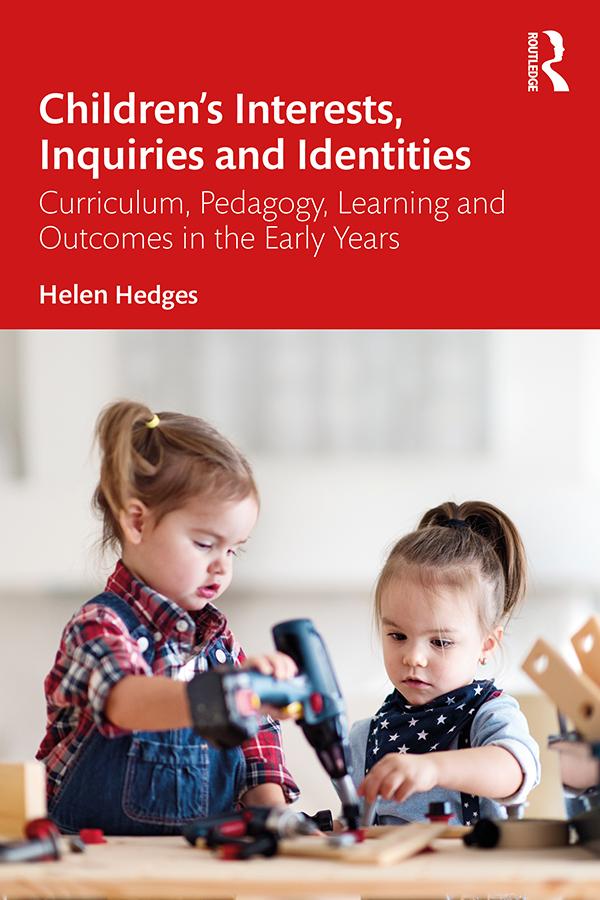
Children’s curiosity about their lives and worlds motivates many interests. Yet, adults often have fixed ideas about what children’s interests are and have been criticised for trivialising children’s interests. This book offers a critical and accessible engagement with research on children’s interests that challenges us to move beyond surface-level understandings.
Children’s Interests, Inquiries and Identities argues that the powerful relationship between interests and informal learning has been under-recognised and undervalued. The book proposes new principles for understanding children’s learning. It provides evidence that we need to look beyond the activities or topics children may currently be selecting to find out who and what has stimulated their interests, how we might identify and interpret interests more analytically and deeply, and how we might respond and engage with these in ways that take children’s interests seriously. Moving beyond play-based activities, Helen Hedges explains and illustrates a number of ways by which children’s interests can be interpreted and understood, to get to the heart of what really matters to, and for, children. The book draws on examples from research with children aged under 5 years, and young adults aged 18-25. It also includes a chapter on teachers’ interests. It presents new and original models for interests-based curriculum and sociocultural curriculum and pedagogy for future examination in research and practice.
This book demonstrates that leaving behind long-standing, taken-for-granted practices that have influenced understandings of curriculum, pedagogy, learning, and outcomes allows a new perspective of children’s interests to emerge. It will be of interest to researchers, postgraduate students, and practitioners in the early years, parents, and other professionals who work with young children.
Before Memmo my notes were scattered across PDFs. Now a workspace pulls everything into one place — I see exactly what's still left to study.
Memmo's summaries are gold before exams. I don't have to re-read 800 pages two weeks before — just the important parts.
The AI chat has saved me the night before an exam more than once. I just keep asking until I get it — no waiting on a study group to reply.
The quizzes hit exactly what I need to know. Memmo tracks what I get stuck on — so I only practice what's worth it.
Flashcards with spaced repetition are magic. Memmo knows when I'm about to forget something and brings it back.
The AI podcasts are my favorite. I listen on my way to school and get a recap without sitting at a computer.

Handbok i kvalitativa metoder
281 kr

Hållbar utveckling: en introduktion för ingenjörer och andra problemlösare
334 kr

Brymans Samhällsvetenskapliga metoder
390 kr

Projektledning
491 kr

Den orättvisa hälsan: om socioekonomiska skillnader i hälsa och livslängd
326 kr

Vetenskapsteori för nybörjare
196 kr

Organizational Leadership
429 kr

På väg mot läraryrket
172 kr

Det sociala livet i skolan: Socialpsykologiska perspektiv
253 kr

Betygsättningens didaktik
151 kr

Personality
402 kr

Studying Leadership
404 kr

Managing Innovation
477 kr

Introduktion till samhällsvetenskaplig metod
347 kr

The Psychology of Sex and Gender
698 kr

Evidens och kunskap för socialt arbete
207 kr

Introduction to Leadership
605 kr