
Before Memmo my notes were scattered across PDFs. Now a workspace pulls everything into one place — I see exactly what's still left to study.
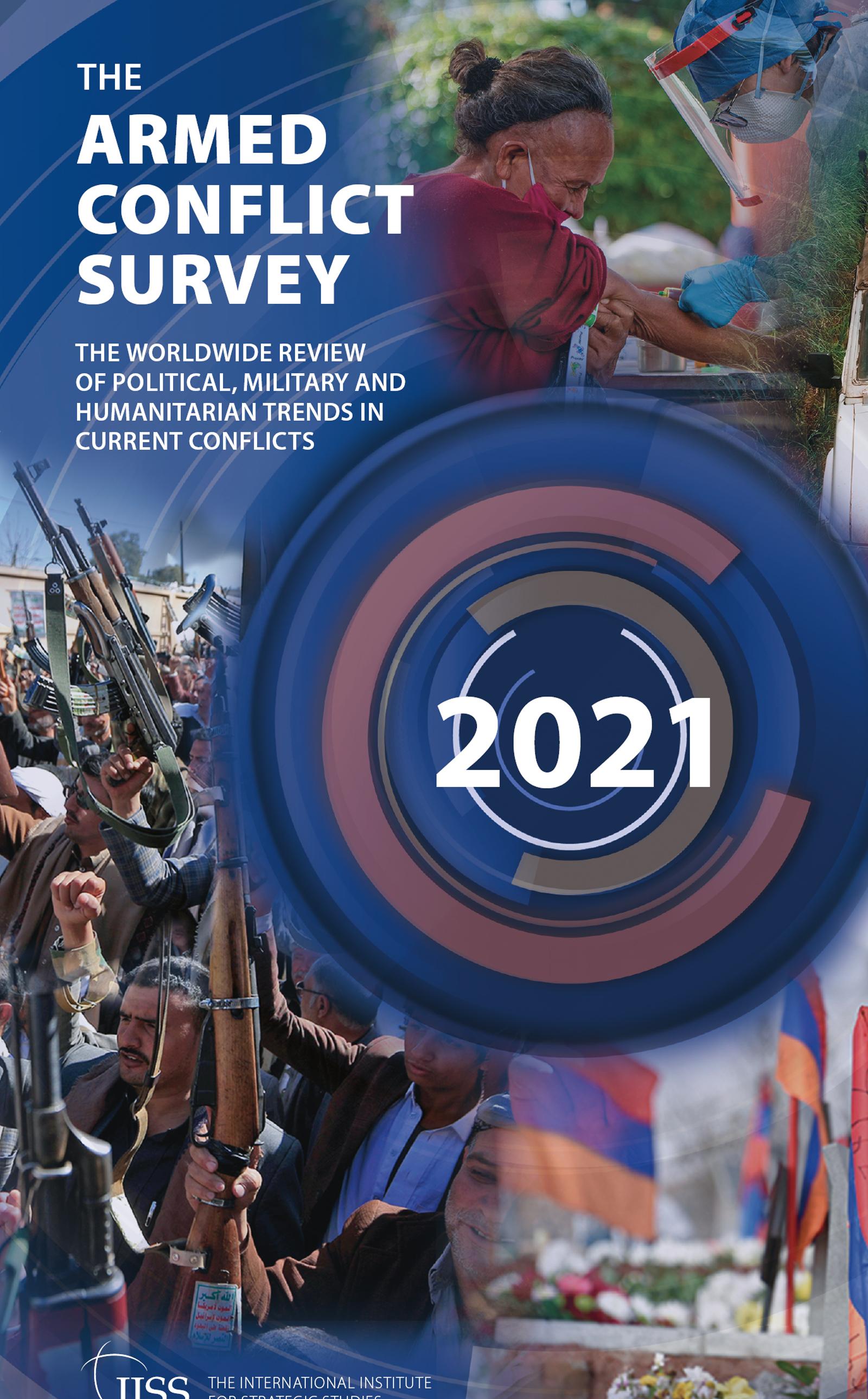
The Armed Conflict Survey is the annual review of the political, military and humanitarian dimensions of all active conflicts from the International Institute for Strategic Studies. It offers in-depth analysis of the drivers, dynamics and outlook of 34 current armed conflicts along with detailed information on conflict parties and more than 60 full-colour maps and infographics. The Armed Conflict Survey is an essential resource for those involved in security, foreign and humanitarian policymaking, and an indispensable handbook for anyone conducting serious analysis of armed conflict.
Key features
· Essays on global trends in armed conflict, with a focus on the changing nature of third-party intervention, the long aftermath of armed conflicts, and economic migration and forced displacement in a COVID-19 world.
· Overviews of key events and political and military developments from January 2020–February 2021 for each conflict.
· Strategic analysis of national and regional drivers and conflict outlooks.
· Regional analyses with unique insights into the geopolitical and geo-economic threads linking conflicts across regions and globally.
· Expanded information on conflict parties.
· The Armed Conflict Global Relevance Indicator (ACGRI), an IISS proprietary indicator that combines measures of incidence and human impact with geopolitical impact to assess the global salience of armed conflicts.
· Analysis of the humanitarian, social and economic impact of conflicts.
· Conflict-specific trends, strategic implications and prospects for peace.
· More than 60 full-colour maps, tables and infographics highlighting key conflict developments and data.
· Key statistics on violent events, fatalities, military power, geopolitical salience, refugees and internally displaced persons.
· The 2021 Chart of Armed Conflict, presenting information on conflict start dates, typologies and relevant refugee flows, as well as providing a visual overview of each conflict’s geopolitical relevance, looking at 2020 UN Security Council resolutions, multilateral missions and the involvement of third-party countries.
Before Memmo my notes were scattered across PDFs. Now a workspace pulls everything into one place — I see exactly what's still left to study.
Memmo's summaries are gold before exams. I don't have to re-read 800 pages two weeks before — just the important parts.
The AI chat has saved me the night before an exam more than once. I just keep asking until I get it — no waiting on a study group to reply.
The quizzes hit exactly what I need to know. Memmo tracks what I get stuck on — so I only practice what's worth it.
Flashcards with spaced repetition are magic. Memmo knows when I'm about to forget something and brings it back.
The AI podcasts are my favorite. I listen on my way to school and get a recap without sitting at a computer.

Handbok i kvalitativa metoder
281 kr

Hållbar utveckling: en introduktion för ingenjörer och andra problemlösare
334 kr

Brymans Samhällsvetenskapliga metoder
390 kr

Projektledning
491 kr

Den orättvisa hälsan: om socioekonomiska skillnader i hälsa och livslängd
326 kr

Organizational Leadership
429 kr

Vetenskapsteori för nybörjare
196 kr

På väg mot läraryrket
172 kr

Det sociala livet i skolan: Socialpsykologiska perspektiv
253 kr

Betygsättningens didaktik
151 kr

Personality
402 kr

Studying Leadership
404 kr

Managing Innovation
477 kr

Introduktion till samhällsvetenskaplig metod
347 kr

The Psychology of Sex and Gender
698 kr

Evidens och kunskap för socialt arbete
207 kr

Introduction to Leadership
605 kr