
Before Memmo my notes were scattered across PDFs. Now a workspace pulls everything into one place — I see exactly what's still left to study.
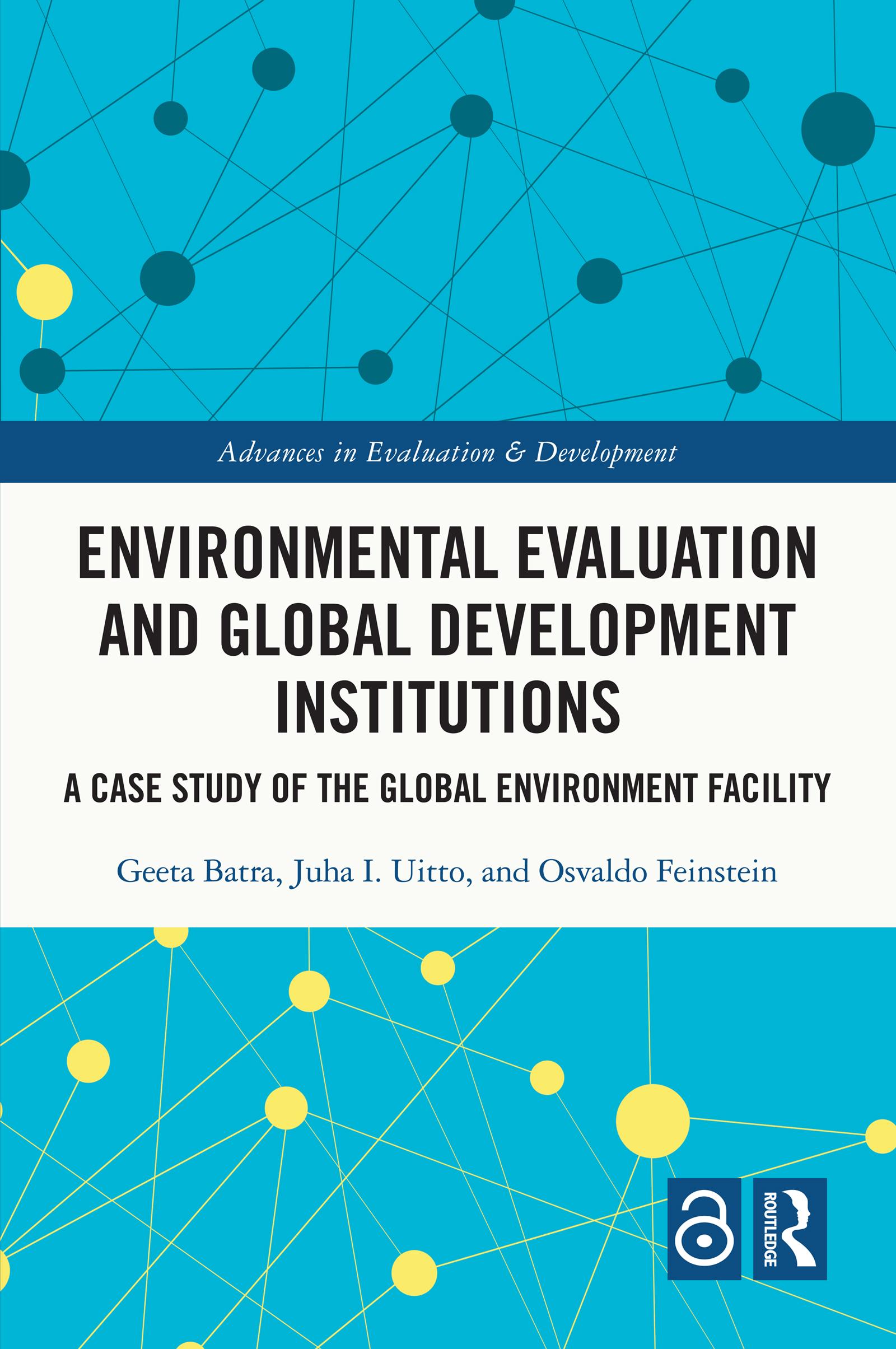
Evaluation is increasingly important for finding sustainable solutions for the people and the planet, based on a systematic analysis of what works, for whom, and under what circumstances, and to contribute to the achievement of the Sustainable Development Goals, as they pertain to the environment.
This book explores why the Global Environment Facility (GEF) invests in evaluation for accountability and learning to inform its decision-making on programming priorities, and how this leads to wiser funding decisions and better program performance on the ground. The book is based on real-life experiences of how to make evaluation count for international environmental action. Drawing upon comprehensive evaluations of the GEF, it provides unique insights from authors responsible for designing, implementing, and disseminating the findings of the evaluations. No other multilateral development or environment agency places evaluation fully at the center of their decision-making. The book outlines the trends in the global environment and the changing landscape of international environmental finance. It defines the role of the GEF and explains its institutional framework and the unique partnership that involves donor and recipient countries, multilateral development banks, UN agencies, nongovernmental organizations (NGOs), and national agencies in the developing countries. Further, it provides useful pointers to other organizations wishing to enhance evidence-based decision-making for improving their relevance, performance, and impact.
The book will be most suitable for graduate-level, specialized study in a variety of disciplines such as environmental and development economics, political science, international relations, geography, sociology, and social anthropology.
The Open Access version of this book, available at http://www.taylorfrancis.com, has been made available under a Creative Commons Attribution-Non Commercial-No Derivatives 4.0 license.
Before Memmo my notes were scattered across PDFs. Now a workspace pulls everything into one place — I see exactly what's still left to study.
Memmo's summaries are gold before exams. I don't have to re-read 800 pages two weeks before — just the important parts.
The AI chat has saved me the night before an exam more than once. I just keep asking until I get it — no waiting on a study group to reply.
The quizzes hit exactly what I need to know. Memmo tracks what I get stuck on — so I only practice what's worth it.
Flashcards with spaced repetition are magic. Memmo knows when I'm about to forget something and brings it back.
The AI podcasts are my favorite. I listen on my way to school and get a recap without sitting at a computer.

Handbok i kvalitativa metoder
281 kr

Hållbar utveckling: en introduktion för ingenjörer och andra problemlösare
334 kr

Brymans Samhällsvetenskapliga metoder
390 kr

Projektledning
491 kr

Den orättvisa hälsan: om socioekonomiska skillnader i hälsa och livslängd
326 kr

Organizational Leadership
429 kr

Vetenskapsteori för nybörjare
196 kr

På väg mot läraryrket
172 kr

Det sociala livet i skolan: Socialpsykologiska perspektiv
253 kr

Betygsättningens didaktik
151 kr

Personality
402 kr

Studying Leadership
404 kr

Managing Innovation
477 kr

Introduktion till samhällsvetenskaplig metod
347 kr

The Psychology of Sex and Gender
698 kr

Evidens och kunskap för socialt arbete
207 kr

Introduction to Leadership
605 kr