
Before Memmo my notes were scattered across PDFs. Now a workspace pulls everything into one place — I see exactly what's still left to study.
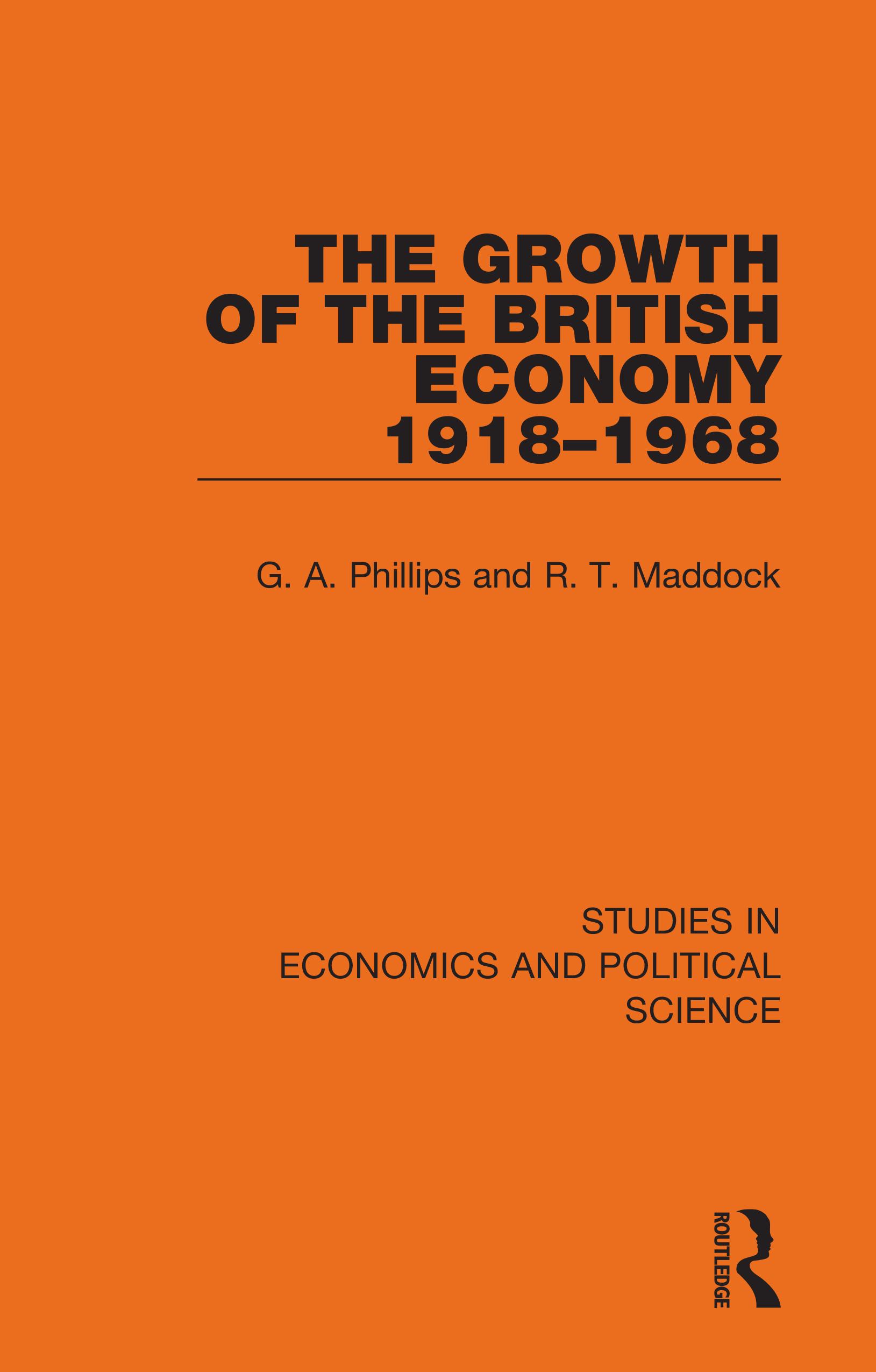
Originally published in 1973, the aim of this work was to discuss the various factors governing the rate of growth of the British economy since the First World War. It endeavours to explain – or at least to provide the groundwork for an explanation of – the movements of aggregate production and productivity in this period. In so doing it examines two particular, and partly antithetical questions: why Britain exceeded the predictions of economic theorists who, until at least the Second World War, had forecast a retardation of growth in all mature industrial economies; and why, especially since 1950, the economy has expanded less quickly than many professional economists, and almost all politicians, thought possible.
The authors look, in turn, at the changing trends in effective economic demand, both domestic and foreign; the supply of labour and capital; and the role of management and the state in fostering growth. Their object is to produce a balanced mixture of the available historical and statistical evidence and the relevant economic theory. They introduce their readers, at the same time, to the more specialized works of both disciplines.
The book is the product of a fruitful collaboration between an economist and a historian, both with considerable experience in teaching students, combining their two subjects. It marries, accordingly, the qualities of apt and informative use of evidence, wide-ranging theoretical discussion, and clarity of exposition.
Before Memmo my notes were scattered across PDFs. Now a workspace pulls everything into one place — I see exactly what's still left to study.
Memmo's summaries are gold before exams. I don't have to re-read 800 pages two weeks before — just the important parts.
The AI chat has saved me the night before an exam more than once. I just keep asking until I get it — no waiting on a study group to reply.
The quizzes hit exactly what I need to know. Memmo tracks what I get stuck on — so I only practice what's worth it.
Flashcards with spaced repetition are magic. Memmo knows when I'm about to forget something and brings it back.
The AI podcasts are my favorite. I listen on my way to school and get a recap without sitting at a computer.

Handbok i kvalitativa metoder
281 kr

Hållbar utveckling: en introduktion för ingenjörer och andra problemlösare
334 kr

Brymans Samhällsvetenskapliga metoder
390 kr

Projektledning
491 kr

Den orättvisa hälsan: om socioekonomiska skillnader i hälsa och livslängd
326 kr

Vetenskapsteori för nybörjare
196 kr

Organizational Leadership
429 kr

På väg mot läraryrket
172 kr

Det sociala livet i skolan: Socialpsykologiska perspektiv
253 kr

Betygsättningens didaktik
151 kr

Personality
402 kr

Studying Leadership
404 kr

Managing Innovation
477 kr

Introduktion till samhällsvetenskaplig metod
347 kr

The Psychology of Sex and Gender
698 kr

Evidens och kunskap för socialt arbete
207 kr

Introduction to Leadership
605 kr