
Before Memmo my notes were scattered across PDFs. Now a workspace pulls everything into one place — I see exactly what's still left to study.
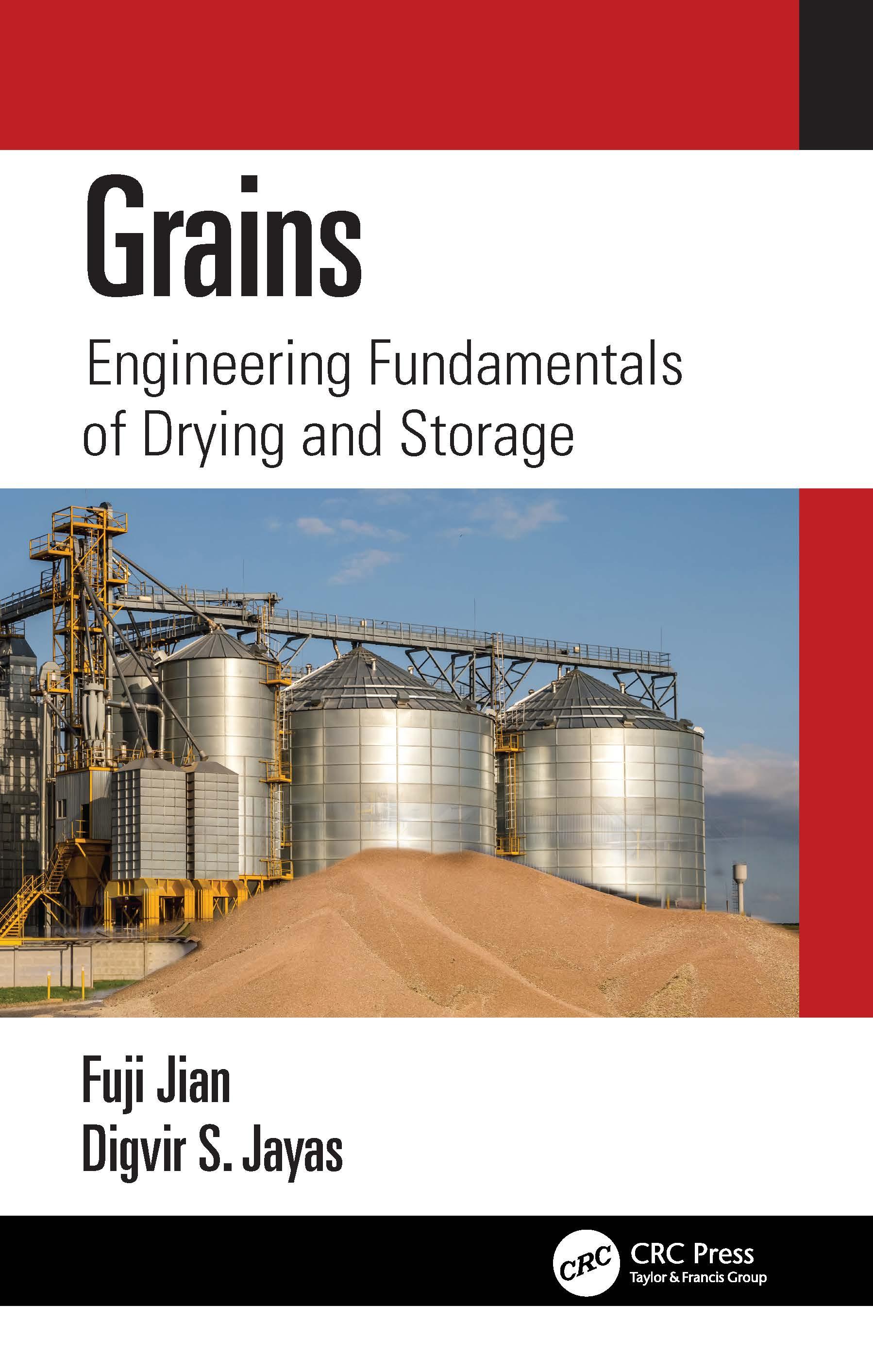
Drying and storage are two significant unit operations in the food industry and are applied to both raw and processed products including cereal grains, oilseeds, legumes, flour, noodle, coffee, and cornstarch. The common characteristic of these materials is that all of them are hygroscopic and contain water. The hygroscopic properties are influenced by their physical properties, which are influenced by their storage environments such as bins, warehouses, bunkers, and temporary storage structures. This book focuses on the storage and drying of bulk products in these storage structures.
On many occasions in our work with the grain storage and drying personnel especially our graduate students and industry contacts, we found a book explaining the fundamental principles of grain storage and drying is needed. Therefore, the primary objective of this book is to help readers understand the fundamental principles of grain storage and drying and develop a well-informed approach to solve grain storage and drying problems. Technologies for grain storage and drying are advanced through research; therefore, literature review and background on each topic has also been included. The book is generally intended for grain storage and drying students, engineers, and scientists. As reflected in the contents which are presented at several levels of depth, this book will serve well readers with different backgrounds and interests. An effort has been made to allow for independent reading of different sections, and to make a large part of this work accessible to a non-mathematical audience.
The authors have combined their experience of teaching grain storage and drying to undergraduate and graduate students in the faculties of Agricultural and Food Sciences and Engineering. Material in the book is organized into broad topic areas: physical properties (Chapters 1 and 2), grain temperature and moisture (Chapters 2 and 6), water in biomaterials and relationship with its environment (Chapter 3), fundamental principles of aeration, drying, and rewetting (Chapter 4), and mathematical modelling of isotherm, drying, and re-wetting (Chapter 5).
We hope our readers will benefit from the contents of the book for many decades.
Before Memmo my notes were scattered across PDFs. Now a workspace pulls everything into one place — I see exactly what's still left to study.
Memmo's summaries are gold before exams. I don't have to re-read 800 pages two weeks before — just the important parts.
The AI chat has saved me the night before an exam more than once. I just keep asking until I get it — no waiting on a study group to reply.
The quizzes hit exactly what I need to know. Memmo tracks what I get stuck on — so I only practice what's worth it.
Flashcards with spaced repetition are magic. Memmo knows when I'm about to forget something and brings it back.
The AI podcasts are my favorite. I listen on my way to school and get a recap without sitting at a computer.

Handbok i kvalitativa metoder
281 kr

Hållbar utveckling: en introduktion för ingenjörer och andra problemlösare
334 kr

Brymans Samhällsvetenskapliga metoder
390 kr

Projektledning
491 kr

Den orättvisa hälsan: om socioekonomiska skillnader i hälsa och livslängd
326 kr

Organizational Leadership
429 kr

Vetenskapsteori för nybörjare
196 kr

På väg mot läraryrket
172 kr

Det sociala livet i skolan: Socialpsykologiska perspektiv
253 kr

Betygsättningens didaktik
151 kr

Personality
402 kr

Studying Leadership
404 kr

Managing Innovation
477 kr

Introduktion till samhällsvetenskaplig metod
347 kr

The Psychology of Sex and Gender
698 kr

Evidens och kunskap för socialt arbete
207 kr

Introduction to Leadership
605 kr