
Before Memmo my notes were scattered across PDFs. Now a workspace pulls everything into one place — I see exactly what's still left to study.
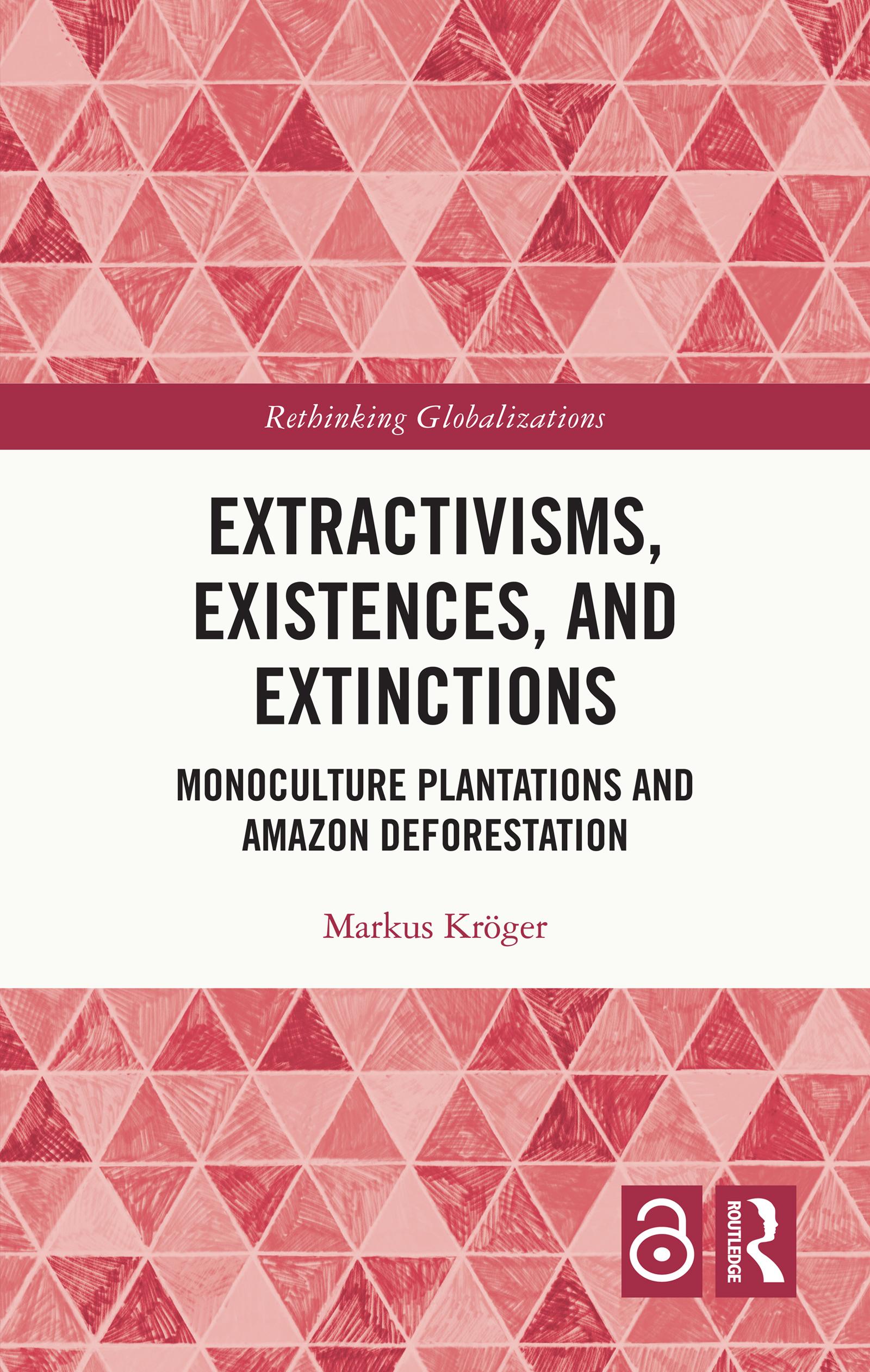
This book explores the existential redistributions that extractivist frontiers create, going beyond existing studies by bringing into the English-language discussion much of the wisdom from Latin American rural and forest communities’ understandings of extractivist phenomena, and the destruction and changes in lives and lived environments they create.
The author explores the many different types of extractivism, ranging from agroextractivist monocultures to mineral extraction, and analyzes the differences between them. The existential transformations of Brazil's Amazon and Cerrado regions, previously inhabited by Indigenous people but now being deforested by colonizers who expand soybean plantations, are analyzed in detail. The author also compares extractivisms with the local and broader existential changes through global production networks and their shifts, produced by monoculture plantation-based extractivist operations. Anchored in the author’s own ethnographic data and comparison of lessons across multiple extractivist frontiers, the chapters integrate the many accounts of violence, and onto-epistemic and moral changes in extractivist enclaves, looking at these with the help of political ontology. The book offers details on how to characterize and compare different types and degrees of extractivisms and anti-extractivisms.
This transdisciplinary book provides new organizing concepts and theoretical frameworks for starting to analyze the unfolding natural resource politics of the post-coronavirus era, the advancing climate emergency, and the ever more chaotic multi-polar world. It will be of interest to students and scholars in the fields of international development, global value chains, political economy, Latin American Studies, political ecology, and international trade, as well as anyone engaged with the practical and political issues related to globalization.
The Open Access version of this book, available at www.taylorfrancis.com, has been made available under a Creative Commons Attribution-Non Commercial-No Derivatives 4.0 license.
Before Memmo my notes were scattered across PDFs. Now a workspace pulls everything into one place — I see exactly what's still left to study.
Memmo's summaries are gold before exams. I don't have to re-read 800 pages two weeks before — just the important parts.
The AI chat has saved me the night before an exam more than once. I just keep asking until I get it — no waiting on a study group to reply.
The quizzes hit exactly what I need to know. Memmo tracks what I get stuck on — so I only practice what's worth it.
Flashcards with spaced repetition are magic. Memmo knows when I'm about to forget something and brings it back.
The AI podcasts are my favorite. I listen on my way to school and get a recap without sitting at a computer.

Handbok i kvalitativa metoder
281 kr

Hållbar utveckling: en introduktion för ingenjörer och andra problemlösare
334 kr

Brymans Samhällsvetenskapliga metoder
390 kr

Projektledning
491 kr

Den orättvisa hälsan: om socioekonomiska skillnader i hälsa och livslängd
326 kr

Vetenskapsteori för nybörjare
196 kr

Organizational Leadership
429 kr

På väg mot läraryrket
172 kr

Det sociala livet i skolan: Socialpsykologiska perspektiv
253 kr

Betygsättningens didaktik
151 kr

Personality
402 kr

Studying Leadership
404 kr

Managing Innovation
477 kr

Introduktion till samhällsvetenskaplig metod
347 kr

The Psychology of Sex and Gender
698 kr

Evidens och kunskap för socialt arbete
207 kr

Introduction to Leadership
605 kr