
Before Memmo my notes were scattered across PDFs. Now a workspace pulls everything into one place — I see exactly what's still left to study.
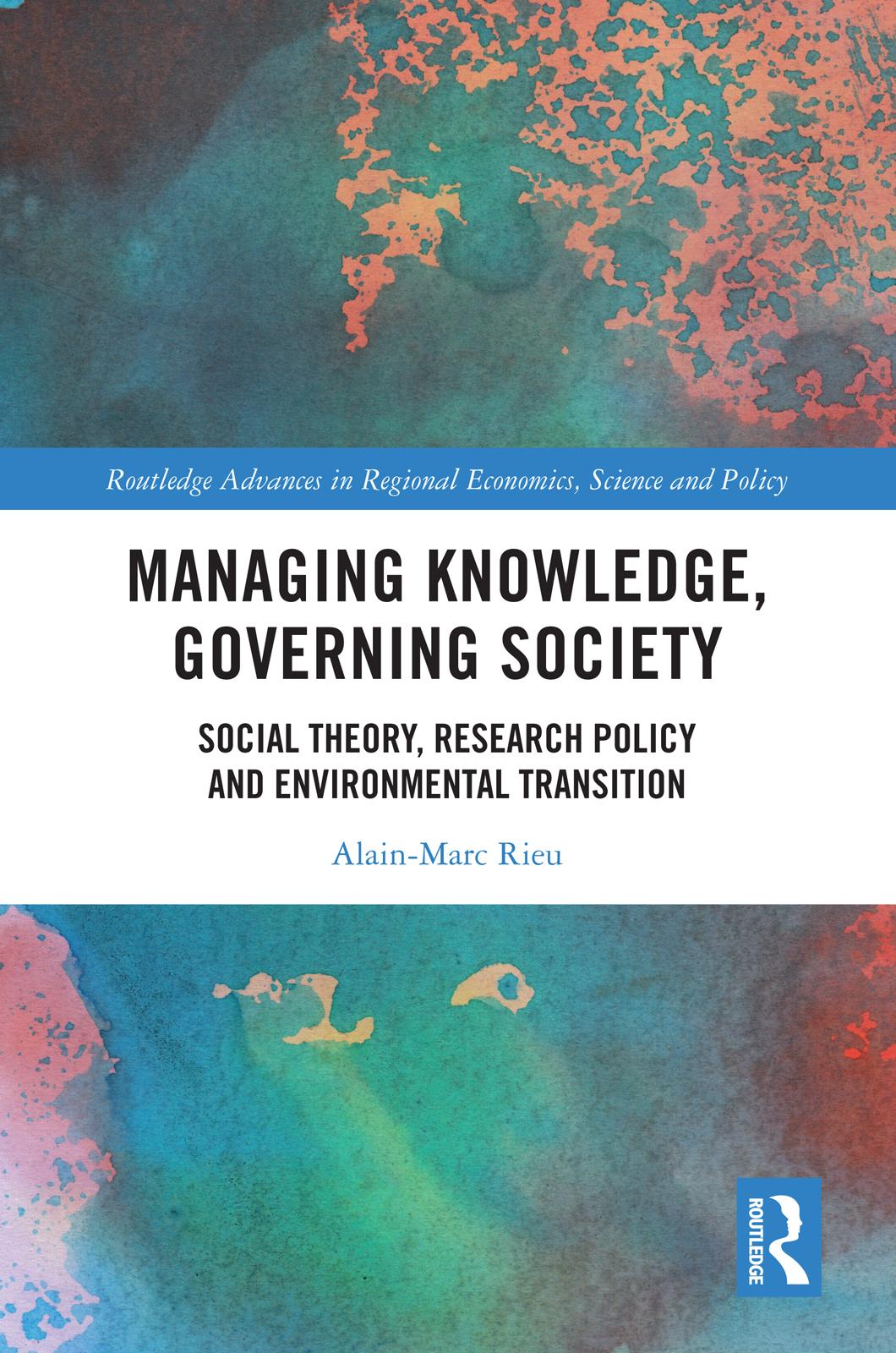
Since the 1980s, two different paradigms have reshaped industrial societies: the Neoliberal paradigm and a Research and Innovation paradigm. Both have been conceptualized and translated into strong policies with massive economic and social consequences. They provide divergent responses to the environmental transition. The Neoliberal paradigm is based on economic models and geopolitical solutions. The Research and Innovation paradigm’s goal is to manage knowledge differently in order to reorient the evolution of society. Since the mid-1990s, a version of the Research and Innovation paradigm has led to the design of large-scale research and innovation policies. This book examines how these policies have evolved and how they can be extended and reformed to respond to present and future environmental constraints. It studies the mutation of the conception, organization and role of science and technology in the evolution of industrial societies and explores the future of these developments.
The book offers three unique lines of enquiry. The first is to focus not specifically on economics, sociology, political science or history, but on knowledge creation from an institutional and reflexive point of view. The second is to establish a convergence between the British school of science and technology studies and the research trends opened by the work of Michel Foucault. Both introduced trans-disciplinary and policy-oriented research associating case studies, long-term perspectives and theory. The third is to consider climate change as the overwhelming challenge of our time.
The book is an insightful guide for students, scholars and researchers across the humanities and social sciences, including philosophy, political science, law, economics, business and media.
Before Memmo my notes were scattered across PDFs. Now a workspace pulls everything into one place — I see exactly what's still left to study.
Memmo's summaries are gold before exams. I don't have to re-read 800 pages two weeks before — just the important parts.
The AI chat has saved me the night before an exam more than once. I just keep asking until I get it — no waiting on a study group to reply.
The quizzes hit exactly what I need to know. Memmo tracks what I get stuck on — so I only practice what's worth it.
Flashcards with spaced repetition are magic. Memmo knows when I'm about to forget something and brings it back.
The AI podcasts are my favorite. I listen on my way to school and get a recap without sitting at a computer.

Handbok i kvalitativa metoder
281 kr

Hållbar utveckling: en introduktion för ingenjörer och andra problemlösare
334 kr

Brymans Samhällsvetenskapliga metoder
390 kr

Projektledning
491 kr

Den orättvisa hälsan: om socioekonomiska skillnader i hälsa och livslängd
326 kr

Vetenskapsteori för nybörjare
196 kr

Organizational Leadership
429 kr

På väg mot läraryrket
172 kr

Det sociala livet i skolan: Socialpsykologiska perspektiv
253 kr

Betygsättningens didaktik
151 kr

Personality
402 kr

Studying Leadership
404 kr

Managing Innovation
477 kr

Introduktion till samhällsvetenskaplig metod
347 kr

The Psychology of Sex and Gender
698 kr

Evidens och kunskap för socialt arbete
207 kr

Introduction to Leadership
605 kr