
Before Memmo my notes were scattered across PDFs. Now a workspace pulls everything into one place — I see exactly what's still left to study.
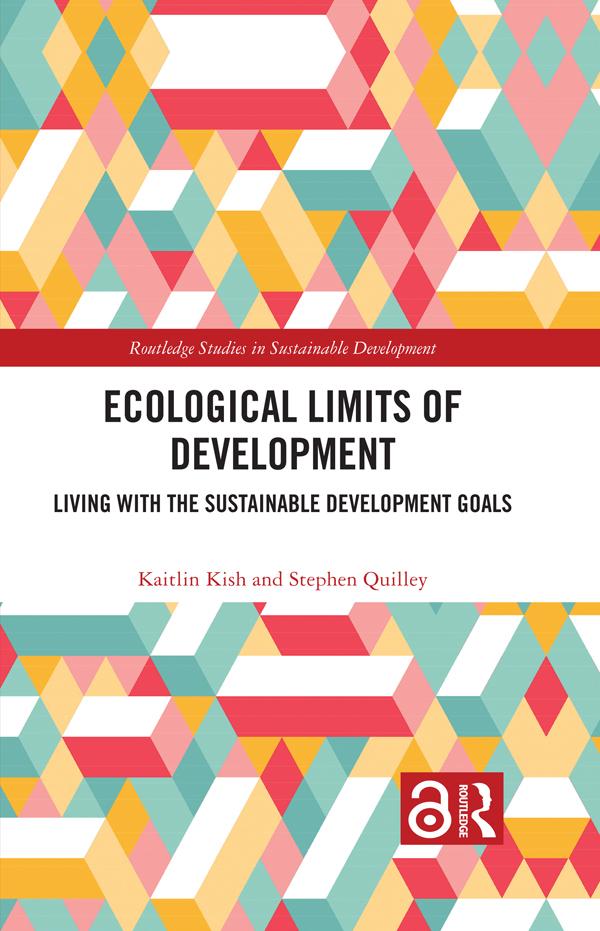
Embracing the reality of biophysical limits to growth, this volume uses the technical tools from ecological economics to recast the Sustainable Development Goals (SDGs) as Ecological Livelihood Goals – policy agendas and trajectories that seek to reconcile the social and spatial mobility and liberty of individuals, with both material security and ecological integrity.
Since the 1970s, mainstream approaches to sustainable development have sought to reconcile ecological constraints with modernization through much vaunted and seldom demonstrated strategies of ‘decoupling’ and ‘dematerialization’. In this context, the UN SDGs have become the orchestrating drivers of sustainability governance. However, biophysical limits are not so easily sidestepped. Building on an ecological- economic critique of mainstream economics and a historical- sociological understanding of state formation, this book explores the implications of ecological limits for modern progressive politics. Each chapter outlines leverage points for municipal engagement in local and regional contexts. Systems theory and community development perspectives are used to explore under- appreciated avenues for the kind of social and cultural change that would be necessary for any accommodation between modernity and ecological limits. Drawing on ideas from H.T. Odum, Herman Daly, Zigmunt Bauman, and many others, this book provides guiding research for a convergence between North and South that is bottom-up, household-centred, and predicated on a re- emerging domain of Livelihood. In each chapter, the authors provide recommendations for reconfiguring the UN’s SDGs as Ecological Livelihood Goals – a framework for sustainable development in an era of limits.
This book will be of great interest to students and scholars of ecological economics, socio- ecological systems, political economy, international and community development, global governance, and sustainable development.
Before Memmo my notes were scattered across PDFs. Now a workspace pulls everything into one place — I see exactly what's still left to study.
Memmo's summaries are gold before exams. I don't have to re-read 800 pages two weeks before — just the important parts.
The AI chat has saved me the night before an exam more than once. I just keep asking until I get it — no waiting on a study group to reply.
The quizzes hit exactly what I need to know. Memmo tracks what I get stuck on — so I only practice what's worth it.
Flashcards with spaced repetition are magic. Memmo knows when I'm about to forget something and brings it back.
The AI podcasts are my favorite. I listen on my way to school and get a recap without sitting at a computer.

Handbok i kvalitativa metoder
281 kr

Hållbar utveckling: en introduktion för ingenjörer och andra problemlösare
334 kr

Brymans Samhällsvetenskapliga metoder
390 kr

Projektledning
491 kr

Den orättvisa hälsan: om socioekonomiska skillnader i hälsa och livslängd
326 kr

Organizational Leadership
429 kr

Vetenskapsteori för nybörjare
196 kr

På väg mot läraryrket
172 kr

Det sociala livet i skolan: Socialpsykologiska perspektiv
253 kr

Betygsättningens didaktik
151 kr

Personality
402 kr

Studying Leadership
404 kr

Managing Innovation
477 kr

Introduktion till samhällsvetenskaplig metod
347 kr

The Psychology of Sex and Gender
698 kr

Evidens och kunskap för socialt arbete
207 kr

Introduction to Leadership
605 kr