
Before Memmo my notes were scattered across PDFs. Now a workspace pulls everything into one place — I see exactly what's still left to study.
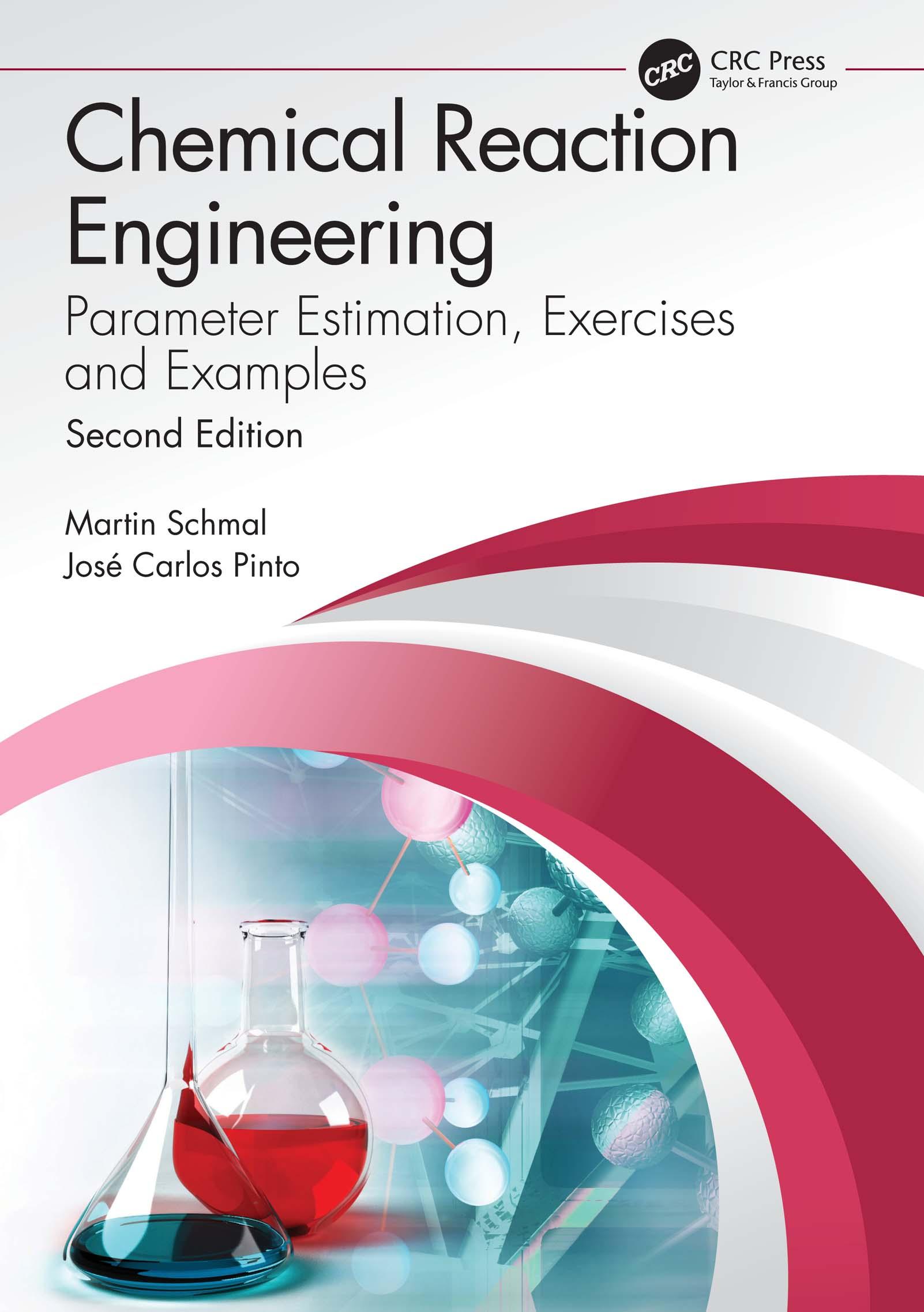
The first English edition of this book was published in 2014. This book was originally intended for undergraduate and graduate students and had one major objective: teach the basic concepts of kinetics and reactor design. The main reason behind the book is the fact that students frequently have great difficulty to explain the basic phenomena that occur in practice. Therefore, basic concepts with examples and many exercises are presented in each topic, instead of specific projects of the industry. The main objective was to provoke students to observe kinetic phenomena and to think about them. Indeed, reactors cannot be designed and operated without knowledge of kinetics.
Additionally, the empirical nature of kinetic studies is recognized in the present edition of the book. For this reason, analyses related to how experimental errors affect kinetic studies are performed and illustrated with actual data. Particularly, analytical and numerical solutions are derived to represent the uncertainties of reactant conversions in distinct scenarios and are used to analyze the quality of the obtained parameter estimates. Consequently, new topics that focus on the development of analytical and numerical procedures for more accurate description of experimental errors in reaction systems and of estimates of kinetic parameters have been included in this version of the book. Finally, kinetics requires knowledge that must be complemented and tested in the laboratory. Therefore, practical examples of reactions performed in bench and semi-pilot scales are discussed in the final chapter.
This edition of the book has been organized in two parts. In the first part, a thorough discussion regarding reaction kinetics is presented. In the second part, basic equations are derived and used to represent the performances of batch and continuous ideal reactors, isothermal and non-isothermal reaction systems and homogeneous and heterogeneous reactor vessels, as illustrated with several examples and exercises. This textbook will be of great value to undergraduate and graduate students in chemical engineering as well as to graduate students in and researchers of kinetics and catalysis.
Before Memmo my notes were scattered across PDFs. Now a workspace pulls everything into one place — I see exactly what's still left to study.
Memmo's summaries are gold before exams. I don't have to re-read 800 pages two weeks before — just the important parts.
The AI chat has saved me the night before an exam more than once. I just keep asking until I get it — no waiting on a study group to reply.
The quizzes hit exactly what I need to know. Memmo tracks what I get stuck on — so I only practice what's worth it.
Flashcards with spaced repetition are magic. Memmo knows when I'm about to forget something and brings it back.
The AI podcasts are my favorite. I listen on my way to school and get a recap without sitting at a computer.

Handbok i kvalitativa metoder
281 kr

Hållbar utveckling: en introduktion för ingenjörer och andra problemlösare
334 kr

Brymans Samhällsvetenskapliga metoder
390 kr

Projektledning
491 kr

Den orättvisa hälsan: om socioekonomiska skillnader i hälsa och livslängd
326 kr

Organizational Leadership
429 kr

Vetenskapsteori för nybörjare
196 kr

På väg mot läraryrket
172 kr

Det sociala livet i skolan: Socialpsykologiska perspektiv
253 kr

Betygsättningens didaktik
151 kr

Personality
402 kr

Studying Leadership
404 kr

Managing Innovation
477 kr

Introduktion till samhällsvetenskaplig metod
347 kr

The Psychology of Sex and Gender
698 kr

Evidens och kunskap för socialt arbete
207 kr

Introduction to Leadership
605 kr