
Before Memmo my notes were scattered across PDFs. Now a workspace pulls everything into one place — I see exactly what's still left to study.
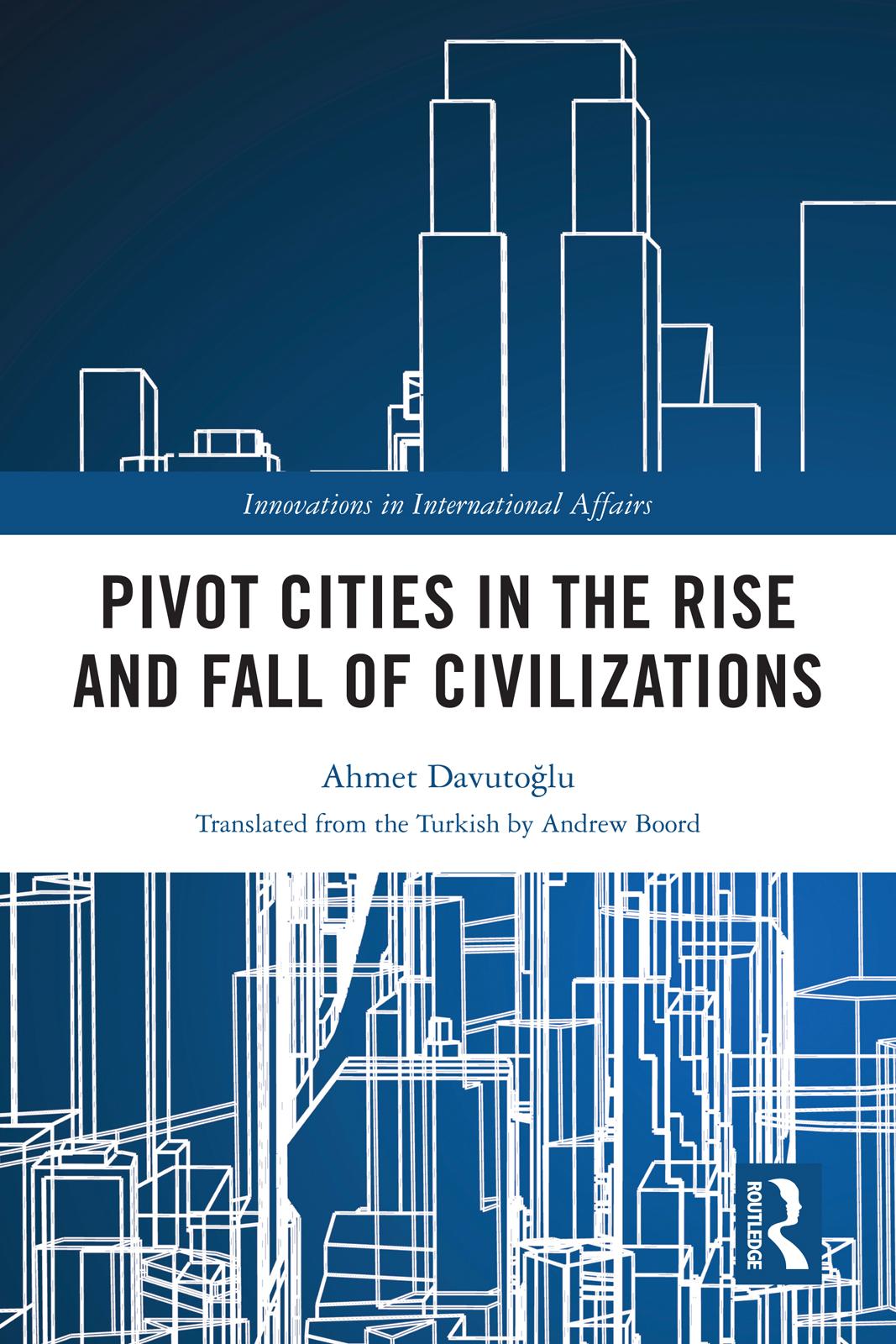
Based on the author’s long experience in academic life and the public realm, especially in foreign policy, this book argues that a single categoric classification of cities is inadequate, and that cities have had different and varied impacts and positions throughout the history of civilization.
The author examines how the formation, transformation, destruction or reestablishment of many civilizational cities reveals a clearer picture of the cornerstones of the course of human history. These cities, which play a decisive and pivotal role in the direction of the flow of history as well as providing us with a compass to guide our efforts to understand and interpret this flow, are conceptualized by the author as civilizations’ "pivot cities". This innovative book explores the role of great cities in political historical change, presenting an alternative view of these pivot cities from a culturalist perspective. Within this framework, the role played by pivot cities in the history of civilization may be considered under seven distinct headings: pioneering cities which founded civilizations; cities which were founded by civilizations; cities which were transplanted during the formation of civilizations; "ghost cities" which lost their importance through shifts in political power and civilizational transformation; "lost cities" which were destroyed by civilizations; cities on lines of geocultural/geoeconomic interaction; and cities which combine, transform or are transformed by different civilizations. The author’s concept of pivot cities explores the interplay between vital cities and civilizations, which bears on the future of globalization at a time of instability, as projected continuing de-Westernization becomes a theme in studies of global history.
This book provides highly productive discussions relevant to the literature on city-civilization relationships and the historicity of pivot cities. Its clear language, rich content, deep and original perspective, interdisciplinary approach and rich bibliography will ensure that it appeals to students and scholars in a variety of disciplines, including cultural studies, political science, comparative urban studies, anthropology, history and civilizational studies.
Before Memmo my notes were scattered across PDFs. Now a workspace pulls everything into one place — I see exactly what's still left to study.
Memmo's summaries are gold before exams. I don't have to re-read 800 pages two weeks before — just the important parts.
The AI chat has saved me the night before an exam more than once. I just keep asking until I get it — no waiting on a study group to reply.
The quizzes hit exactly what I need to know. Memmo tracks what I get stuck on — so I only practice what's worth it.
Flashcards with spaced repetition are magic. Memmo knows when I'm about to forget something and brings it back.
The AI podcasts are my favorite. I listen on my way to school and get a recap without sitting at a computer.

Handbok i kvalitativa metoder
281 kr

Hållbar utveckling: en introduktion för ingenjörer och andra problemlösare
334 kr

Brymans Samhällsvetenskapliga metoder
390 kr

Projektledning
491 kr

Den orättvisa hälsan: om socioekonomiska skillnader i hälsa och livslängd
326 kr

Vetenskapsteori för nybörjare
196 kr

Organizational Leadership
429 kr

På väg mot läraryrket
172 kr

Det sociala livet i skolan: Socialpsykologiska perspektiv
253 kr

Betygsättningens didaktik
151 kr

Personality
402 kr

Studying Leadership
404 kr

Managing Innovation
477 kr

Introduktion till samhällsvetenskaplig metod
347 kr

The Psychology of Sex and Gender
698 kr

Evidens och kunskap för socialt arbete
207 kr

Introduction to Leadership
605 kr