
Before Memmo my notes were scattered across PDFs. Now a workspace pulls everything into one place — I see exactly what's still left to study.
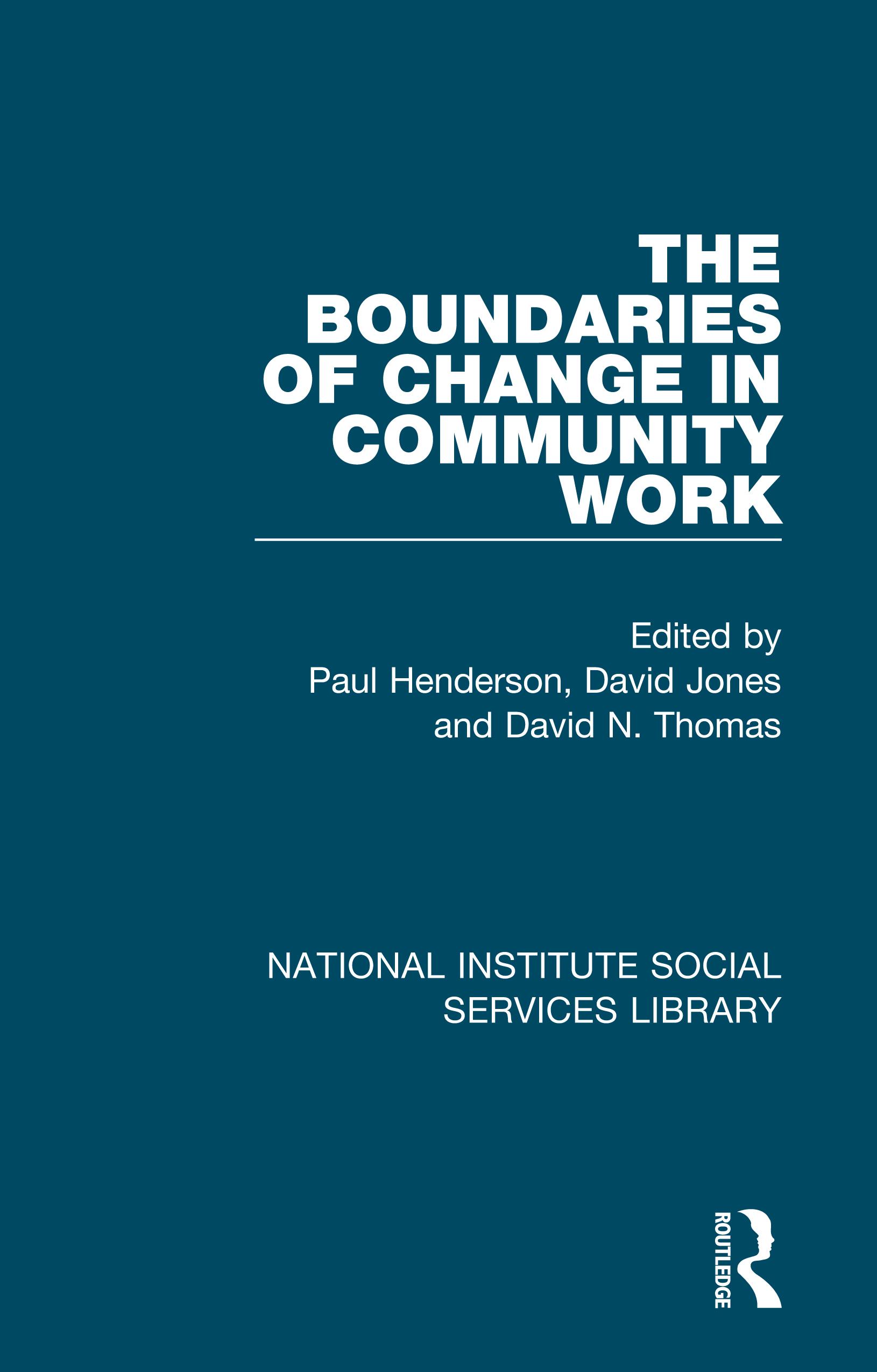
Since the late 1960s, community work had emerged in its own right as an occupation with an increasingly important contribution to make both to ways of thinking within the field of social policy, and to day-to-day social work practice and the resolution of pressing community issues. Its practitioners had grown in numbers and experience, while community work ideas and methods continued to influence developments in a variety of other ‘neighbouring’ occupations. Originally published in 1980, the editors of this NISW collection suggest that if community workers are to remain effective, then they must stay on the boundaries of the agencies that employ them and of the groups with whom they work. This theme of the ‘boundary nature’ of community work is examined in detail in the Introduction and is subsequently taken up by the other contributors to the book.
This title is organised under three main headings – a survey section on the history, philosophy and theories of community work in the United Kingdom; a series of case studies that suggest the diversity of the interests of community work; and an analysis of the growth of community work as an occupation and the spread of its influence through related professions and disciplines.
This mix of theory, practice and analysis made the book of special importance both to practising community workers and to community work teachers and students at the time. In addition, the book would have been of direct interest to community oriented administrators, professionals, teachers and students in other human service fields such as health, education, housing, planning and the personal social services, as well as to elected members and administrators in central and local government more generally. It will now be welcomed by anyone who seeks a critical account of the historical activities of community work, written by experienced practitioners and teachers.
Before Memmo my notes were scattered across PDFs. Now a workspace pulls everything into one place — I see exactly what's still left to study.
Memmo's summaries are gold before exams. I don't have to re-read 800 pages two weeks before — just the important parts.
The AI chat has saved me the night before an exam more than once. I just keep asking until I get it — no waiting on a study group to reply.
The quizzes hit exactly what I need to know. Memmo tracks what I get stuck on — so I only practice what's worth it.
Flashcards with spaced repetition are magic. Memmo knows when I'm about to forget something and brings it back.
The AI podcasts are my favorite. I listen on my way to school and get a recap without sitting at a computer.

Handbok i kvalitativa metoder
281 kr

Hållbar utveckling: en introduktion för ingenjörer och andra problemlösare
334 kr

Brymans Samhällsvetenskapliga metoder
390 kr

Projektledning
491 kr

Den orättvisa hälsan: om socioekonomiska skillnader i hälsa och livslängd
326 kr

Vetenskapsteori för nybörjare
196 kr

Organizational Leadership
429 kr

På väg mot läraryrket
172 kr

Det sociala livet i skolan: Socialpsykologiska perspektiv
253 kr

Betygsättningens didaktik
151 kr

Personality
402 kr

Studying Leadership
404 kr

Managing Innovation
477 kr

Introduktion till samhällsvetenskaplig metod
347 kr

The Psychology of Sex and Gender
698 kr

Evidens och kunskap för socialt arbete
207 kr

Introduction to Leadership
605 kr