
Before Memmo my notes were scattered across PDFs. Now a workspace pulls everything into one place — I see exactly what's still left to study.
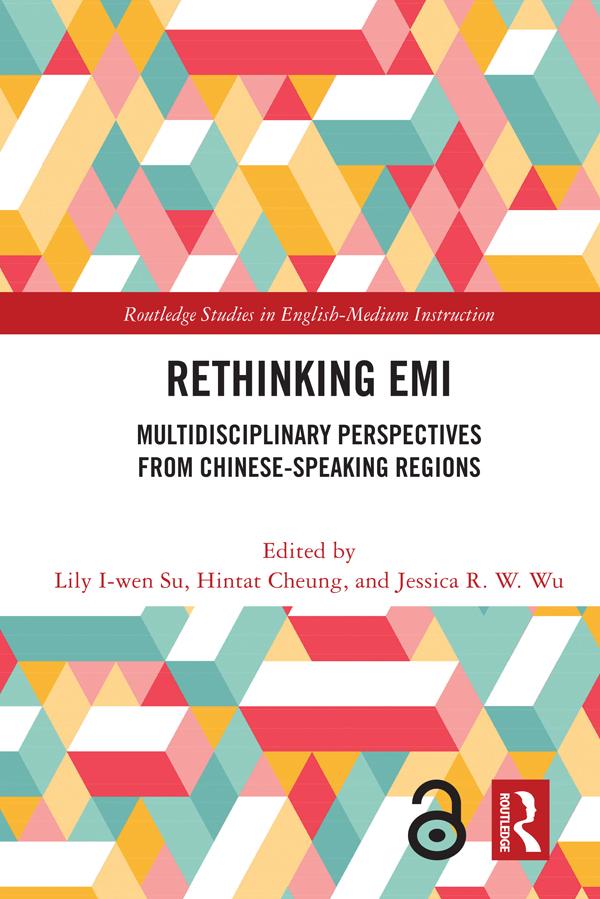
Due to the competitive edge it confers on students, educational institutions, and non-English speaking nations in a globalized economy, English as a medium of instruction (EMI) has been gaining popularity in tertiary education in non-native English-speaking (NNES) countries. Institute-wide EMI implementation has often been imposed by top-down decisions, in combination with the optimistic view that the horse should always be placed before the cart. However, emerging evidence suggests that the delivery of such programs to NNES students has led to new pedagogical challenges and learning problems that go beyond the scope of language learning and teaching and deserve immediate attention. For example, how would an instructor respond to situations in which students’ learning of content is compromised by their limited language proficiency? This book draws on the current practice of EMI in diverse disciplines and university settings and examines how these new pedagogical and learning issues can be addressed. The discussion also involves a reflection on the essence of EMI in relation to the use of the first language (L1) as the medium of instruction in tertiary education. In addition, the book includes discussion about how to ensure and maintain the quality of EMI programs and assess the readiness of stakeholders for such programs, which include administrators, teachers, and students. The discussion is led by exemplars in Hong Kong and Taiwan, where the majority of students are native Chinese speakers, in the hope of developing critical perspectives and practical guidelines as references for EMI in other NNES settings.
“The Open Access version of this book, available at http://www.taylorfrancis.com/books/e/ISBN, has been made available under a Creative Commons Attribution-Non Commercial-No Derivatives 4.0 license.
Before Memmo my notes were scattered across PDFs. Now a workspace pulls everything into one place — I see exactly what's still left to study.
Memmo's summaries are gold before exams. I don't have to re-read 800 pages two weeks before — just the important parts.
The AI chat has saved me the night before an exam more than once. I just keep asking until I get it — no waiting on a study group to reply.
The quizzes hit exactly what I need to know. Memmo tracks what I get stuck on — so I only practice what's worth it.
Flashcards with spaced repetition are magic. Memmo knows when I'm about to forget something and brings it back.
The AI podcasts are my favorite. I listen on my way to school and get a recap without sitting at a computer.

Handbok i kvalitativa metoder
281 kr

Hållbar utveckling: en introduktion för ingenjörer och andra problemlösare
334 kr

Brymans Samhällsvetenskapliga metoder
390 kr

Projektledning
491 kr

Den orättvisa hälsan: om socioekonomiska skillnader i hälsa och livslängd
326 kr

Organizational Leadership
429 kr

Vetenskapsteori för nybörjare
196 kr

På väg mot läraryrket
172 kr

Det sociala livet i skolan: Socialpsykologiska perspektiv
253 kr

Betygsättningens didaktik
151 kr

Personality
402 kr

Studying Leadership
404 kr

Managing Innovation
477 kr

Introduktion till samhällsvetenskaplig metod
347 kr

The Psychology of Sex and Gender
698 kr

Evidens och kunskap för socialt arbete
207 kr

Introduction to Leadership
605 kr