
Before Memmo my notes were scattered across PDFs. Now a workspace pulls everything into one place — I see exactly what's still left to study.
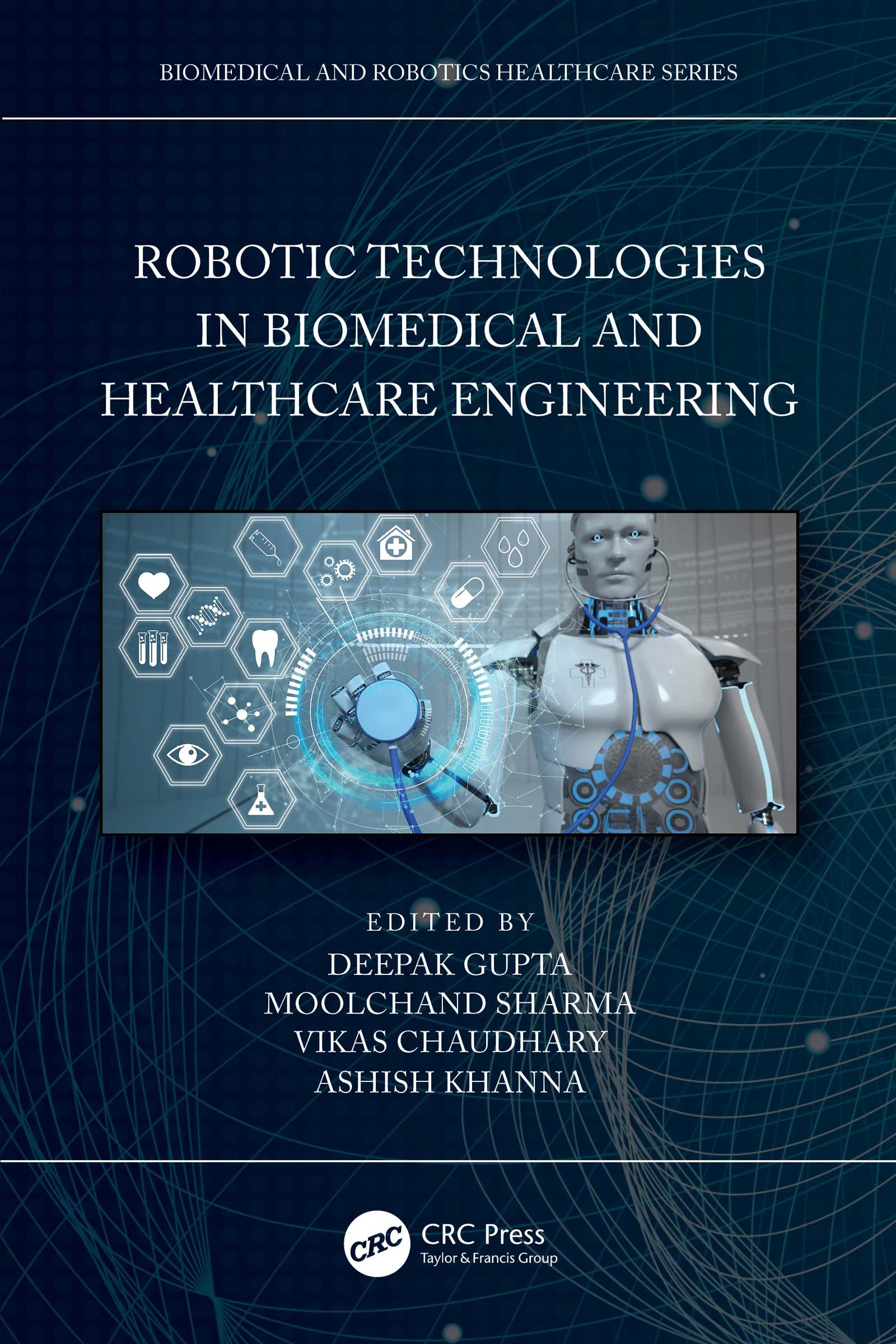
New prospects for biomedical and healthcare engineering are being created by the rapid development of Robotic and Artificial Intelligence techniques. Innovative technologies such as Artificial Intelligence, Deep Learning, Robotics, and IoT are currently under huge influence in today’s modern world. For instance, a micro-nano robot allows us to study the fundamental problems at a cellular scale owing to its precise positioning and manipulation ability; the medical robot paves a new way for the low-invasive and high-efficient clinical operation, and rehabilitation robotics is able to improve the rehabilitative efficacy of patients. This book aims at exhibiting the latest research achievements, findings, and ideas in the field of robotics in biomedical and healthcare engineering, primarily focusing on the walking assistive robot, telerobotic surgery, upper/lower limb rehabilitation, and radiosurgery. As a result, a wide range of robots are being developed to serve a variety of roles within the medical environment. Robots specializing in human treatment include surgical robots and rehabilitation robots. The field of assistive and therapeutic robotic devices is also expanding rapidly. These include robots that help patients rehabilitate from severe conditions like strokes, empathic robots that assist in the care of older or physically/mentally challenged individuals, and industrial robots that take on a variety of routine tasks, such as sterilizing rooms and delivering medical supplies and equipment, including medications. The objectives of the book are in terms of advancing the state-of-the-art of robotic techniques and addressing the challenging problems in biomedical and healthcare engineering. This book
Deepak Gupta is an Assistant Professor at the Maharaja Agrasen Institute of Technology, GGSIPU, Delhi, India.
Moolchand Sharma is an Assistant Professor at the Maharaja Agrasen Institute of Technology, GGSIPU, Delhi, India.
Vikas Chaudhary is a Professor at the JIMS Engineering Management Technical Campus, GGSIPU, Greater Noida, India.
Ashish Khanna currently works at the Maharaja Agrasen Institute of Technology, GGSIPU, Delhi, India.
Before Memmo my notes were scattered across PDFs. Now a workspace pulls everything into one place — I see exactly what's still left to study.
Memmo's summaries are gold before exams. I don't have to re-read 800 pages two weeks before — just the important parts.
The AI chat has saved me the night before an exam more than once. I just keep asking until I get it — no waiting on a study group to reply.
The quizzes hit exactly what I need to know. Memmo tracks what I get stuck on — so I only practice what's worth it.
Flashcards with spaced repetition are magic. Memmo knows when I'm about to forget something and brings it back.
The AI podcasts are my favorite. I listen on my way to school and get a recap without sitting at a computer.

Handbok i kvalitativa metoder
281 kr

Hållbar utveckling: en introduktion för ingenjörer och andra problemlösare
334 kr

Brymans Samhällsvetenskapliga metoder
390 kr

Projektledning
491 kr

Den orättvisa hälsan: om socioekonomiska skillnader i hälsa och livslängd
326 kr

Organizational Leadership
429 kr

Vetenskapsteori för nybörjare
196 kr

På väg mot läraryrket
172 kr

Det sociala livet i skolan: Socialpsykologiska perspektiv
253 kr

Betygsättningens didaktik
151 kr

Personality
402 kr

Studying Leadership
404 kr

Managing Innovation
477 kr

Introduktion till samhällsvetenskaplig metod
347 kr

The Psychology of Sex and Gender
698 kr

Evidens och kunskap för socialt arbete
207 kr

Introduction to Leadership
605 kr