
Before Memmo my notes were scattered across PDFs. Now a workspace pulls everything into one place — I see exactly what's still left to study.
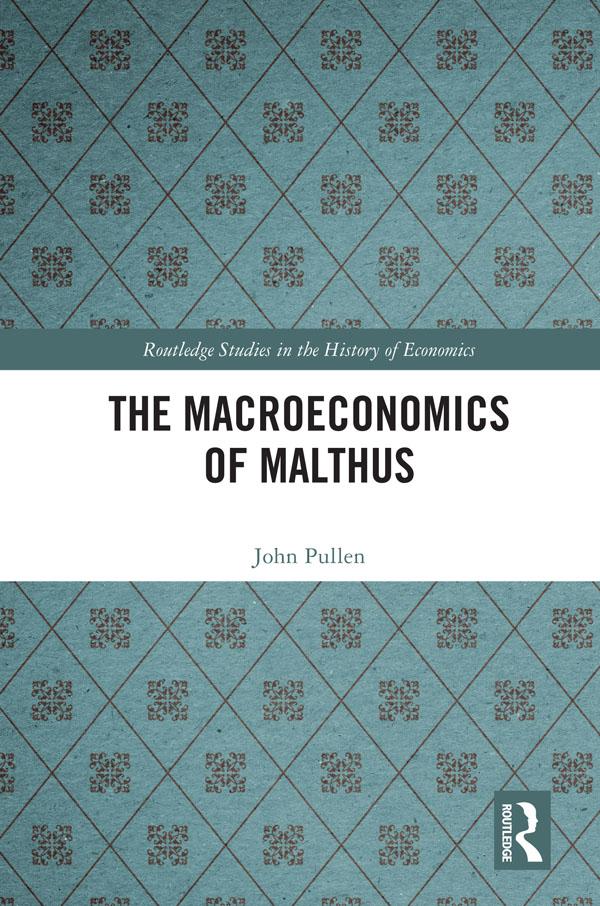
The views of Thomas Robert Malthus (1766–1834) on population, first published in his Essay on the Principle of Population, 1798, continue to be hotly debated, either acclaimed or opposed, as do his views on macroeconomics. There is a widely held view that his macroeconomics lacks coherence and is merely a collection of isolated jottings. This book challenges this view; it presents textual evidence that Malthus’s macroeconomics constitutes a significant system of thought with considerable academic merit.
It reawakens debate about the relative merits of Malthus and Ricardo as macroeconomists and contends that Malthus offers important macroeconomic ideas and policy proposals relevant to modern economic problems. It presents and analyses Malthus’ ideas on topics such as the determinants of aggregate economic growth; the causes of general depression; the remedies for mass unemployment; the balance between laissez-faire and government intervention; the optimum division of expenditure between consumption, saving, and investment; the distribution of income between wages, profits, and rents; and the degree of economic inequality. Particular emphasis is given to his view that the pattern of distribution of wealth between the upper, lower, and middle classes is a major determinant or factor in the production of wealth, and that continued economic development depends on the growth of a large and affluent middle class. The radical nature of some of his ideas and policy proposals on the ownership and distribution of land is highlighted. An extensive treatment of Say’s Law, incorporating aspects of the correspondence between Say and Malthus, addresses the question of whether Malthus showed that Say’s Law is merely a truism and lacks any scientific relevance. The book also sheds new light on the nature of the influence of Malthus on Keynes.
This combination of a search for textual authenticity and a critical assessment of the views of commentators on Malthus will be of significant interest to students and scholars of economic theory and the history of economics.
Before Memmo my notes were scattered across PDFs. Now a workspace pulls everything into one place — I see exactly what's still left to study.
Memmo's summaries are gold before exams. I don't have to re-read 800 pages two weeks before — just the important parts.
The AI chat has saved me the night before an exam more than once. I just keep asking until I get it — no waiting on a study group to reply.
The quizzes hit exactly what I need to know. Memmo tracks what I get stuck on — so I only practice what's worth it.
Flashcards with spaced repetition are magic. Memmo knows when I'm about to forget something and brings it back.
The AI podcasts are my favorite. I listen on my way to school and get a recap without sitting at a computer.

Handbok i kvalitativa metoder
281 kr

Hållbar utveckling: en introduktion för ingenjörer och andra problemlösare
334 kr

Brymans Samhällsvetenskapliga metoder
390 kr

Projektledning
491 kr

Den orättvisa hälsan: om socioekonomiska skillnader i hälsa och livslängd
326 kr

Vetenskapsteori för nybörjare
196 kr

Organizational Leadership
429 kr

På väg mot läraryrket
172 kr

Det sociala livet i skolan: Socialpsykologiska perspektiv
253 kr

Betygsättningens didaktik
151 kr

Personality
402 kr

Studying Leadership
404 kr

Managing Innovation
477 kr

Introduktion till samhällsvetenskaplig metod
347 kr

The Psychology of Sex and Gender
698 kr

Evidens och kunskap för socialt arbete
207 kr

Introduction to Leadership
605 kr