
Before Memmo my notes were scattered across PDFs. Now a workspace pulls everything into one place — I see exactly what's still left to study.
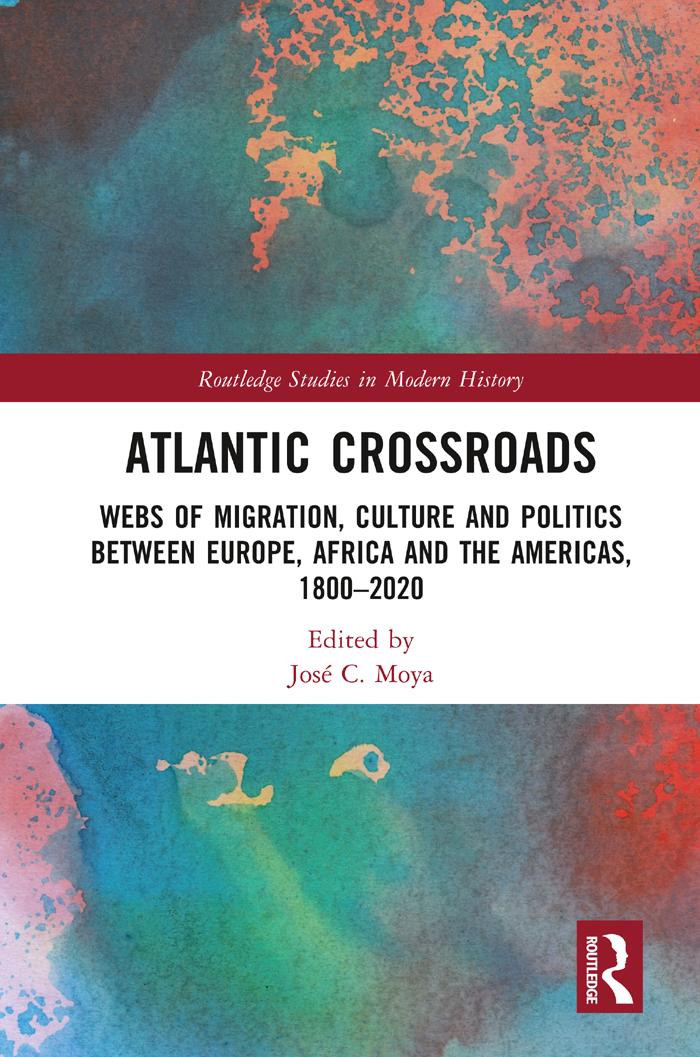
Unlike most books on the Atlantic that associate its history with European colonialism and thus end in 1800, this volume demonstrates that the Atlantic connections not only outlasted colonialism, they also reached unprecedented levels in postcolonial times, when the Atlantic truly became the world’s major crossroads and dominant economy. Twice as many Europeans entered New York, Buenos Aires, and São Paulo in 3 years on the eve of WWI as had arrived in all the New World during 300 years of colonial rule. Transatlantic ties surged again with mass movements from the West Indies, Latin America, and Africa to North America and Western Europe from the 1960s to the present.
As befits a transnational subject, the 24 contributors in this volume come from 14 different countries. Over half of the chapters are co-authored, an exceptional level of scholarly collaboration, and all but two are explicitly comparative. Comparisons include Congo and Yoruba slaves in Brazil, Irish and Italian mercenaries and adventurers in the New World, German Lutherans in Canada and Argentina, Spanish laborers in Algeria and Cuba, the diasporic nationalism of ethnic groups without nation states, and the transatlantic politics of fascism and anti-fascism in the interwar. Overall, the volume shows the Atlantic World’s distinctiveness rested not on the level or persistence of colonial control but on the density and longevity of human migrations and the resulting high levels of social and cultural contact, circulation, connection, and mixing.
This title will appeal to students and researchers in the fields of Atantic and global history, migration, diaspora, slavery, ethnicity, nationalism, citizenship, politics, anthropology, and area studies.
Before Memmo my notes were scattered across PDFs. Now a workspace pulls everything into one place — I see exactly what's still left to study.
Memmo's summaries are gold before exams. I don't have to re-read 800 pages two weeks before — just the important parts.
The AI chat has saved me the night before an exam more than once. I just keep asking until I get it — no waiting on a study group to reply.
The quizzes hit exactly what I need to know. Memmo tracks what I get stuck on — so I only practice what's worth it.
Flashcards with spaced repetition are magic. Memmo knows when I'm about to forget something and brings it back.
The AI podcasts are my favorite. I listen on my way to school and get a recap without sitting at a computer.

Handbok i kvalitativa metoder
281 kr

Hållbar utveckling: en introduktion för ingenjörer och andra problemlösare
334 kr

Brymans Samhällsvetenskapliga metoder
390 kr

Projektledning
491 kr

Den orättvisa hälsan: om socioekonomiska skillnader i hälsa och livslängd
326 kr

Organizational Leadership
429 kr

Vetenskapsteori för nybörjare
196 kr

På väg mot läraryrket
172 kr

Det sociala livet i skolan: Socialpsykologiska perspektiv
253 kr

Betygsättningens didaktik
151 kr

Personality
402 kr

Studying Leadership
404 kr

Managing Innovation
477 kr

Introduktion till samhällsvetenskaplig metod
347 kr

The Psychology of Sex and Gender
698 kr

Evidens och kunskap för socialt arbete
207 kr

Introduction to Leadership
605 kr