
Before Memmo my notes were scattered across PDFs. Now a workspace pulls everything into one place — I see exactly what's still left to study.
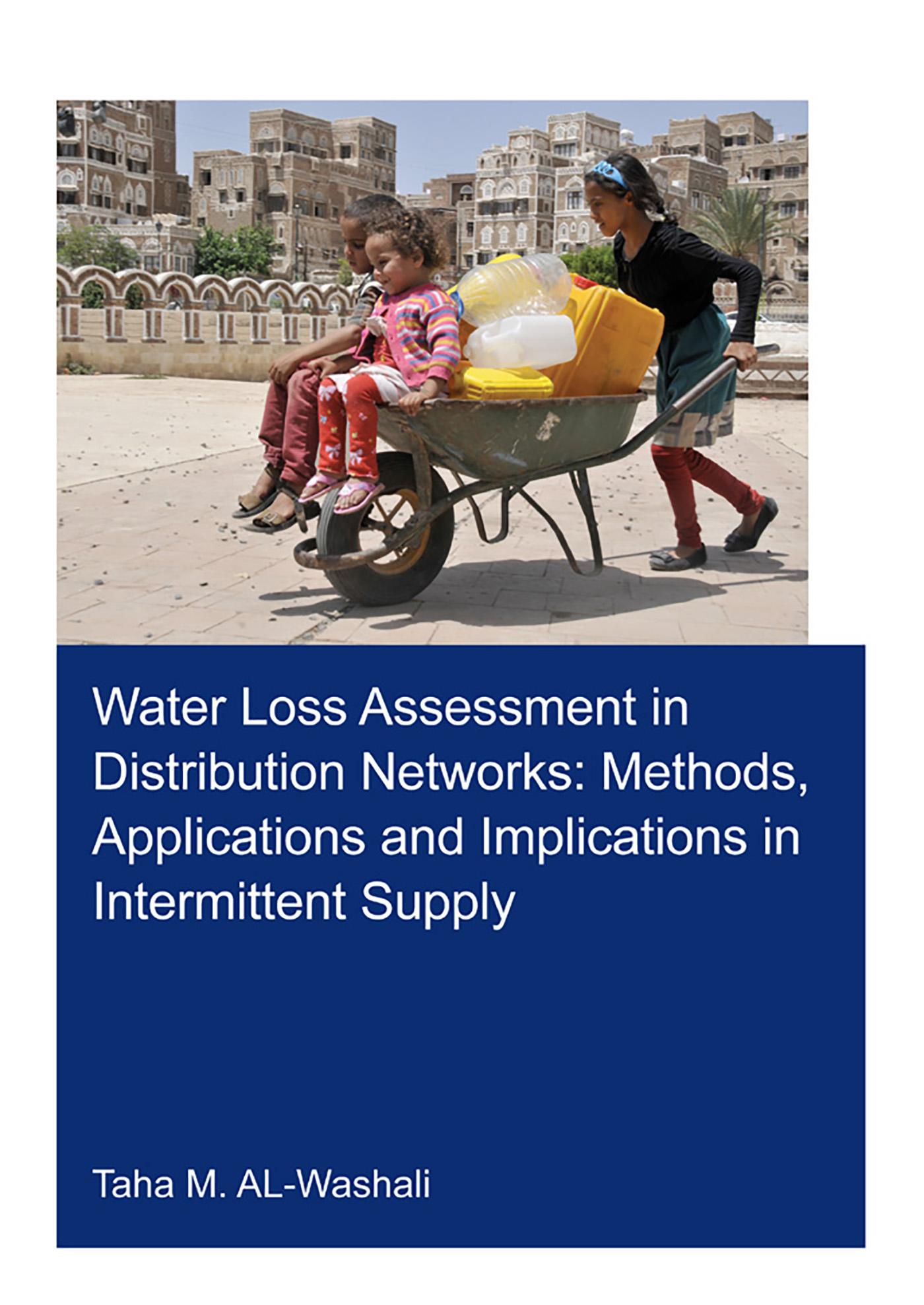
Water utilities worldwide lose 128 billion cubic meters annually, causing annual monetary losses estimated at USD 40 billion. Most of these losses occur in developing countries (74%). This calls for rethinking the challenges facing water utilities in developing countries, foremost of which is the assessment of water losses in intermittent supply networks. Water loss assessment methods were originally developed in continuous supply systems, and their application in intermittently operated networks (in developing countries) is hindered by the widespread use of household water tanks and unauthorised consumption.
This study provides an extensive review of existing methods and (software) tools for water loss assessment. In addition, several new methods were developed, which offer improved water loss assessment in intermittent supply. As the volume of water loss varies monthly and annually according to the amount of supplied water, this study proposes procedures to normalise the volume of water loss in order to enable water utilities to monitor and benchmark their performance on water loss management. The study also developed a novel method of estimating apparent losses using routine data of WWTP inflows, enabling future real-time monitoring of losses in networks.
Different methods have also been suggested to estimate the unauthorised consumption in networks. This study found that minimum night flow analysis can still be applied in intermittent supply if an area of the network is supplied for several days. Furthermore, this study concluded that water meter performance is enhanced in intermittent supply conditions. However, continuous supply in the presence of float-valves significantly reduces the accuracy of water meters.
Finally, this study provides guidance and highlights several knowledge gaps in order to improve the accuracy of water loss assessment in intermittent supply. Accurate assessment of water loss is a prerequisite for reliable leakage modelling and minimisation as well as planning for, and monitoring of water loss management in distribution networks.
Before Memmo my notes were scattered across PDFs. Now a workspace pulls everything into one place — I see exactly what's still left to study.
Memmo's summaries are gold before exams. I don't have to re-read 800 pages two weeks before — just the important parts.
The AI chat has saved me the night before an exam more than once. I just keep asking until I get it — no waiting on a study group to reply.
The quizzes hit exactly what I need to know. Memmo tracks what I get stuck on — so I only practice what's worth it.
Flashcards with spaced repetition are magic. Memmo knows when I'm about to forget something and brings it back.
The AI podcasts are my favorite. I listen on my way to school and get a recap without sitting at a computer.

Handbok i kvalitativa metoder
281 kr

Hållbar utveckling: en introduktion för ingenjörer och andra problemlösare
334 kr

Brymans Samhällsvetenskapliga metoder
390 kr

Projektledning
491 kr

Den orättvisa hälsan: om socioekonomiska skillnader i hälsa och livslängd
326 kr

Vetenskapsteori för nybörjare
196 kr

Organizational Leadership
429 kr

På väg mot läraryrket
172 kr

Det sociala livet i skolan: Socialpsykologiska perspektiv
253 kr

Betygsättningens didaktik
151 kr

Personality
402 kr

Studying Leadership
404 kr

Managing Innovation
477 kr

Introduktion till samhällsvetenskaplig metod
347 kr

The Psychology of Sex and Gender
698 kr

Evidens och kunskap för socialt arbete
207 kr

Introduction to Leadership
605 kr