
Before Memmo my notes were scattered across PDFs. Now a workspace pulls everything into one place — I see exactly what's still left to study.
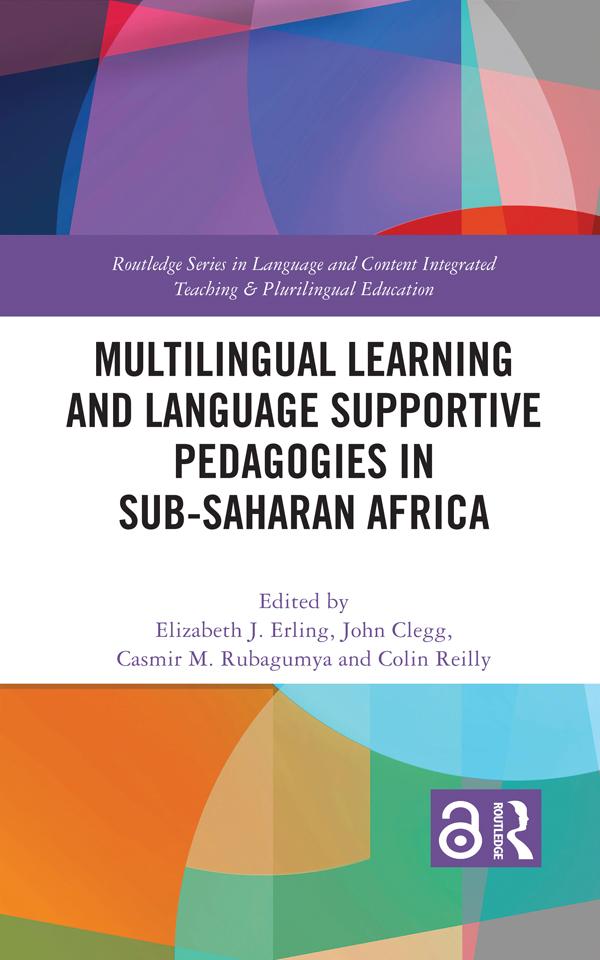
This edited collection provides unprecedented insight into the emerging field of multilingual education in Sub-Saharan Africa (SSA). Multilingual education is claimed to have many benefits, amongst which are that it can improve both content and language learning, especially for learners who may have low ability in the medium of instruction and are consequently struggling to learn. The book represents a range of Sub-Saharan school contexts and describes how multilingual strategies have been developed and implemented within them to support the learning of content and language. It looks at multilingual learning from several points of view, including ‘translanguaging’, or the use of multiple languages – and especially African languages – for learning and language-supportive pedagogy, or the implementation of a distinct pedagogy to support learners working through the medium of a second language.
The book puts forward strategies for creating materials, classroom environments and teacher education programmes which support the use of all of a student’s languages to improve language and content learning. The contexts which the book describes are challenging, including low school resourcing, poverty and low literacy in the home, and school policy which militates against the use of African languages in school. The volume also draws on multilingual education approaches which have been successfully carried out in higher resource countries and lend themselves to being adapted for use in SSA. It shows how multilingual learning can bring about transformation in education and provides inspiration for how these strategies might spread and be further developed to improve learning in schools in SSA and beyond.
Chapter 3 of this book is freely available as a downloadable Open Access PDF under a Creative Commons Attribution-Non Commercial-No Derivatives 4.0 license available at http://www.taylorfrancis.com.
Before Memmo my notes were scattered across PDFs. Now a workspace pulls everything into one place — I see exactly what's still left to study.
Memmo's summaries are gold before exams. I don't have to re-read 800 pages two weeks before — just the important parts.
The AI chat has saved me the night before an exam more than once. I just keep asking until I get it — no waiting on a study group to reply.
The quizzes hit exactly what I need to know. Memmo tracks what I get stuck on — so I only practice what's worth it.
Flashcards with spaced repetition are magic. Memmo knows when I'm about to forget something and brings it back.
The AI podcasts are my favorite. I listen on my way to school and get a recap without sitting at a computer.

Handbok i kvalitativa metoder
281 kr

Hållbar utveckling: en introduktion för ingenjörer och andra problemlösare
334 kr

Brymans Samhällsvetenskapliga metoder
390 kr

Projektledning
491 kr

Den orättvisa hälsan: om socioekonomiska skillnader i hälsa och livslängd
326 kr

Vetenskapsteori för nybörjare
196 kr

Organizational Leadership
429 kr

På väg mot läraryrket
172 kr

Det sociala livet i skolan: Socialpsykologiska perspektiv
253 kr

Betygsättningens didaktik
151 kr

Personality
402 kr

Studying Leadership
404 kr

Managing Innovation
477 kr

Introduktion till samhällsvetenskaplig metod
347 kr

The Psychology of Sex and Gender
698 kr

Evidens och kunskap för socialt arbete
207 kr

Introduction to Leadership
605 kr