
Before Memmo my notes were scattered across PDFs. Now a workspace pulls everything into one place — I see exactly what's still left to study.
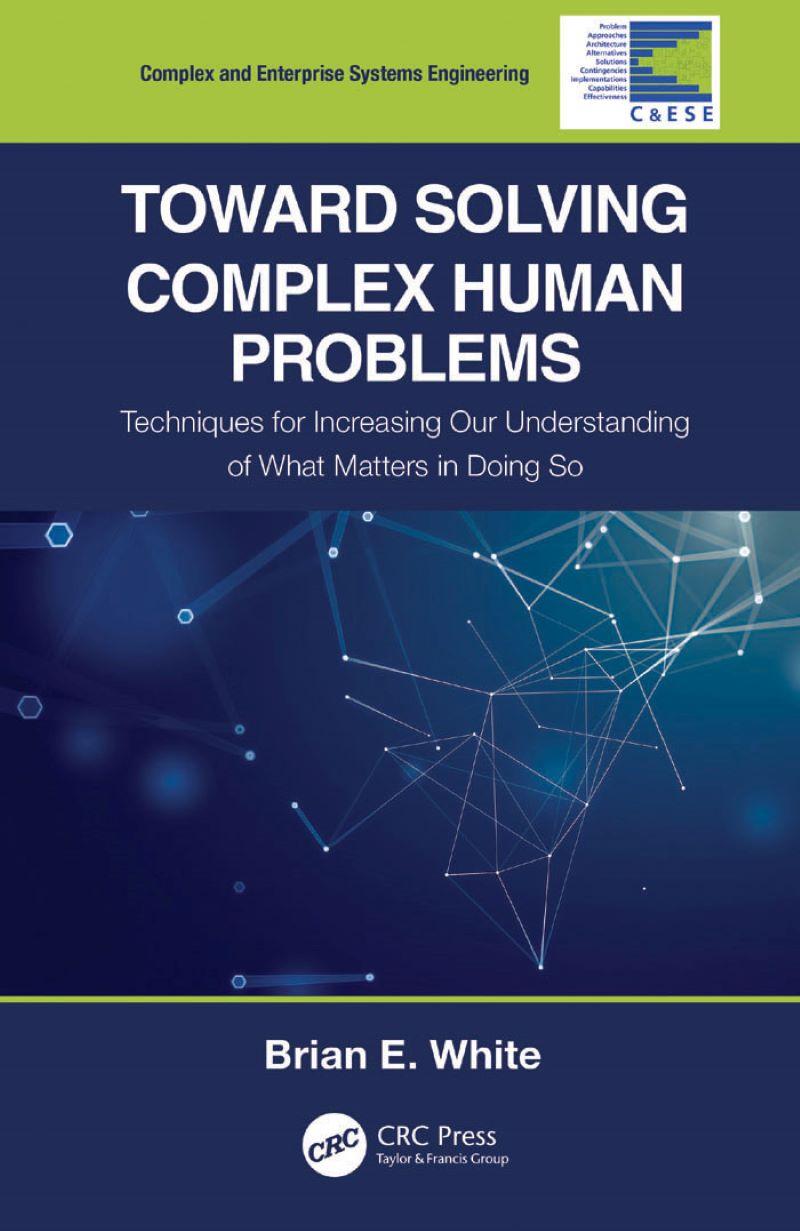
This book serves three basic purposes: (1) a tutorial-type reference for complex systems engineering (CSE) concepts and associated terminology, (2) a recommendation of a proposed methodology showing how the evolving practice of CSE can lead to a more unified theory, and (3) a complex systems (CSs) initiative for organizations to invest some of their resources toward helping to make the world a better place.
A wide variety of technical practitioners—e.g., developers of new or improved systems (particularly systems engineers), program and project managers, associated staff/workers, funders and overseers, government executives, military officers, systems acquisition personnel, contract specialists, owners of large and small businesses, professional society members, and CS researchers—may be interested in further exploring these topics.
Readers will learn more about CS characteristics and behaviors and CSE principles and will therefore be able to focus on techniques that will better serve them in their everyday work environments in dealing with complexity. The fundamental observation is that many systems inherently involve a deeper complexity because stakeholders are engaged in the enterprise. This means that such CSs are more difficult to invent, create, or improve upon because no one can be in total control since people cannot be completely controlled. Therefore, one needs to concentrate on trying to influence progress, then wait a suitable amount of time to see what happens, iterating as necessary. With just three chapters in this book, it seems to make sense to provide a tutorial introduction that readers can peruse only as necessary, considering their background and understanding, then a chapter laying out the suggested artifacts and methodology, followed by a chapter emphasizing worthwhile areas of application.
Before Memmo my notes were scattered across PDFs. Now a workspace pulls everything into one place — I see exactly what's still left to study.
Memmo's summaries are gold before exams. I don't have to re-read 800 pages two weeks before — just the important parts.
The AI chat has saved me the night before an exam more than once. I just keep asking until I get it — no waiting on a study group to reply.
The quizzes hit exactly what I need to know. Memmo tracks what I get stuck on — so I only practice what's worth it.
Flashcards with spaced repetition are magic. Memmo knows when I'm about to forget something and brings it back.
The AI podcasts are my favorite. I listen on my way to school and get a recap without sitting at a computer.

Handbok i kvalitativa metoder
281 kr

Hållbar utveckling: en introduktion för ingenjörer och andra problemlösare
334 kr

Brymans Samhällsvetenskapliga metoder
390 kr

Projektledning
491 kr

Den orättvisa hälsan: om socioekonomiska skillnader i hälsa och livslängd
326 kr

Organizational Leadership
429 kr

Vetenskapsteori för nybörjare
196 kr

På väg mot läraryrket
172 kr

Det sociala livet i skolan: Socialpsykologiska perspektiv
253 kr

Betygsättningens didaktik
151 kr

Personality
402 kr

Studying Leadership
404 kr

Managing Innovation
477 kr

Introduktion till samhällsvetenskaplig metod
347 kr

The Psychology of Sex and Gender
698 kr

Evidens och kunskap för socialt arbete
207 kr

Introduction to Leadership
605 kr