
Before Memmo my notes were scattered across PDFs. Now a workspace pulls everything into one place — I see exactly what's still left to study.
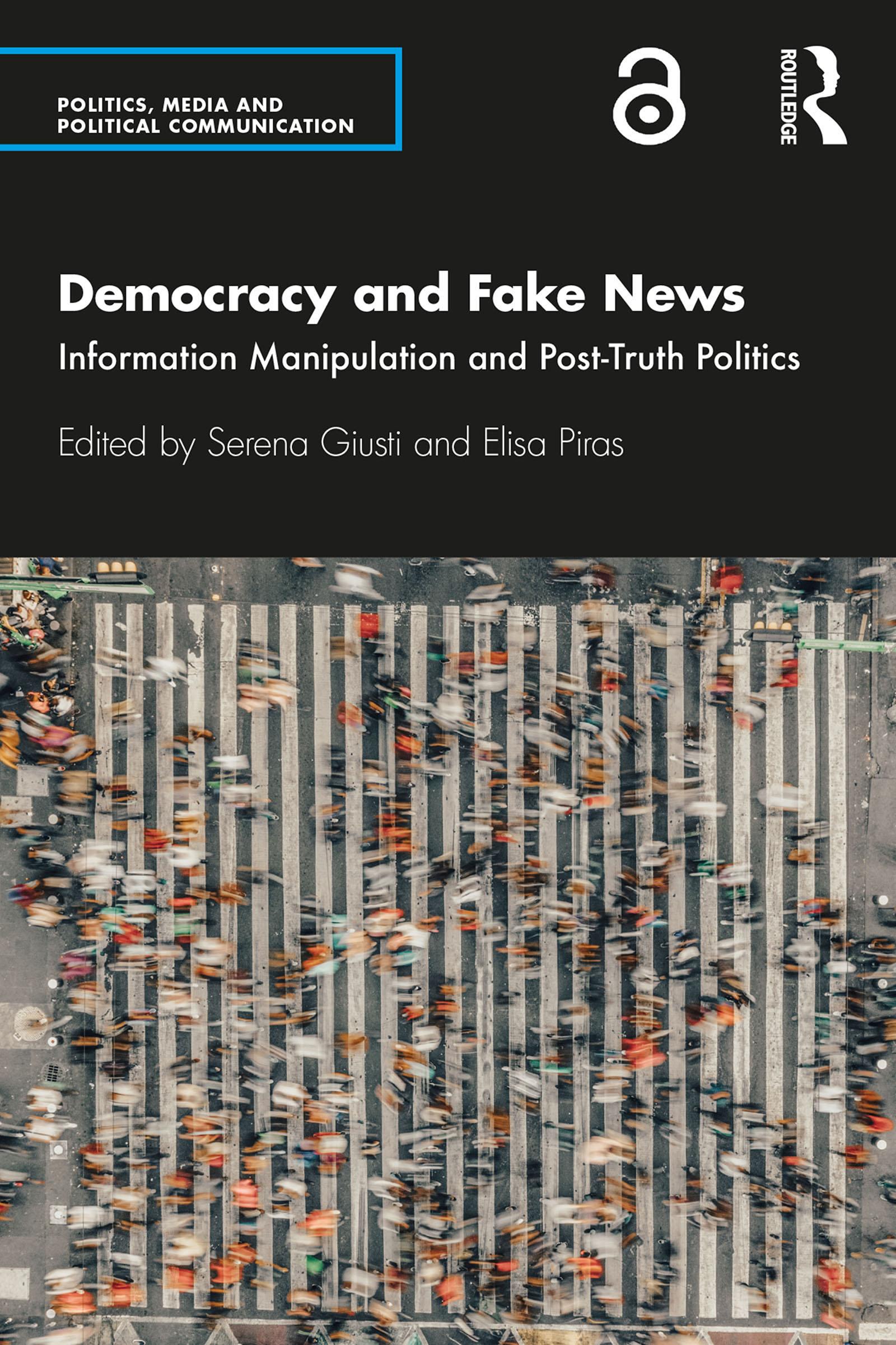
This book explores the challenges that disinformation, fake news, and post-truth politics pose to democracy from a multidisciplinary perspective. The authors analyse and interpret how the use of technology and social media as well as the emergence of new political narratives has been progressively changing the information landscape, undermining some of the pillars of democracy.
The volume sheds light on some topical questions connected to fake news, thereby contributing to a fuller understanding of its impact on democracy. In the Introduction, the editors offer some orientating definitions of post-truth politics, building a theoretical framework where various different aspects of fake news can be understood. The book is then divided into three parts: Part I helps to contextualise the phenomena investigated, offering definitions and discussing key concepts as well as aspects linked to the manipulation of information systems, especially considering its reverberation on democracy. Part II considers the phenomena of disinformation, fake news, and post-truth politics in the context of Russia, which emerges as a laboratory where the phases of creation and diffusion of fake news can be broken down and analysed; consequently, Part II also reflects on the ways to counteract disinformation and fake news. Part III moves from case studies in Western and Central Europe to reflect on the methodological difficulty of investigating disinformation, as well as tackling the very delicate question of detection, combat, and prevention of fake news.
This book will be of great interest to students and scholars of political science, law, political philosophy, journalism, media studies, and computer science, since it provides a multidisciplinary approach to the analysis of post-truth politics.
Before Memmo my notes were scattered across PDFs. Now a workspace pulls everything into one place — I see exactly what's still left to study.
Memmo's summaries are gold before exams. I don't have to re-read 800 pages two weeks before — just the important parts.
The AI chat has saved me the night before an exam more than once. I just keep asking until I get it — no waiting on a study group to reply.
The quizzes hit exactly what I need to know. Memmo tracks what I get stuck on — so I only practice what's worth it.
Flashcards with spaced repetition are magic. Memmo knows when I'm about to forget something and brings it back.
The AI podcasts are my favorite. I listen on my way to school and get a recap without sitting at a computer.

Handbok i kvalitativa metoder
281 kr

Hållbar utveckling: en introduktion för ingenjörer och andra problemlösare
334 kr

Brymans Samhällsvetenskapliga metoder
390 kr

Projektledning
491 kr

Den orättvisa hälsan: om socioekonomiska skillnader i hälsa och livslängd
326 kr

Vetenskapsteori för nybörjare
196 kr

Organizational Leadership
429 kr

På väg mot läraryrket
172 kr

Det sociala livet i skolan: Socialpsykologiska perspektiv
253 kr

Betygsättningens didaktik
151 kr

Personality
402 kr

Studying Leadership
404 kr

Managing Innovation
477 kr

Introduktion till samhällsvetenskaplig metod
347 kr

The Psychology of Sex and Gender
698 kr

Evidens och kunskap för socialt arbete
207 kr

Introduction to Leadership
605 kr