
Before Memmo my notes were scattered across PDFs. Now a workspace pulls everything into one place — I see exactly what's still left to study.
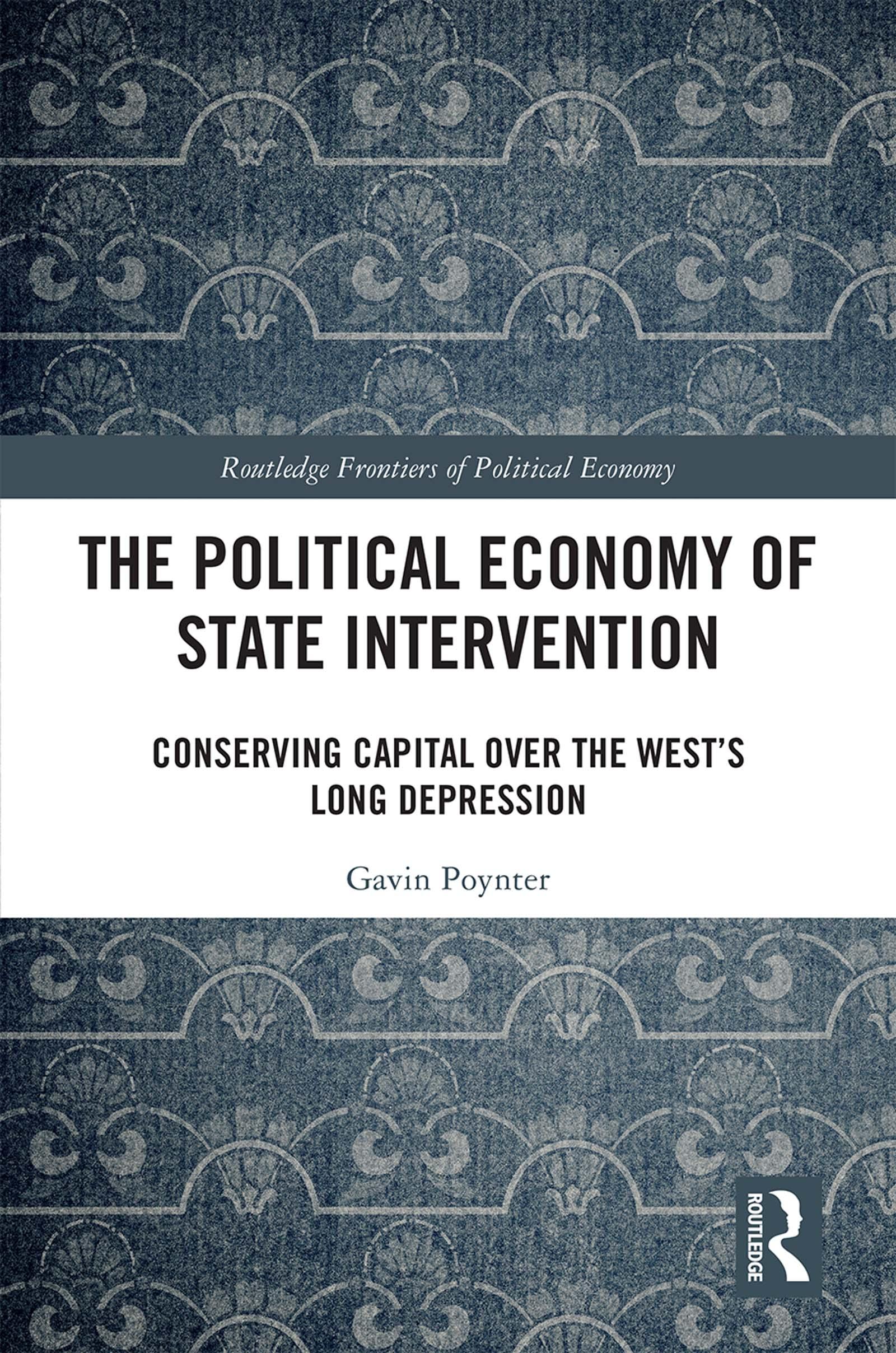
Both the exponents and critics of neoliberalism assert the dominance of market forces in western nations. The Political Economy of State Intervention calls this into question. Through a re-examination of state intervention in the USA and Britain over the course of the "long depression" (1970-to date), this book argues that the state has performed an increasingly significant role in conserving capital, propping up an economic and social order that has lost its productive dynamism.
The specific forms of capital’s dependency on the state may vary, however the underlying weaknesses of mature western economies have prompted new forms of state intervention narrowly aimed at conserving capital, especially in the wake of the financial crisis. The chapters consider factors which are usually posited as explanations for the long depression such as oil price shocks, domestic conditions and technological innovation. The work argues that the consensus view of neoliberalism has served to underplay the significance of the state’s role in failing to lift this long depression in several ways: it has lent a greater ideological coherence to the policies pursued by successive governments than they deserve; the state has been less subordinate to the market than is usually claimed and more often its maker; and there has been a significant growth in jobs located in the private sector that are funded by public money. The cumulative effect of this is a narrowing of the state’s purpose to conserving capital, a role which has contributed to its loss of authority as an institution that claims to represent society as a whole. It is theorised that this, in turn, has led to the insecurities of the existing political order and the rise of populism.
This book will be of great interest to students and scholars of political economy, public policy, political theory, economics and sociology.
Before Memmo my notes were scattered across PDFs. Now a workspace pulls everything into one place — I see exactly what's still left to study.
Memmo's summaries are gold before exams. I don't have to re-read 800 pages two weeks before — just the important parts.
The AI chat has saved me the night before an exam more than once. I just keep asking until I get it — no waiting on a study group to reply.
The quizzes hit exactly what I need to know. Memmo tracks what I get stuck on — so I only practice what's worth it.
Flashcards with spaced repetition are magic. Memmo knows when I'm about to forget something and brings it back.
The AI podcasts are my favorite. I listen on my way to school and get a recap without sitting at a computer.

Handbok i kvalitativa metoder
281 kr

Hållbar utveckling: en introduktion för ingenjörer och andra problemlösare
334 kr

Brymans Samhällsvetenskapliga metoder
390 kr

Projektledning
491 kr

Den orättvisa hälsan: om socioekonomiska skillnader i hälsa och livslängd
326 kr

Vetenskapsteori för nybörjare
196 kr

Organizational Leadership
429 kr

På väg mot läraryrket
172 kr

Det sociala livet i skolan: Socialpsykologiska perspektiv
253 kr

Betygsättningens didaktik
151 kr

Personality
402 kr

Studying Leadership
404 kr

Managing Innovation
477 kr

Introduktion till samhällsvetenskaplig metod
347 kr

The Psychology of Sex and Gender
698 kr

Evidens och kunskap för socialt arbete
207 kr

Introduction to Leadership
605 kr