
Before Memmo my notes were scattered across PDFs. Now a workspace pulls everything into one place — I see exactly what's still left to study.
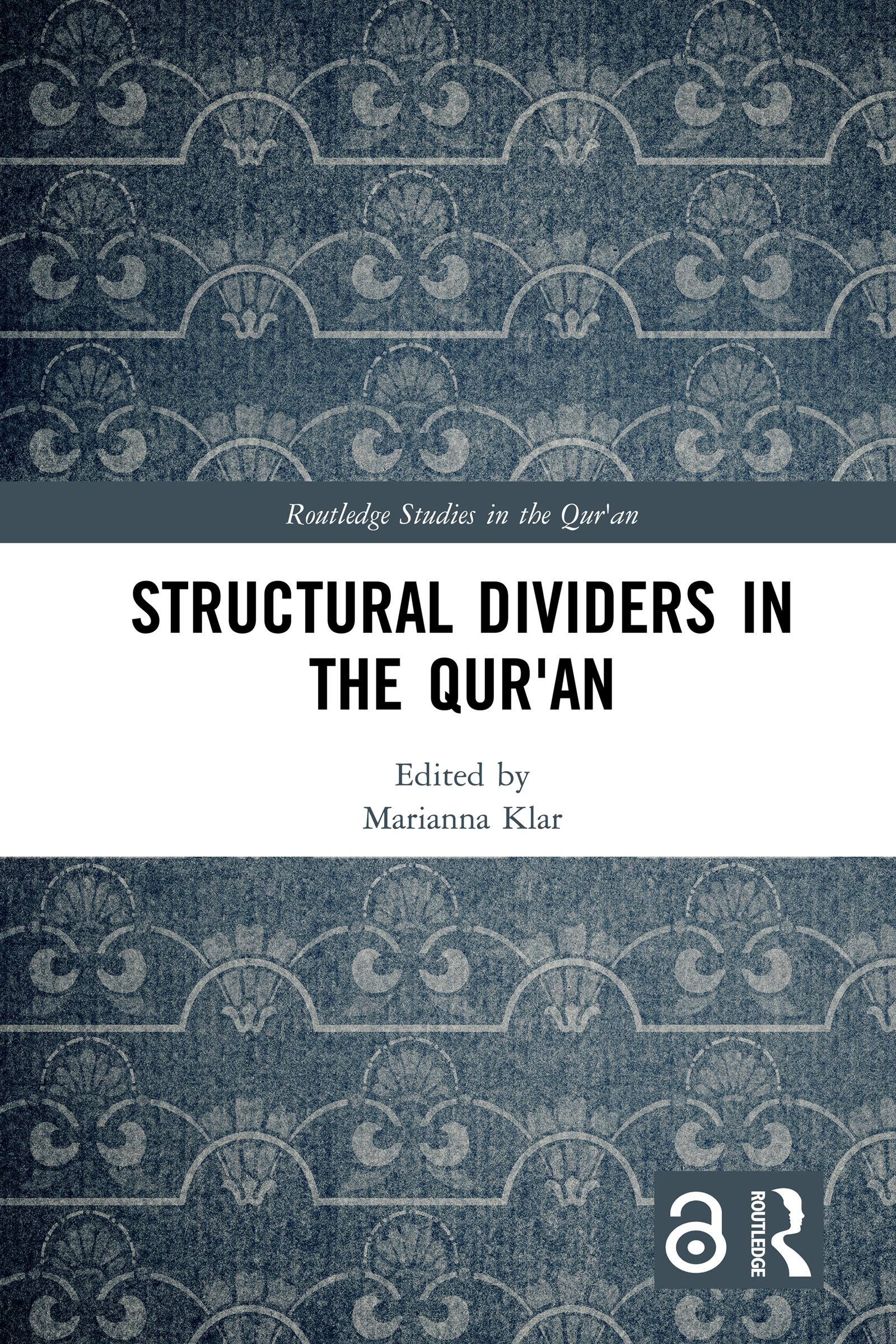
This volume showcases a wide range of contemporary approaches to the identification of literary structures within Qur’anic surahs. Recent academic studies of the Qur’an have taken an increasing interest in the concept of the surah as a unity and, with it, the division of complete surahs into consecutive sections or parts.
Part One presents a series of case studies focussing on individual Qur’anic surahs. Nevin Reda analyzes the structure of Sūrat Āl ʿImrān (Q 3), Holger Zellentin looks at competing structures within Sūrat al-ʿAlaq (Q 96), and A.H. Mathias Zahniser provides an exploration of the ring structures that open Sūrat Maryam (Q 19). Part Two then focusses on three discrete aspects of the text. Nora K. Schmid assesses the changing structural function of oaths, Marianna Klar evaluates how rhythm, rhyme, and morphological parallelisms combine in order to produce texture and cohesion, while Salwa El-Awa considers the structural impact of connectives and other discourse markers with specific reference to Sūrat Ṭāhā (Q 20). The final section of the volume juxtaposes contrasting attitudes to the discernment of diachronic seams. Devin Stewart examines surah-medial oracular oaths, Muhammad Abdel Haleem questions a range of instances where suggestions of disjointedness have historically been raised, and Nicolai Sinai explores the presence of redactional layers within Sūrat al-Nisāʾ (Q 4) and Sūrat al-Māʾidah (Q 5).
Bringing a combination of different approaches to Qur’an structure into a single book, written by well-established and emerging voices in Qur’anic studies, the work will be an invaluable resource to academics researching Islam, religious studies, and languages and literatures in general.
Chapters 3 and 6 of this book are freely available as downloadable Open Access PDFs at http://www.taylorfrancis.com under a Creative Commons [Attribution-Non Commercial-No Derivatives (CC-BY-NC-ND)] 4.0 license.
Before Memmo my notes were scattered across PDFs. Now a workspace pulls everything into one place — I see exactly what's still left to study.
Memmo's summaries are gold before exams. I don't have to re-read 800 pages two weeks before — just the important parts.
The AI chat has saved me the night before an exam more than once. I just keep asking until I get it — no waiting on a study group to reply.
The quizzes hit exactly what I need to know. Memmo tracks what I get stuck on — so I only practice what's worth it.
Flashcards with spaced repetition are magic. Memmo knows when I'm about to forget something and brings it back.
The AI podcasts are my favorite. I listen on my way to school and get a recap without sitting at a computer.

Handbok i kvalitativa metoder
281 kr

Hållbar utveckling: en introduktion för ingenjörer och andra problemlösare
334 kr

Brymans Samhällsvetenskapliga metoder
390 kr

Projektledning
491 kr

Den orättvisa hälsan: om socioekonomiska skillnader i hälsa och livslängd
326 kr

Vetenskapsteori för nybörjare
196 kr

Organizational Leadership
429 kr

På väg mot läraryrket
172 kr

Det sociala livet i skolan: Socialpsykologiska perspektiv
253 kr

Betygsättningens didaktik
151 kr

Personality
402 kr

Studying Leadership
404 kr

Managing Innovation
477 kr

Introduktion till samhällsvetenskaplig metod
347 kr

The Psychology of Sex and Gender
698 kr

Evidens och kunskap för socialt arbete
207 kr

Introduction to Leadership
605 kr