
Before Memmo my notes were scattered across PDFs. Now a workspace pulls everything into one place — I see exactly what's still left to study.
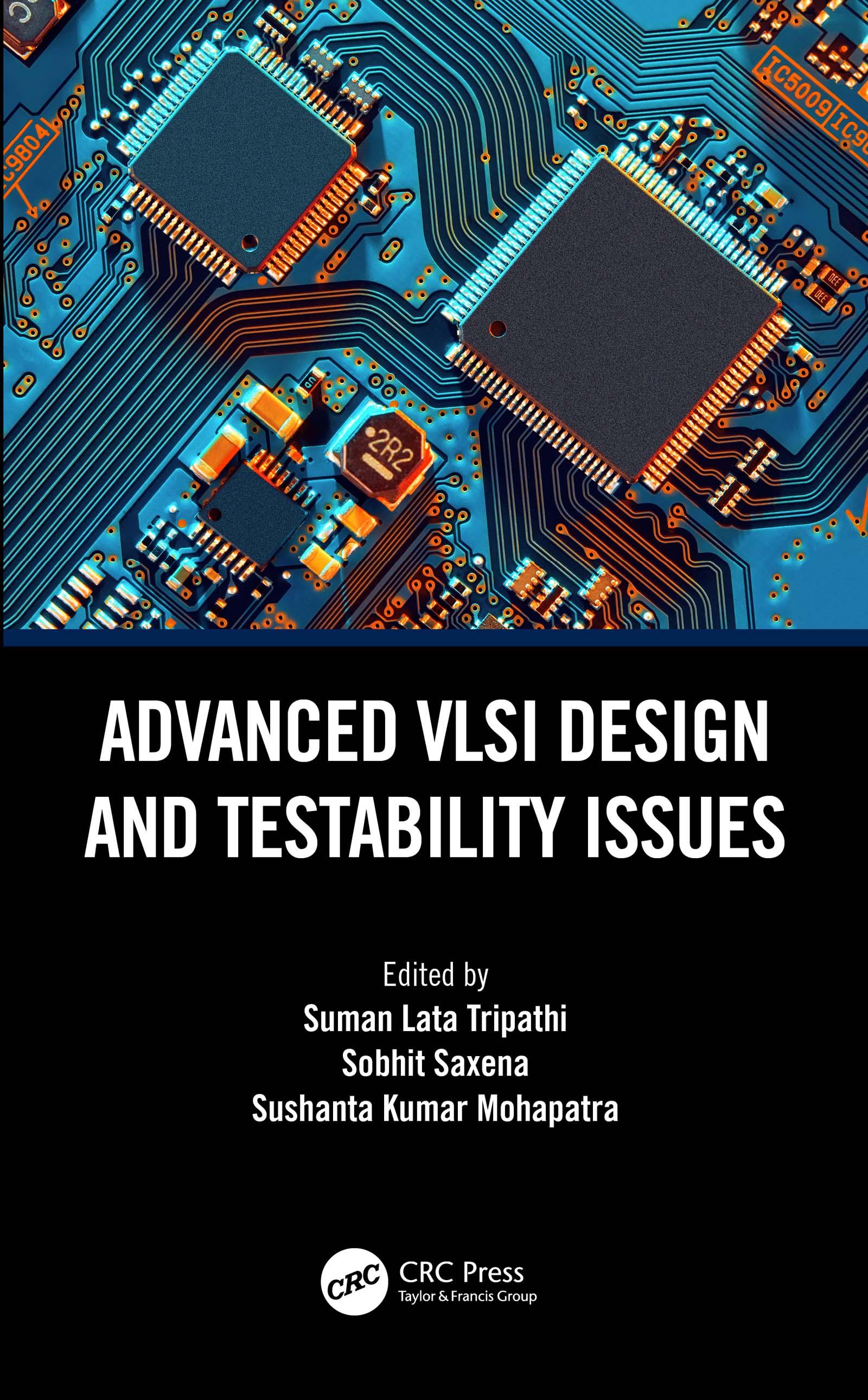
This book facilitates the VLSI-interested individuals with not only in-depth knowledge, but also the broad aspects of it by explaining its applications in different fields, including image processing and biomedical. The deep understanding of basic concepts gives you the power to develop a new application aspect, which is very well taken care of in this book by using simple language in explaining the concepts. In the VLSI world, the importance of hardware description languages cannot be ignored, as the designing of such dense and complex circuits is not possible without them. Both Verilog and VHDL languages are used here for designing. The current needs of high-performance integrated circuits (ICs) including low power devices and new emerging materials, which can play a very important role in achieving new functionalities, are the most interesting part of the book. The testing of VLSI circuits becomes more crucial than the designing of the circuits in this nanometer technology era. The role of fault simulation algorithms is very well explained, and its implementation using Verilog is the key aspect of this book.
This book is well organized into 20 chapters. Chapter 1 emphasizes on uses of FPGA on various image processing and biomedical applications. Then, the descriptions enlighten the basic understanding of digital design from the perspective of HDL in Chapters 2–5. The performance enhancement with alternate material or geometry for silicon-based FET designs is focused in Chapters 6 and 7. Chapters 8 and 9 describe the study of bimolecular interactions with biosensing FETs. Chapters 10–13 deal with advanced FET structures available in various shapes, materials such as nanowire, HFET, and their comparison in terms of device performance metrics calculation. Chapters 14–18 describe different application-specific VLSI design techniques and challenges for analog and digital circuit designs. Chapter 19 explains the VLSI testability issues with the description of simulation and its categorization into logic and fault simulation for test pattern generation using Verilog HDL. Chapter 20 deals with a secured VLSI design with hardware obfuscation by hiding the IC’s structure and function, which makes it much more difficult to reverse engineer.
Before Memmo my notes were scattered across PDFs. Now a workspace pulls everything into one place — I see exactly what's still left to study.
Memmo's summaries are gold before exams. I don't have to re-read 800 pages two weeks before — just the important parts.
The AI chat has saved me the night before an exam more than once. I just keep asking until I get it — no waiting on a study group to reply.
The quizzes hit exactly what I need to know. Memmo tracks what I get stuck on — so I only practice what's worth it.
Flashcards with spaced repetition are magic. Memmo knows when I'm about to forget something and brings it back.
The AI podcasts are my favorite. I listen on my way to school and get a recap without sitting at a computer.

Handbok i kvalitativa metoder
281 kr

Hållbar utveckling: en introduktion för ingenjörer och andra problemlösare
334 kr

Brymans Samhällsvetenskapliga metoder
390 kr

Projektledning
491 kr

Den orättvisa hälsan: om socioekonomiska skillnader i hälsa och livslängd
326 kr

Organizational Leadership
429 kr

Vetenskapsteori för nybörjare
196 kr

På väg mot läraryrket
172 kr

Det sociala livet i skolan: Socialpsykologiska perspektiv
253 kr

Betygsättningens didaktik
151 kr

Personality
402 kr

Studying Leadership
404 kr

Managing Innovation
477 kr

Introduktion till samhällsvetenskaplig metod
347 kr

The Psychology of Sex and Gender
698 kr

Evidens och kunskap för socialt arbete
207 kr

Introduction to Leadership
605 kr