
Before Memmo my notes were scattered across PDFs. Now a workspace pulls everything into one place — I see exactly what's still left to study.
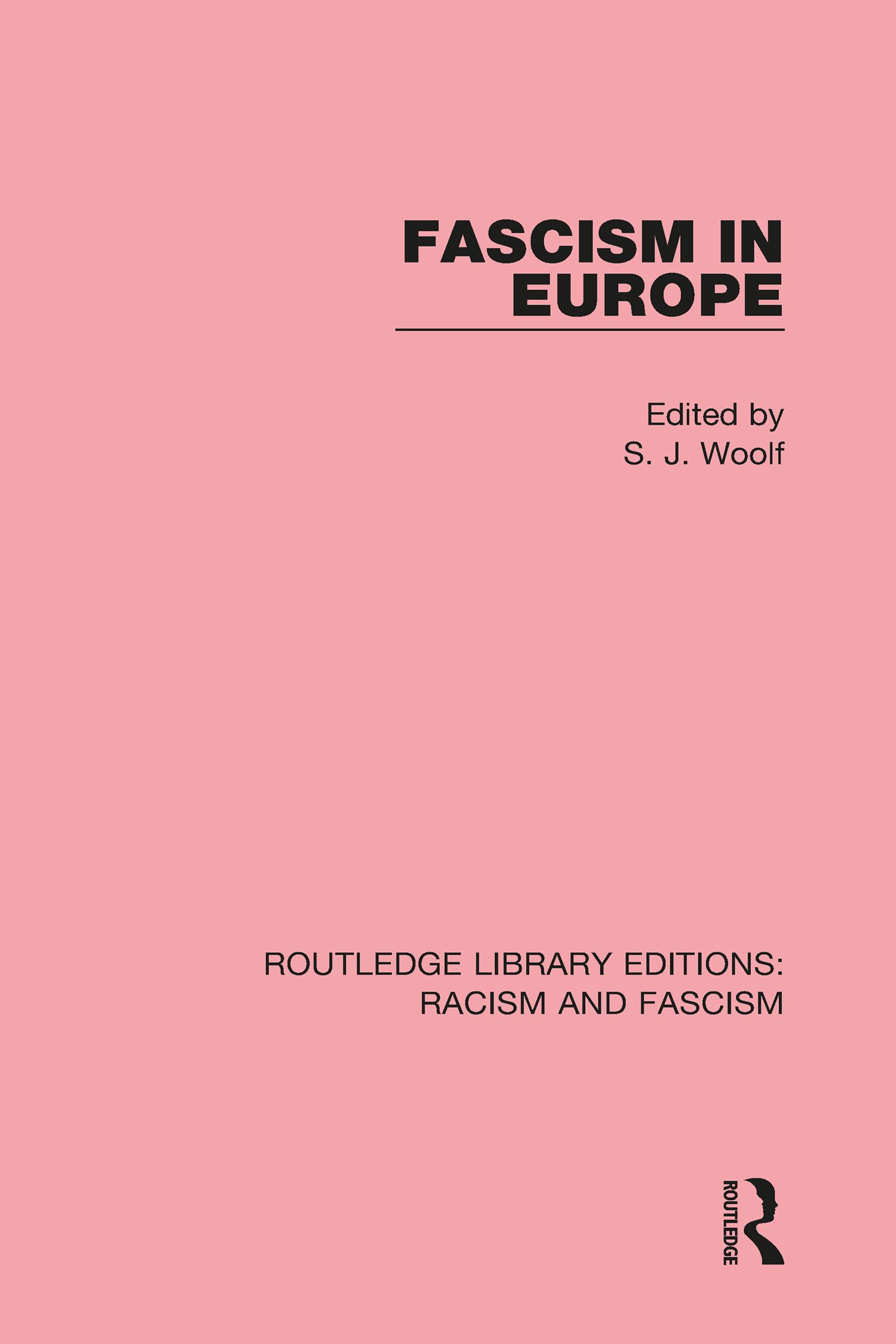
What was fascism, why did it gain support between the wars, and could it happen again? This collection of essays, published in 1981, by leading authorities on the subject, offers a comprehensive study of European fascism, with a detailed analysis of its roots, its extraordinary strength between the two world wars, and its prospects in modern Europe. The essays discuss the economic, political and social conditions out of which individual fascist movements arose, the crucial problem of why a few fascist parties succeeded but most failed. The essays on Italy, Germany and Spain examine the continuities and contradictions between the fascist movements in opposition and the fascist regimes in power. The introductory and conclusive essays are concerned with the overall problem of the historical nature of the fascist phenomenon, but all the papers address themselves directly to this theme, testing the generalizations made by social scientists against the historical experiences of individual countries. Besides Italy and Germany, which harboured the major fascist movements, the countries discussed range from those with traditional parliamentary democracies – such as England, France, Belgium and Norway – to the new states which emerged from the collapse of the central European empires, such as Austria, Hungary, Romania and Poland. Originally published in 1968 under the title European Fascism, this survey acquired a worldwide reputation for its excellent and wide-ranging account of the history, role and functions of fascism in Europe. The present edition contains six new or wholly re-written essays and three substantially revised ones.
Before Memmo my notes were scattered across PDFs. Now a workspace pulls everything into one place — I see exactly what's still left to study.
Memmo's summaries are gold before exams. I don't have to re-read 800 pages two weeks before — just the important parts.
The AI chat has saved me the night before an exam more than once. I just keep asking until I get it — no waiting on a study group to reply.
The quizzes hit exactly what I need to know. Memmo tracks what I get stuck on — so I only practice what's worth it.
Flashcards with spaced repetition are magic. Memmo knows when I'm about to forget something and brings it back.
The AI podcasts are my favorite. I listen on my way to school and get a recap without sitting at a computer.

Handbok i kvalitativa metoder
281 kr

Hållbar utveckling: en introduktion för ingenjörer och andra problemlösare
334 kr

Brymans Samhällsvetenskapliga metoder
390 kr

Projektledning
491 kr

Den orättvisa hälsan: om socioekonomiska skillnader i hälsa och livslängd
326 kr

Vetenskapsteori för nybörjare
196 kr

Organizational Leadership
429 kr

På väg mot läraryrket
172 kr

Det sociala livet i skolan: Socialpsykologiska perspektiv
253 kr

Betygsättningens didaktik
151 kr

Personality
402 kr

Studying Leadership
404 kr

Managing Innovation
477 kr

Introduktion till samhällsvetenskaplig metod
347 kr

The Psychology of Sex and Gender
698 kr

Evidens och kunskap för socialt arbete
207 kr

Introduction to Leadership
605 kr