
Before Memmo my notes were scattered across PDFs. Now a workspace pulls everything into one place — I see exactly what's still left to study.
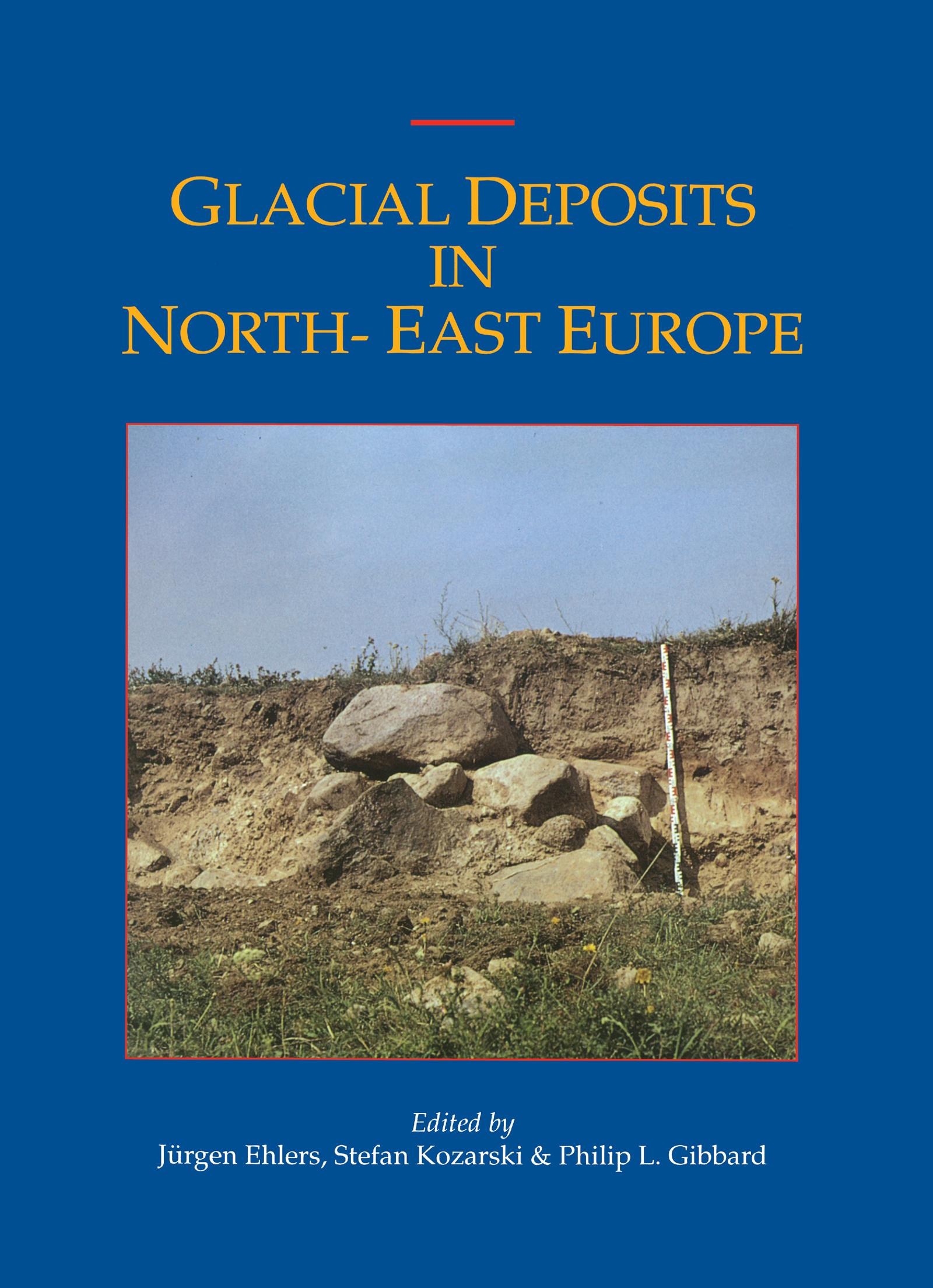
Until now no overview of the Quaternary deposits of northeastern Europe has been available. This book fills the gap. It presents the state of research on Quaternary stratigraphy and geology, with emphasis on glacial deposits, discusses the general scientific ideas and gives an overview of the methods of investigation, some of which have rarely been applied elsewhere. It has become apparent that the region covered has many environmental problems, and a proper understanding of the Quaternary deposits is a basic requirement for dealing with them. The same is true for civil engineering. In the formerly glaciated areas almost all construction sites for roads and houses will encounter glacial deposits. This volume provides an authoritative and fascinating overview for anyone planning to venture into this field.
In its 53 regional chapters the book covers Finland, Estonia, Latvia, Lithuania, Russia, Ukraine, Belarus, Poland, the Czech Republic and eastern Germany. From the text it becomes clear that not all the stratigraphical schemes are yet fully compatible or comprehensible. There can be no doubt, however, that the east was subjected to very extensive ice advances during the earlier Pleistocene. Also, in contrast to western Europe, there was a significant Early Weichselian ice advance, although not as extensive as the last, Late Weichselian event.
The book is illustrated by 421 figures and 74 colour plates (mostly photographs). There are 23 tables, a detailed index and a list of over 1000 references, providing a unique collection of northeastern European geoscience literature, much of which has so far escaped the attention of western scientists. The volume, composed of contributions by 60 scientists, completes the trilogy on glacial deposits of northern Europe. Together with its two companion volumes, the Glacial deposits in North-West Europe and the Glacial Deposits in Great Britain and Ireland, it represents an invaluable source of information for the geoscientist, the advanced student or the amateur.
Before Memmo my notes were scattered across PDFs. Now a workspace pulls everything into one place — I see exactly what's still left to study.
Memmo's summaries are gold before exams. I don't have to re-read 800 pages two weeks before — just the important parts.
The AI chat has saved me the night before an exam more than once. I just keep asking until I get it — no waiting on a study group to reply.
The quizzes hit exactly what I need to know. Memmo tracks what I get stuck on — so I only practice what's worth it.
Flashcards with spaced repetition are magic. Memmo knows when I'm about to forget something and brings it back.
The AI podcasts are my favorite. I listen on my way to school and get a recap without sitting at a computer.

Handbok i kvalitativa metoder
281 kr

Hållbar utveckling: en introduktion för ingenjörer och andra problemlösare
334 kr

Brymans Samhällsvetenskapliga metoder
390 kr

Projektledning
491 kr

Den orättvisa hälsan: om socioekonomiska skillnader i hälsa och livslängd
326 kr

Vetenskapsteori för nybörjare
196 kr

Organizational Leadership
429 kr

På väg mot läraryrket
172 kr

Det sociala livet i skolan: Socialpsykologiska perspektiv
253 kr

Betygsättningens didaktik
151 kr

Personality
402 kr

Studying Leadership
404 kr

Managing Innovation
477 kr

Introduktion till samhällsvetenskaplig metod
347 kr

The Psychology of Sex and Gender
698 kr

Evidens och kunskap för socialt arbete
207 kr

Introduction to Leadership
605 kr