
Before Memmo my notes were scattered across PDFs. Now a workspace pulls everything into one place — I see exactly what's still left to study.
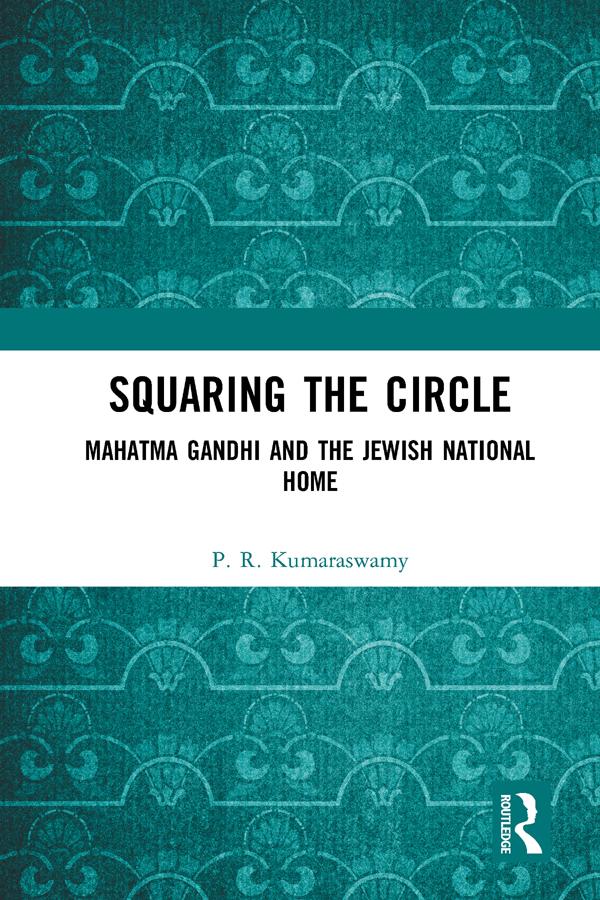
The centrality of the book is Gandhi's disposition and orientation towards the idea of Jewish homeland. When it comes to Jews, Jewish nationalism and their aspirations in Palestine, even Mahatma Gandhi was not infallible. His abiding empathy for the Jews was negated by his limited understanding of Judaism and Jewish history. His perception of the Palestine issue and his support for the Arabs was rooted in the domestic Indian context. The conventional understanding that Gandhi was ‘consistently’ opposed to Zionism and the Jewish aspirations for a national home in Palestine does not correspond with his later remarks. While demanding Jewish non-violence both against Hitler and in Palestine, Mahatma was prepared to understand, the ‘excesses’ of the Arabs who were facing ‘overwhelming odds.’ His position on the domestic situation largely influenced his stand viz-à-viz Palestine and hence his demand for Jews to abandon their collaboration with imperialism and follow the path of negotiation should be read within the Indian context. So long as India pursued a recognition-without-relations policy toward Israel, one could rest on Gandhi’s shoulders and adopt a self-righteous attitude. However, can one rely on the Gandhian paradigm to explain India’s new-found bonhomie toward Israel without sounding selective, hypocritical or both?
The primary focus of this book is the explication of political constraints and oversensitivity towards the religious minority for political gains, which shaped Gandhi's notion about the Jewish homeland. The author has conducted an empirical survey of the political, religious and strategic constraints behind Gandhi's idea of the Jewish homeland that in common parlance is seen as an ardent disapproval of Zionism by Gandhi.
Please note: This title is co-published with KW Publishers, New Delhi. Taylor & Francis does not sell or distribute the Hardback in India, Pakistan, Nepal, Bhutan, Bangladesh and Sri Lanka
Before Memmo my notes were scattered across PDFs. Now a workspace pulls everything into one place — I see exactly what's still left to study.
Memmo's summaries are gold before exams. I don't have to re-read 800 pages two weeks before — just the important parts.
The AI chat has saved me the night before an exam more than once. I just keep asking until I get it — no waiting on a study group to reply.
The quizzes hit exactly what I need to know. Memmo tracks what I get stuck on — so I only practice what's worth it.
Flashcards with spaced repetition are magic. Memmo knows when I'm about to forget something and brings it back.
The AI podcasts are my favorite. I listen on my way to school and get a recap without sitting at a computer.

Handbok i kvalitativa metoder
281 kr

Hållbar utveckling: en introduktion för ingenjörer och andra problemlösare
334 kr

Brymans Samhällsvetenskapliga metoder
390 kr

Projektledning
491 kr

Den orättvisa hälsan: om socioekonomiska skillnader i hälsa och livslängd
326 kr

Vetenskapsteori för nybörjare
196 kr

Organizational Leadership
429 kr

På väg mot läraryrket
172 kr

Det sociala livet i skolan: Socialpsykologiska perspektiv
253 kr

Betygsättningens didaktik
151 kr

Personality
402 kr

Studying Leadership
404 kr

Managing Innovation
477 kr

Introduktion till samhällsvetenskaplig metod
347 kr

The Psychology of Sex and Gender
698 kr

Evidens och kunskap för socialt arbete
207 kr

Introduction to Leadership
605 kr