
Before Memmo my notes were scattered across PDFs. Now a workspace pulls everything into one place — I see exactly what's still left to study.
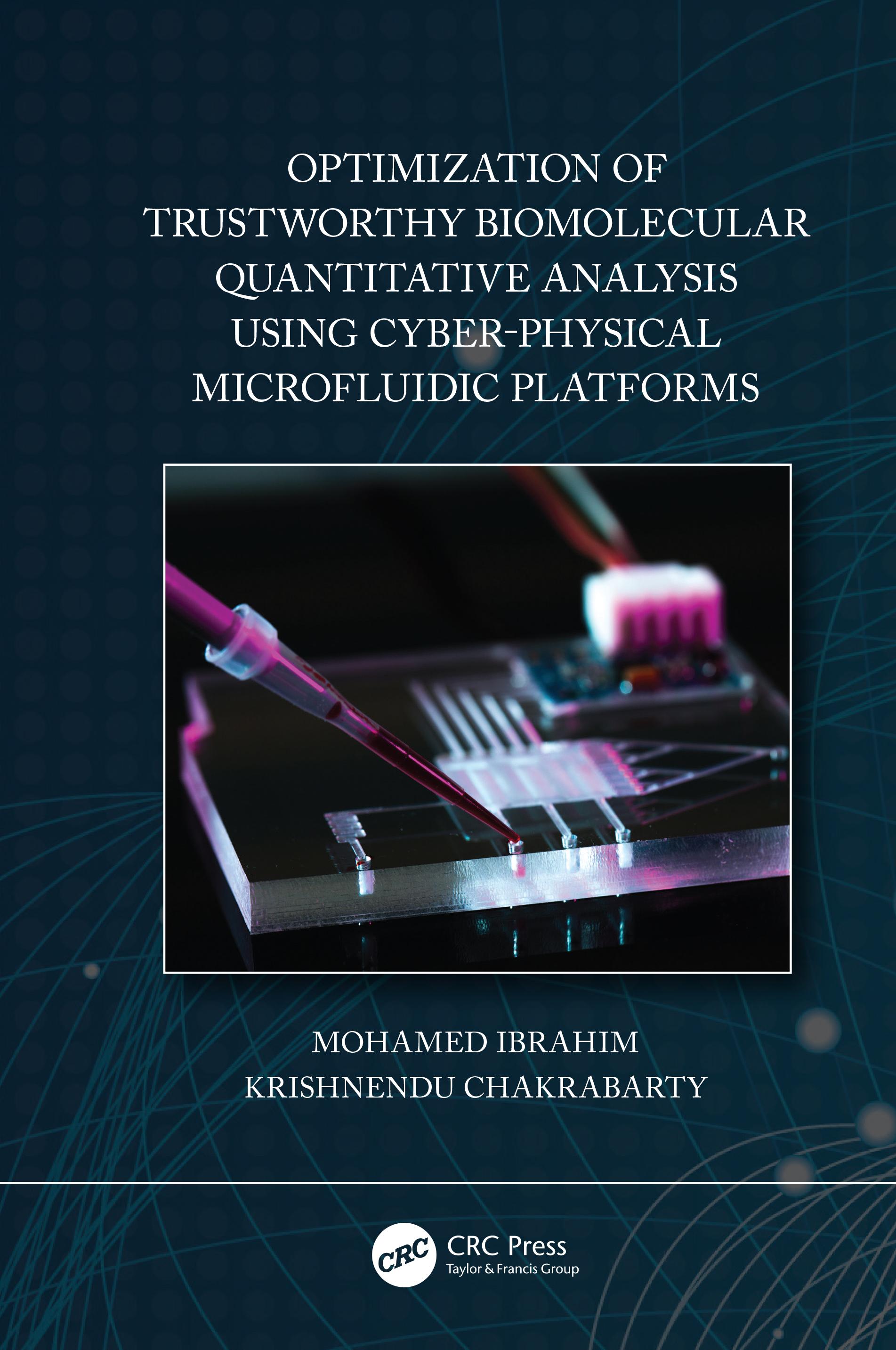
A microfluidic biochip is an engineered fluidic device that controls the flow of analytes, thereby enabling a variety of useful applications. According to recent studies, the fields that are best set to benefit from the microfluidics technology, also known as lab-on-chip technology, include forensic identification, clinical chemistry, point-of-care (PoC) diagnostics, and drug discovery. The growth in such fields has significantly amplified the impact of microfluidics technology, whose market value is forecast to grow from $4 billion in 2017 to $13.2 billion by 2023. The rapid evolution of lab-on-chip technologies opens up opportunities for new biological or chemical science areas that can be directly facilitated by sensor-based microfluidics control. For example, the digital microfluidics-based ePlex system from GenMarkDx enables automated disease diagnosis and can bring syndromic testing near patients everywhere.
However, as the applications of molecular biology grow, the adoption of microfluidics in many applications has not grown at the same pace, despite the concerted effort of microfluidic systems engineers. Recent studies suggest that state-of-the-art design techniques for microfluidics have two major drawbacks that need to be addressed appropriately: (1) current lab-on-chip systems were only optimized as auxiliary components and are only suitable for sample-limited analyses; therefore, their capabilities may not cope with the requirements of contemporary molecular biology applications; (2) the integrity of these automated lab-on-chip systems and their biochemical operations are still an open question since no protection schemes were developed against adversarial contamination or result-manipulation attacks. Optimization of Trustworthy Biomolecular Quantitative Analysis Using Cyber-Physical Microfluidic Platforms provides solutions to these challenges by introducing a new design flow based on the realistic modeling of contemporary molecular biology protocols. It also presents a microfluidic security flow that provides a high-level of confidence in the integrity of such protocols. In summary, this book creates a new research field as it bridges the technical skills gap between microfluidic systems and molecular biology protocols but it is viewed from the perspective of an electronic/systems engineer.
Before Memmo my notes were scattered across PDFs. Now a workspace pulls everything into one place — I see exactly what's still left to study.
Memmo's summaries are gold before exams. I don't have to re-read 800 pages two weeks before — just the important parts.
The AI chat has saved me the night before an exam more than once. I just keep asking until I get it — no waiting on a study group to reply.
The quizzes hit exactly what I need to know. Memmo tracks what I get stuck on — so I only practice what's worth it.
Flashcards with spaced repetition are magic. Memmo knows when I'm about to forget something and brings it back.
The AI podcasts are my favorite. I listen on my way to school and get a recap without sitting at a computer.

Handbok i kvalitativa metoder
281 kr

Hållbar utveckling: en introduktion för ingenjörer och andra problemlösare
334 kr

Brymans Samhällsvetenskapliga metoder
390 kr

Projektledning
491 kr

Den orättvisa hälsan: om socioekonomiska skillnader i hälsa och livslängd
326 kr

Organizational Leadership
429 kr

Vetenskapsteori för nybörjare
196 kr

På väg mot läraryrket
172 kr

Det sociala livet i skolan: Socialpsykologiska perspektiv
253 kr

Betygsättningens didaktik
151 kr

Personality
402 kr

Studying Leadership
404 kr

Managing Innovation
477 kr

Introduktion till samhällsvetenskaplig metod
347 kr

The Psychology of Sex and Gender
698 kr

Evidens och kunskap för socialt arbete
207 kr

Introduction to Leadership
605 kr