
Before Memmo my notes were scattered across PDFs. Now a workspace pulls everything into one place — I see exactly what's still left to study.
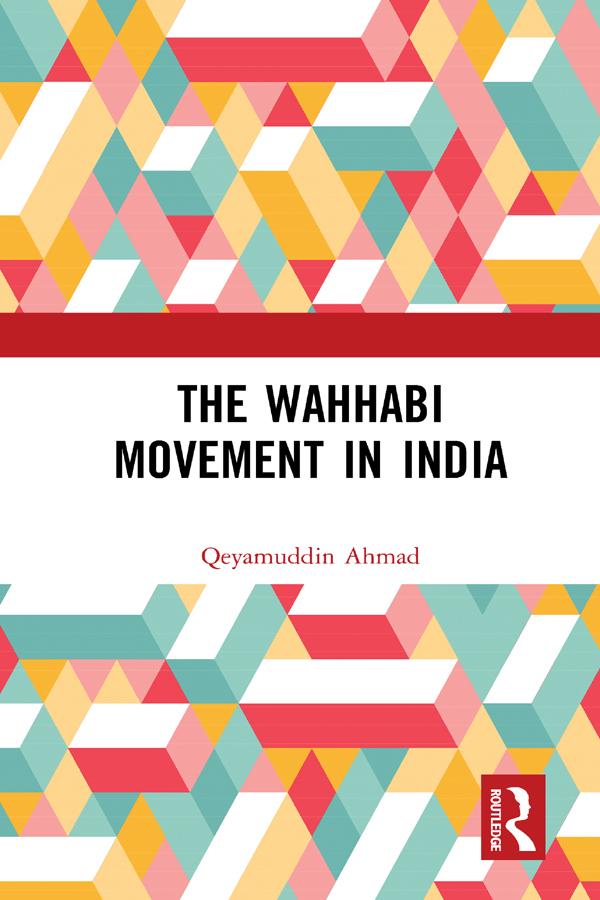
Founded by Sayyid Ahmad (1786-1831) of Rae Bareli, the Wahhabi Movement in India was a vigorous movement for socio-religious reforms in Indo-Islamic society in the nineteenth century with strong political undercurrents. It stood for a strong affirmation of Tauhid (unity of God), the efficacy of ijtihad (the right of further interpretation of the Quran and the Sunnah, or of forming a new opinion by applying analogy) and the rejection of bid'at (innovation). It remained active for half a century.
Sayyid Ahmad's writings show an awareness of the increasing British presence in the country and he regarded British India as a daru'l harb (abode of war). In 1826 he migrated and established an operational base in the independent tribal belt of the North Western Frontier area. After his death in the battle of Balakote, the Movement slackened for some time but his adherents particularly Wilayet Ali and Enayat Ali of Patna revived the work and broad-based its activities.
The climax of the Movement was reached in the Ambeyla War (1863) during which the English army suffered serious losses at the hands of the Wahhabis. This led the Government to take stern measures to suppress the Movement. Investigations were launched, the leaders were arrested and sentenced to long-term imprisonments and their properties confiscated. That broke the back of the Movement but it continued to be a potential source of trouble to the government.
The Movement does not fit in neatly in any one of the groups and categories into which the history of the early resistance to British rule has been divided by some of the writers on the subject. It cut across some of them time-wise and theme-wise. The existing studies on the subject do not offer a comprehensive profile of the Movement and fail to analyse its nature and the reasons for its failure politically.
This well researched study drawing on a vast array of contemporary records, many of them for the first time, seeks to fill this gap and presents an integrated account of the rise and growth of the Movement, its operation over the entire area and period of its existence, its impact and reasons for its failure.
Please note: This title is co-published with Manohar Publishers, New Delhi. Taylor & Francis does not sell or distribute the Hardback in India, Pakistan, Nepal, Bhutan, Bangladesh and Sri Lanka
Before Memmo my notes were scattered across PDFs. Now a workspace pulls everything into one place — I see exactly what's still left to study.
Memmo's summaries are gold before exams. I don't have to re-read 800 pages two weeks before — just the important parts.
The AI chat has saved me the night before an exam more than once. I just keep asking until I get it — no waiting on a study group to reply.
The quizzes hit exactly what I need to know. Memmo tracks what I get stuck on — so I only practice what's worth it.
Flashcards with spaced repetition are magic. Memmo knows when I'm about to forget something and brings it back.
The AI podcasts are my favorite. I listen on my way to school and get a recap without sitting at a computer.

Handbok i kvalitativa metoder
281 kr

Hållbar utveckling: en introduktion för ingenjörer och andra problemlösare
334 kr

Brymans Samhällsvetenskapliga metoder
390 kr

Projektledning
491 kr

Den orättvisa hälsan: om socioekonomiska skillnader i hälsa och livslängd
326 kr

Vetenskapsteori för nybörjare
196 kr

Organizational Leadership
429 kr

På väg mot läraryrket
172 kr

Det sociala livet i skolan: Socialpsykologiska perspektiv
253 kr

Betygsättningens didaktik
151 kr

Personality
402 kr

Studying Leadership
404 kr

Managing Innovation
477 kr

Introduktion till samhällsvetenskaplig metod
347 kr

The Psychology of Sex and Gender
698 kr

Evidens och kunskap för socialt arbete
207 kr

Introduction to Leadership
605 kr