
Before Memmo my notes were scattered across PDFs. Now a workspace pulls everything into one place — I see exactly what's still left to study.
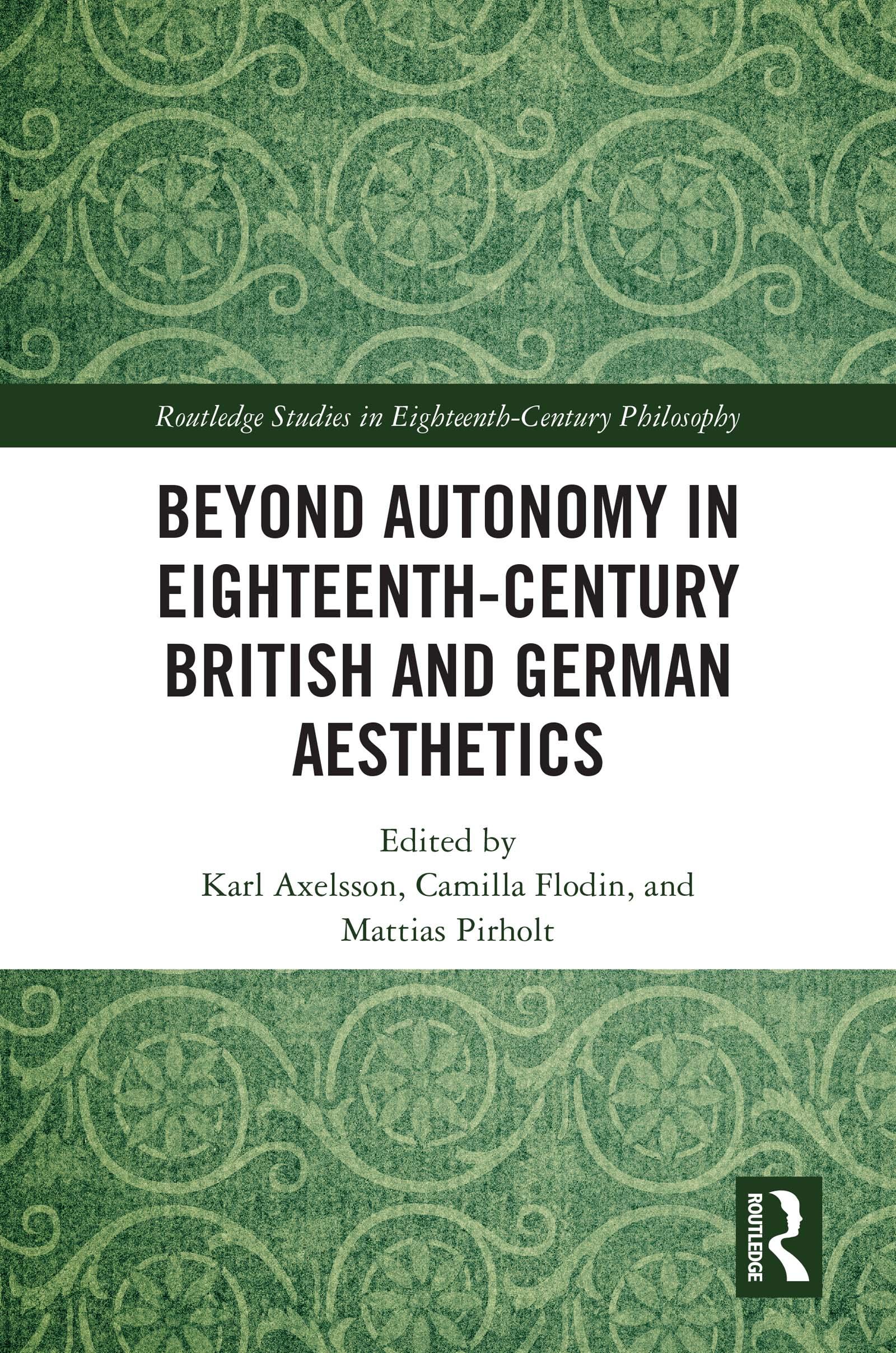
This volume re-examines traditional interpretations of the rise of modern aesthetics in eighteenth-century Britain and Germany. It provides a new account that connects aesthetic experience with morality, science, and political society. In doing so, it challenges long-standing teleological narratives that emphasize disinterestedness and the separation of aesthetics from moral, cognitive, and political interests.
The chapters are divided into three thematic parts. The chapters in Part I demonstrate the heteronomy of eighteenth-century British aesthetics. They chart the evolution of aesthetic concepts and discuss the ethical and political significance of the aesthetic theories of several key figures: namely, the third Earl of Shaftesbury, David Hume, and Adam Smith. Part II explores the ways in which eighteenth-century German, and German-oriented, thinkers examine aesthetic experience and moral concerns, and relate to the work of their British counterparts. The chapters here cover the work of Kant, Moses Mendelssohn, Alexander Gottlieb Baumgarten, and Madame de Staël. Finally, Part III explores the interrelation of science, aesthetics, and a new model of society in the work of Goethe, Johann Wilhelm Ritter, Friedrich Hölderlin, and William Hazlitt, among others.
This volume develops unique discussions of the rise of aesthetic autonomy in the eighteenth century. In bringing together well-known scholars working on British and German eighteenth-century aesthetics, philosophy, and literature, it will appeal to scholars and advanced students in a range of disciplines who are interested in this topic.
The Introduction and Chapters 2, 10, and 12 of this book are freely available as downloadable Open Access PDFs at http://www.taylorfrancis.com under a Creative Commons Attribution-Non Commercial-No Derivatives (CC-BY-NC-ND) 4.0 license.
Before Memmo my notes were scattered across PDFs. Now a workspace pulls everything into one place — I see exactly what's still left to study.
Memmo's summaries are gold before exams. I don't have to re-read 800 pages two weeks before — just the important parts.
The AI chat has saved me the night before an exam more than once. I just keep asking until I get it — no waiting on a study group to reply.
The quizzes hit exactly what I need to know. Memmo tracks what I get stuck on — so I only practice what's worth it.
Flashcards with spaced repetition are magic. Memmo knows when I'm about to forget something and brings it back.
The AI podcasts are my favorite. I listen on my way to school and get a recap without sitting at a computer.

Handbok i kvalitativa metoder
281 kr

Hållbar utveckling: en introduktion för ingenjörer och andra problemlösare
334 kr

Brymans Samhällsvetenskapliga metoder
390 kr

Projektledning
491 kr

Den orättvisa hälsan: om socioekonomiska skillnader i hälsa och livslängd
326 kr

Vetenskapsteori för nybörjare
196 kr

Organizational Leadership
429 kr

På väg mot läraryrket
172 kr

Det sociala livet i skolan: Socialpsykologiska perspektiv
253 kr

Betygsättningens didaktik
151 kr

Personality
402 kr

Studying Leadership
404 kr

Managing Innovation
477 kr

Introduktion till samhällsvetenskaplig metod
347 kr

The Psychology of Sex and Gender
698 kr

Evidens och kunskap för socialt arbete
207 kr

Introduction to Leadership
605 kr