
Before Memmo my notes were scattered across PDFs. Now a workspace pulls everything into one place — I see exactly what's still left to study.
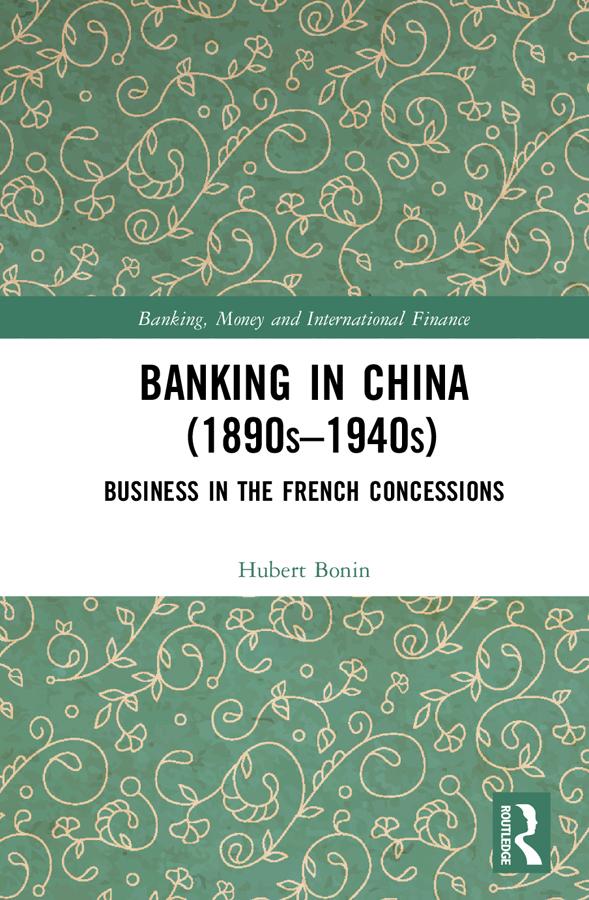
From the 1890s to the 1940s, French State and entrepreneurial companies were enticed to promote French interests, beyond mere colonial targets, for the sake of economic patriotism. Chinese concessions, not including Hong Kong, were thus inserted into geo-economic moves, and French stakeholders asserted their philosophy of competition, and displayed their means of influence and investment. In this book, the author assesses the challenges which confronted French actors in the face of powerful British imperial action overseas, all the more so because German Belgian, Japanese, and then also North-American competitors joined the fray.
The book targets three concessions: Canton/Guangzhou, Tientsin/Tianjin, and Hankeou/Wuhan because of their significance in the emergence of a modern economy in the country. The three main sections of the book explore the position of French stakeholders, mainly businessmen, merchant houses, bankers, and a few industrialists, in these three port-cities and China overall. The chapters gauge their capital of influence and networking, commercial tools, and banking skills in the face of competition, the hardships of crossing the changes in economic productive systems or clusters in the various port-cities and their areas, rich with commercial offshoots. Also, several chapters underscore the uncertainties caused by geopolitical and military events in China. For each of the three concessions, commercial and banking systems, assessments of the successes and limits of the French bankers and merchants are investigated, with the aim of evaluating the reality of French entrepreneurialism and power in the regions prospected by the offshoots of French capitalism.
The book will be an invaluable resource for academics interested in the history of banking and finance, business, entrepreneurship, colonialism and "economic patriotism" in Chinese history, in geo-economics and in connected history.
Before Memmo my notes were scattered across PDFs. Now a workspace pulls everything into one place — I see exactly what's still left to study.
Memmo's summaries are gold before exams. I don't have to re-read 800 pages two weeks before — just the important parts.
The AI chat has saved me the night before an exam more than once. I just keep asking until I get it — no waiting on a study group to reply.
The quizzes hit exactly what I need to know. Memmo tracks what I get stuck on — so I only practice what's worth it.
Flashcards with spaced repetition are magic. Memmo knows when I'm about to forget something and brings it back.
The AI podcasts are my favorite. I listen on my way to school and get a recap without sitting at a computer.

Handbok i kvalitativa metoder
281 kr

Hållbar utveckling: en introduktion för ingenjörer och andra problemlösare
334 kr

Brymans Samhällsvetenskapliga metoder
390 kr

Projektledning
491 kr

Den orättvisa hälsan: om socioekonomiska skillnader i hälsa och livslängd
326 kr

Organizational Leadership
429 kr

Vetenskapsteori för nybörjare
196 kr

På väg mot läraryrket
172 kr

Det sociala livet i skolan: Socialpsykologiska perspektiv
253 kr

Betygsättningens didaktik
151 kr

Personality
402 kr

Studying Leadership
404 kr

Managing Innovation
477 kr

Introduktion till samhällsvetenskaplig metod
347 kr

The Psychology of Sex and Gender
698 kr

Evidens och kunskap för socialt arbete
207 kr

Introduction to Leadership
605 kr