
Before Memmo my notes were scattered across PDFs. Now a workspace pulls everything into one place — I see exactly what's still left to study.
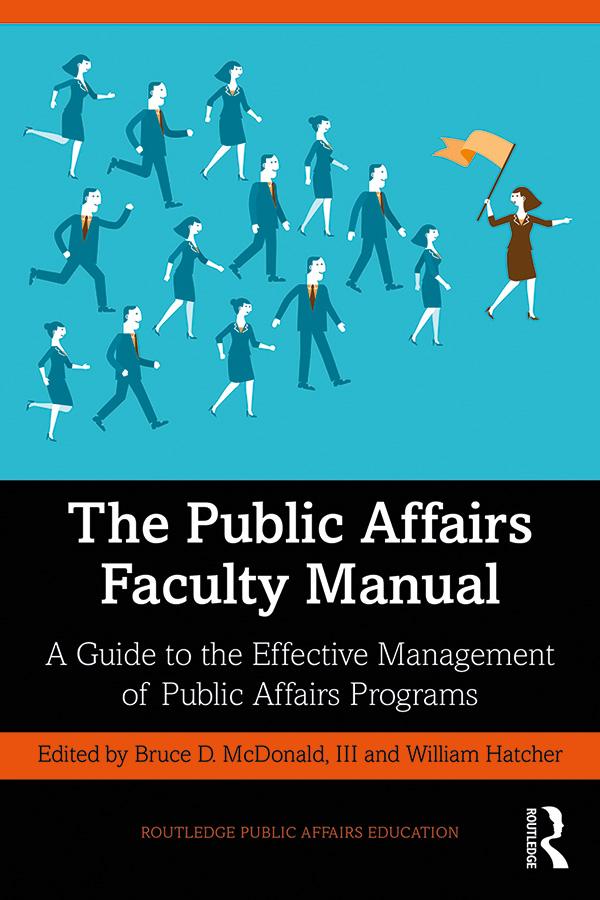
While public affairs faculty study administration and management techniques, few administrators of public affairs programs receive formal training in the nuts and bolts of academic administration. Even those faculty who come to academia after distinguished careers in managerial positions may not be ready for the very different (and difficult) environment of university administration. The Public Affairs Faculty Manual argues that public affairs as a field needs to ensure that knowledge about administration and management is applied to the running of its academic programs, and brings together major leaders in the discipline to explore key features of academic administration. Many of these leaders have served as Master of Public Administration (MPA) directors, chairs, and deans at the nation’s top public affairs programs.
Crucial issues of academic administration discussed include the basics of public affairs programs, models of governance, roles of different administrative leaders, planning and budgeting for programs, navigating the accreditation process, assessing and improving student learning, ensuring social equity and cultural competency, mentoring faculty, developing curriculum, and helping provide service and applied research to community partners. Contributors have served as MPA directors, chairs, and deans at the nation’s topic public affairs programs. Themes running throughout the book’s chapters are examined, and additional resources to help manage public affairs programs are offered. This collection of essays and the strategies within it are designed to encourage faculty to assume positions of leadership in their programs and manage those programs in an effective, efficient, and fair manner. The Public Affairs Faculty Manual is required reading for new, seasoned, and aspiring academic administrators in public administration, public policy, and nonprofit management programs, as well as schools of government.
Before Memmo my notes were scattered across PDFs. Now a workspace pulls everything into one place — I see exactly what's still left to study.
Memmo's summaries are gold before exams. I don't have to re-read 800 pages two weeks before — just the important parts.
The AI chat has saved me the night before an exam more than once. I just keep asking until I get it — no waiting on a study group to reply.
The quizzes hit exactly what I need to know. Memmo tracks what I get stuck on — so I only practice what's worth it.
Flashcards with spaced repetition are magic. Memmo knows when I'm about to forget something and brings it back.
The AI podcasts are my favorite. I listen on my way to school and get a recap without sitting at a computer.

Handbok i kvalitativa metoder
281 kr

Hållbar utveckling: en introduktion för ingenjörer och andra problemlösare
334 kr

Brymans Samhällsvetenskapliga metoder
390 kr

Projektledning
491 kr

Den orättvisa hälsan: om socioekonomiska skillnader i hälsa och livslängd
326 kr

Organizational Leadership
429 kr

Vetenskapsteori för nybörjare
196 kr

På väg mot läraryrket
172 kr

Det sociala livet i skolan: Socialpsykologiska perspektiv
253 kr

Betygsättningens didaktik
151 kr

Personality
402 kr

Studying Leadership
404 kr

Managing Innovation
477 kr

Introduktion till samhällsvetenskaplig metod
347 kr

The Psychology of Sex and Gender
698 kr

Evidens och kunskap för socialt arbete
207 kr

Introduction to Leadership
605 kr