
Before Memmo my notes were scattered across PDFs. Now a workspace pulls everything into one place — I see exactly what's still left to study.
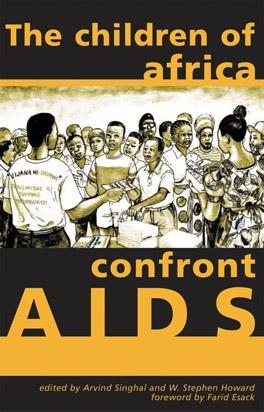
AIDS is now the leading cause of death in Africa, where twenty-eight million people are HIV-positive, and where some twelve million children have lost one or both parents to AIDS. In Zimbabwe, 45 percent of children under the age of five are HIV-positive, and the epidemic has shortened life expectancy by twenty-two years. A fifteen-year-old in Botswana or South Africa has a one-in-two chance of dying of AIDS. AIDS deaths are so widespread in sub-Saharan Africa that small children now play a new game called “Funerals.”
The Children of Africa Confront AIDS depicts the reality of how African children deal with the AIDS epidemic, and how the discourse of their vulnerability affects acts of coping and courage. A project of the Institute for the African Child at Ohio University, The Children of Africa Confront AIDS cuts across disciplines and issues to focus on the world’s most marginalized population group, the children of Africa.
Editors Arvind Singhal and Stephen Howard join conversations between humanitarian and political activists and academics, asking, “What shall we do?” Such discourse occurs in African contexts ranging from a social science classroom in Botswana to youth groups in Kenya and Ghana. The authors describe HIV/AIDS in its macro contexts of vulnerable children and the continent’s democratization movements and also in its national contexts of civil conflict, rural poverty, youth organizations, and agencies working on the ground.
Singhal, Howard, and other contributors draw on compelling personal experience in descriptions of HIV/AIDS interventions for children in difficult circumstances and present thoughtful insights into data gathered from surveys and observations concerning this terrible epidemic.
Before Memmo my notes were scattered across PDFs. Now a workspace pulls everything into one place — I see exactly what's still left to study.
Memmo's summaries are gold before exams. I don't have to re-read 800 pages two weeks before — just the important parts.
The AI chat has saved me the night before an exam more than once. I just keep asking until I get it — no waiting on a study group to reply.
The quizzes hit exactly what I need to know. Memmo tracks what I get stuck on — so I only practice what's worth it.
Flashcards with spaced repetition are magic. Memmo knows when I'm about to forget something and brings it back.
The AI podcasts are my favorite. I listen on my way to school and get a recap without sitting at a computer.

Handbok i kvalitativa metoder
281 kr

Hållbar utveckling: en introduktion för ingenjörer och andra problemlösare
334 kr

Brymans Samhällsvetenskapliga metoder
390 kr

Projektledning
491 kr

Den orättvisa hälsan: om socioekonomiska skillnader i hälsa och livslängd
326 kr

Vetenskapsteori för nybörjare
196 kr

Organizational Leadership
429 kr

På väg mot läraryrket
172 kr

Det sociala livet i skolan: Socialpsykologiska perspektiv
253 kr

Betygsättningens didaktik
151 kr

Personality
402 kr

Studying Leadership
404 kr

Managing Innovation
477 kr

Introduktion till samhällsvetenskaplig metod
347 kr

The Psychology of Sex and Gender
698 kr

Evidens och kunskap för socialt arbete
207 kr

Introduction to Leadership
605 kr