
Before Memmo my notes were scattered across PDFs. Now a workspace pulls everything into one place — I see exactly what's still left to study.
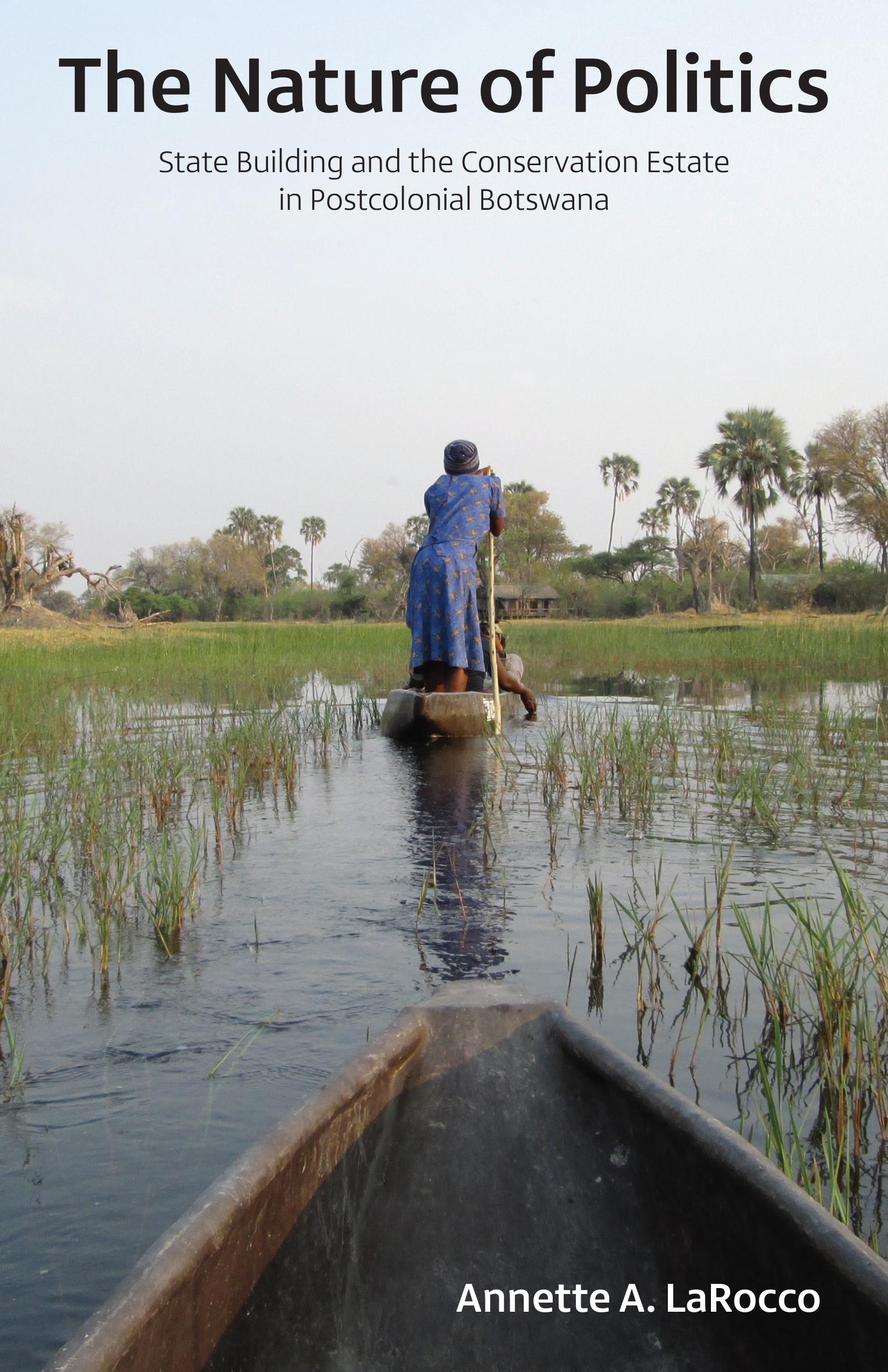
This case study of Botswana focuses on the state-building qualities of biodiversity conservation in southern Africa. Drawing on extensive fieldwork, Annette A. LaRocco argues that discourses and practices related to biodiversity conservation are essential to state building in the postcolonial era. These discourses and practices invoke the ways the state exerts authority over people, places, and resources; enacts and remakes territorial control; crafts notions of ideal citizenship and identity; and structures economic relationships at the local, national, and global levels.
The book’s key innovation is its conceptualization of the “conservation estate,” a term most often used as an apolitical descriptor denoting land set aside for the purpose of conservation. LaRocco argues that this description is inadequate and proposes a novel and much-needed alternative definition that is tied to its political elements. The components of conservation—control over land, policing of human behavior, and structuring of the authority that allows or disallows certain subjectivities—render conservation a political phenomenon that can be analyzed separately from considerations of “nature” or “wildlife.” In doing so, it addresses a gap in the scholarship of rural African politics, which focuses overwhelmingly on productive agrarian dynamics and often fails to recognize that land nonuse can be as politically significant and wide reaching as land use.
Botswana is an ideal empirical case study upon which to base these theoretical claims. With 39 percent of its land set aside for conservation, Botswana is home to large populations of wildlife, particularly charismatic megafauna, such as the largest herd of elephants on the continent. Utilizing more than two hundred interviews, participant observation, and document analysis, this book examines a series of conservation policies and their reception by people living on the conservation estate. These phenomena include securitized antipoaching enforcement, a national hunting ban (2014–19), restrictions on using wildlife products, forced evictions from conservation areas, limitations on mobility and freedom of movement, the political economy of Botswana’s wildlife tourism industry, and the conservation of globally important charismatic megafauna species.
Before Memmo my notes were scattered across PDFs. Now a workspace pulls everything into one place — I see exactly what's still left to study.
Memmo's summaries are gold before exams. I don't have to re-read 800 pages two weeks before — just the important parts.
The AI chat has saved me the night before an exam more than once. I just keep asking until I get it — no waiting on a study group to reply.
The quizzes hit exactly what I need to know. Memmo tracks what I get stuck on — so I only practice what's worth it.
Flashcards with spaced repetition are magic. Memmo knows when I'm about to forget something and brings it back.
The AI podcasts are my favorite. I listen on my way to school and get a recap without sitting at a computer.

Handbok i kvalitativa metoder
281 kr

Hållbar utveckling: en introduktion för ingenjörer och andra problemlösare
334 kr

Brymans Samhällsvetenskapliga metoder
390 kr

Projektledning
491 kr

Den orättvisa hälsan: om socioekonomiska skillnader i hälsa och livslängd
326 kr

Vetenskapsteori för nybörjare
196 kr

Organizational Leadership
429 kr

På väg mot läraryrket
172 kr

Det sociala livet i skolan: Socialpsykologiska perspektiv
253 kr

Betygsättningens didaktik
151 kr

Personality
402 kr

Studying Leadership
404 kr

Managing Innovation
477 kr

Introduktion till samhällsvetenskaplig metod
347 kr

The Psychology of Sex and Gender
698 kr

Evidens och kunskap för socialt arbete
207 kr

Introduction to Leadership
605 kr