
Before Memmo my notes were scattered across PDFs. Now a workspace pulls everything into one place — I see exactly what's still left to study.
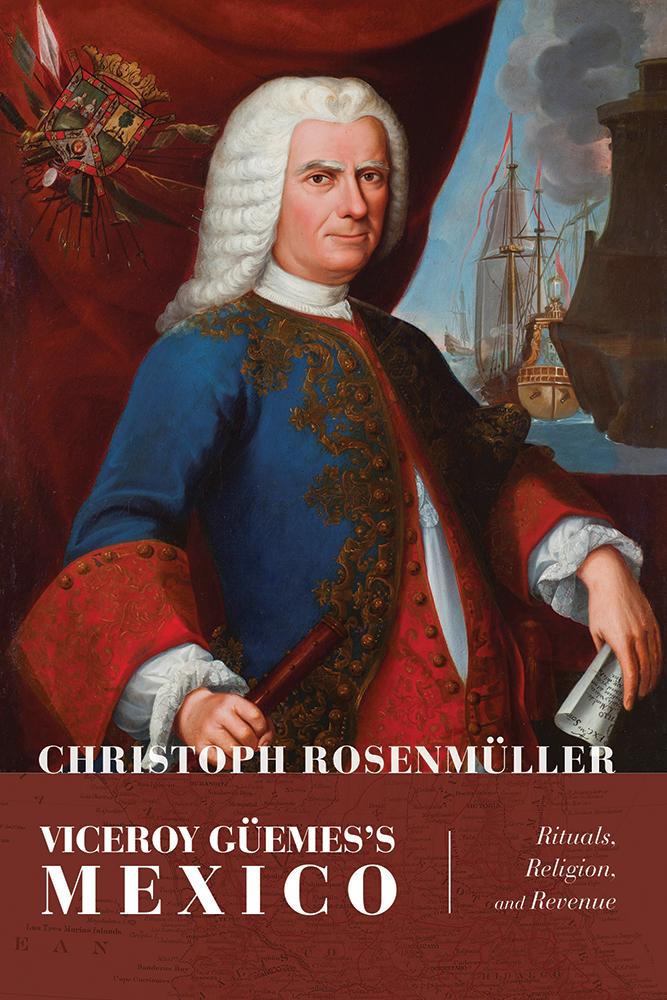
Viceroy Güemes’s Mexico: Rituals, Religion, and Revenue examines the career of Juan Francisco Güemes y Horcasitas, viceroy of New Spain from 1746 to 1755. It provides the best account yet of how the colonial reform process most commonly known as the Bourbon Reforms did not commence with the arrival of José de Gálvez, the visitador general to New Spain appointed in 1765. Rather, Güemes, ennobled as the conde de Revillagigedo in 1749, pushed through substantial reforms in the late 1740s and early 1750s, most notably the secularization of the doctrinas (turning parishes administering to Natives over to diocesan priests) and the state takeover of the administration of the alcabala tax in Mexico City. Both measures served to strengthen royal authority and increase fiscal revenues, the twin goals historians have long identified as central to the Bourbon reform project. Güemes also managed to implement these reforms without stirring up the storm of protest that attended the Gálvez visita. The book thus recasts how historians view eighteenth-century colonial reform in New Spain and the Spanish empire generally.
Christoph Rosenmüller’s study of Güemes is the first in English-language scholarship that draws on significant research in a family archive. Using these rarely consulted sources allows for a deeper understanding of daily life and politics. Whereas most scholars have relied on the official communications in the great archives to emphasize tightly choreographed rituals, for instance, Rosenmüller’s work shows that much interaction in the viceregal palace was rather informal—a fact that scholars have overlooked. The sources throw light on meeting and greeting people, ongoing squabbles over hierarchy and ceremony, walks on the Alameda square, the role of the vicereine and their children, and working hours in the offices. Such insights are drawn from a rare family archive harboring a trove of personal communications. The resulting book paints a vivid portrait of a society undergoing change earlier than many historians have believed.
Before Memmo my notes were scattered across PDFs. Now a workspace pulls everything into one place — I see exactly what's still left to study.
Memmo's summaries are gold before exams. I don't have to re-read 800 pages two weeks before — just the important parts.
The AI chat has saved me the night before an exam more than once. I just keep asking until I get it — no waiting on a study group to reply.
The quizzes hit exactly what I need to know. Memmo tracks what I get stuck on — so I only practice what's worth it.
Flashcards with spaced repetition are magic. Memmo knows when I'm about to forget something and brings it back.
The AI podcasts are my favorite. I listen on my way to school and get a recap without sitting at a computer.

Handbok i kvalitativa metoder
281 kr

Hållbar utveckling: en introduktion för ingenjörer och andra problemlösare
334 kr

Brymans Samhällsvetenskapliga metoder
390 kr

Projektledning
491 kr

Den orättvisa hälsan: om socioekonomiska skillnader i hälsa och livslängd
326 kr

Vetenskapsteori för nybörjare
196 kr

Organizational Leadership
429 kr

På väg mot läraryrket
172 kr

Det sociala livet i skolan: Socialpsykologiska perspektiv
253 kr

Betygsättningens didaktik
151 kr

Personality
402 kr

Studying Leadership
404 kr

Managing Innovation
477 kr

Introduktion till samhällsvetenskaplig metod
347 kr

The Psychology of Sex and Gender
698 kr

Evidens och kunskap för socialt arbete
207 kr

Introduction to Leadership
605 kr