
Before Memmo my notes were scattered across PDFs. Now a workspace pulls everything into one place — I see exactly what's still left to study.
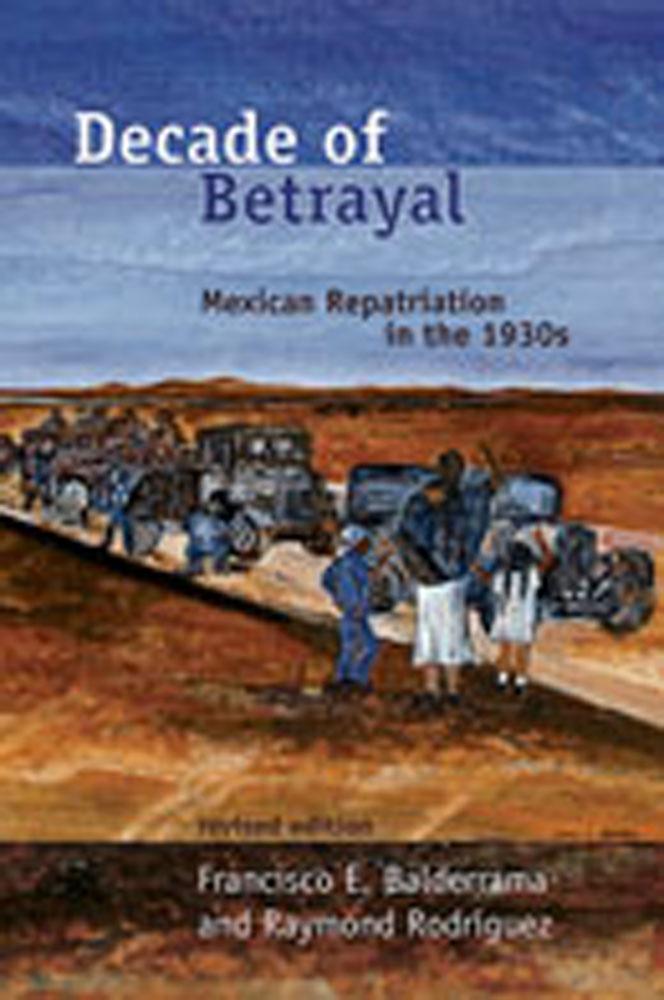
During the Great Depression, a sense of total despair plagued the United States. Americans sought a convenient scapegoat and found it in the Mexican community. Laws forbidding employment of Mexicans were accompanied by the hue and cry to "get rid of the Mexicans!" The hysteria led pandemic repatriation drives and one million Mexicans and their children were illegally shipped to Mexico.
Despite their horrific treatment and traumatic experiences, the American born children never gave up hope of returning to the United States. Upon attaining legal age, they badgered their parents to let them return home. Repatriation survivors who came back worked diligently to get their lives back together. Due to their sense of shame, few of them ever told their children about their tragic ordeal. Decade of Betrayal recounts the injustice and suffering endured by the Mexican community during the 1930s. It focuses on the experiences of individuals forced to undergo the tragic ordeal of betrayal, deprivation, and adjustment. This revised edition also addresses the inclusion of the event in the educational curriculum, the issuance of a formal apology, and the question of fiscal remuneration.
"Francisco Balderrama and Raymond Rodríguez, the authors of Decade of Betrayal, the first expansive study of Mexican repatriation with perspectives from both sides of the border, claim that 1 million people of Mexican descent were driven from the United States during the 1930s due to raids, scare tactics, deportation, repatriation and public pressure. Of that conservative estimate, approximately 60 percent of those leaving were legal American citizens. Mexicans comprised nearly half of all those deported during the decade, although they made up less than 1 percent of the country's population. 'Americans, reeling from the economic disorientation of the depression, sought a convenient scapegoat' Balderrama and Rodríguez wrote. 'They found it in the Mexican community.'"--American History
Before Memmo my notes were scattered across PDFs. Now a workspace pulls everything into one place — I see exactly what's still left to study.
Memmo's summaries are gold before exams. I don't have to re-read 800 pages two weeks before — just the important parts.
The AI chat has saved me the night before an exam more than once. I just keep asking until I get it — no waiting on a study group to reply.
The quizzes hit exactly what I need to know. Memmo tracks what I get stuck on — so I only practice what's worth it.
Flashcards with spaced repetition are magic. Memmo knows when I'm about to forget something and brings it back.
The AI podcasts are my favorite. I listen on my way to school and get a recap without sitting at a computer.

Handbok i kvalitativa metoder
281 kr

Hållbar utveckling: en introduktion för ingenjörer och andra problemlösare
334 kr

Brymans Samhällsvetenskapliga metoder
390 kr

Projektledning
491 kr

Den orättvisa hälsan: om socioekonomiska skillnader i hälsa och livslängd
326 kr

Vetenskapsteori för nybörjare
196 kr

Organizational Leadership
429 kr

På väg mot läraryrket
172 kr

Det sociala livet i skolan: Socialpsykologiska perspektiv
253 kr

Betygsättningens didaktik
151 kr

Personality
402 kr

Studying Leadership
404 kr

Managing Innovation
477 kr

Introduktion till samhällsvetenskaplig metod
347 kr

The Psychology of Sex and Gender
698 kr

Evidens och kunskap för socialt arbete
207 kr

Introduction to Leadership
605 kr