
Before Memmo my notes were scattered across PDFs. Now a workspace pulls everything into one place — I see exactly what's still left to study.
Finalist, 2022 Big Other Book Award for Nonfiction
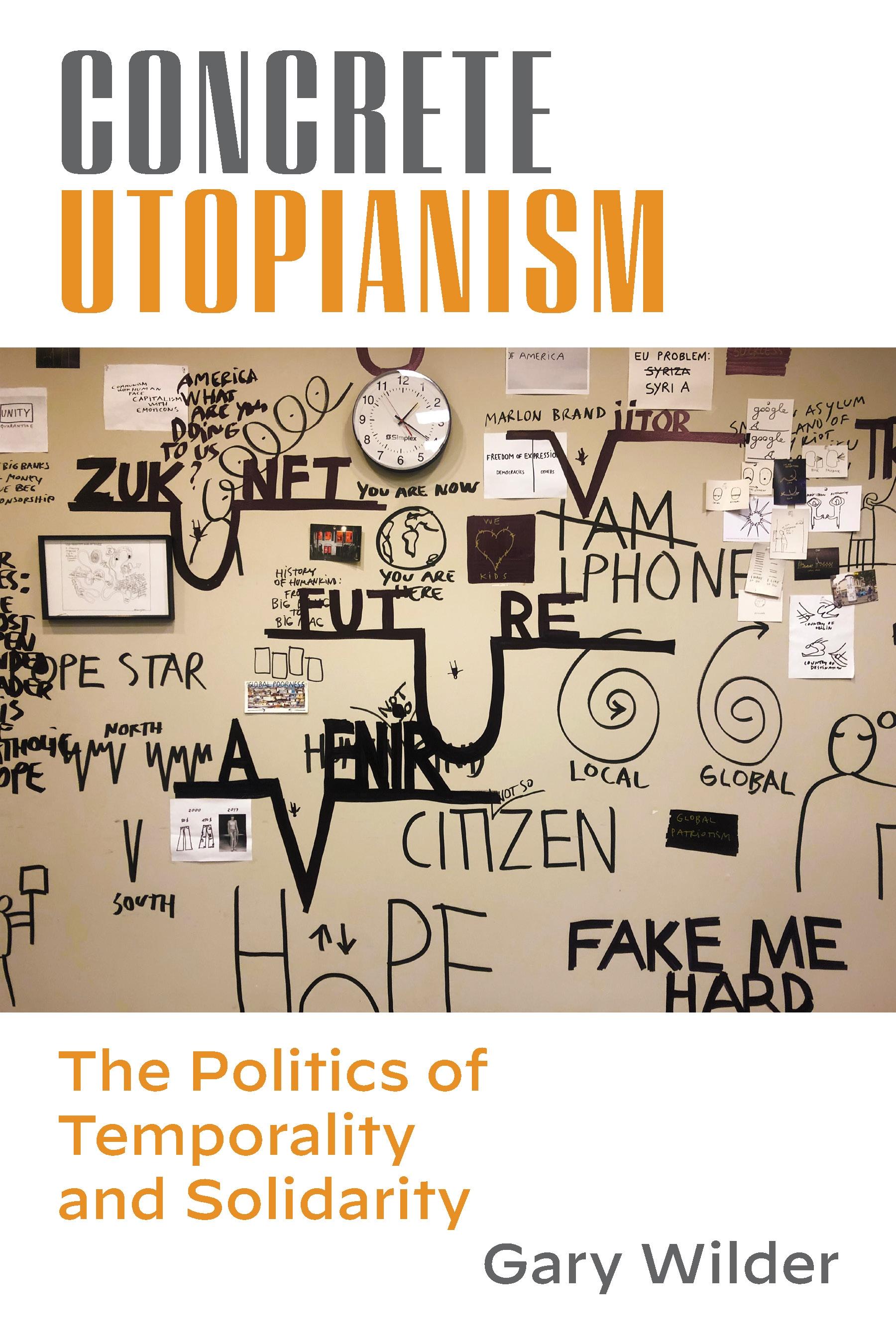
Never before has it been more important for Left thinking to champion expansive visions for societal transformation. Yet influential currents of critical theory have lost sight of this political imperative. Provincial notions of places, periods, and subjects obstruct our capacity to invent new alignments and envision a world we wish to see. Political imagination is misread as optimism. Utopianism is conflated with idealism. Revolutionary traditions of non-liberal universalism and non-bourgeois humanism are rendered illegible. Negative critique becomes an end in itself. Pessimism is mistaken for radicalism and political fatalism risks winning the day.
In this book, Gary Wilder insists that we place solidarity and temporality at the center of our political thinking. He develops a critique of Left realism, Left culturalism, and Left pessimism from the standpoint of heterodox Marxism and Black radicalism. These traditions offer precious resources to relate cultural singularity and translocal solidarity, political autonomy and worldwide interdependence. They develop modes of immanent critique and forms of poetic knowledge to envision alternative futures that may already dwell within our world: traces of past ways of being, knowing, and relating that persist within an untimely present; or charged residues of unrealized possibilities that were the focus of an earlier generation’s dreams and struggles; or opportunities for dialectical reversals embedded in the contradictory tendencies of the given order.
Concrete Utopianism makes a bold case for embracing what Wilder calls a politics of the possible-impossible. Attentive to the non-identical character of places, periods, and subjects, insisting that axes of political alignment and contestation are neither self-evident nor unchanging, reworking Lenin’s call to “transform the imperial war into a civil war,” he invites Left thinkers see beyond inherited distinctions between here and there, now and then, us and them. Guided by the spirit of Marx’s call for revolutionaries to draw their poetry from a future they cannot fathom yet must nevertheless invent, he calls for practices of anticipation that envision and enact, call for and call forth, seemingly impossible ways of being together. He elaborates a critical orientation that emphasizes the dialectical relations between aesthetics and politics, political imagination and transformative practice, concrete interventions and revolutionary restructuring, past dreams and possible worlds, means of struggle and its ultimate aims. This orientation requires nonrealist epistemologies that do not mistake immediate appearances with the really real. Such epistemologies would allow critics to recognize uncanny and untimely aspects of social life, whether oppressive or potentially emancipatory. They may help actors to render the world subversively uncanny and untimely. They may clear pathways for the kind of critical internationalism and concrete utopianism that Left politics cannot afford to ignore.
Before Memmo my notes were scattered across PDFs. Now a workspace pulls everything into one place — I see exactly what's still left to study.
Memmo's summaries are gold before exams. I don't have to re-read 800 pages two weeks before — just the important parts.
The AI chat has saved me the night before an exam more than once. I just keep asking until I get it — no waiting on a study group to reply.
The quizzes hit exactly what I need to know. Memmo tracks what I get stuck on — so I only practice what's worth it.
Flashcards with spaced repetition are magic. Memmo knows when I'm about to forget something and brings it back.
The AI podcasts are my favorite. I listen on my way to school and get a recap without sitting at a computer.

Handbok i kvalitativa metoder
281 kr

Hållbar utveckling: en introduktion för ingenjörer och andra problemlösare
334 kr

Brymans Samhällsvetenskapliga metoder
390 kr

Projektledning
491 kr

Den orättvisa hälsan: om socioekonomiska skillnader i hälsa och livslängd
326 kr

Organizational Leadership
429 kr

Vetenskapsteori för nybörjare
196 kr

På väg mot läraryrket
172 kr

Det sociala livet i skolan: Socialpsykologiska perspektiv
253 kr

Betygsättningens didaktik
151 kr

Personality
402 kr

Studying Leadership
404 kr

Managing Innovation
477 kr

Introduktion till samhällsvetenskaplig metod
347 kr

The Psychology of Sex and Gender
698 kr

Evidens och kunskap för socialt arbete
207 kr

Introduction to Leadership
605 kr