
Before Memmo my notes were scattered across PDFs. Now a workspace pulls everything into one place — I see exactly what's still left to study.
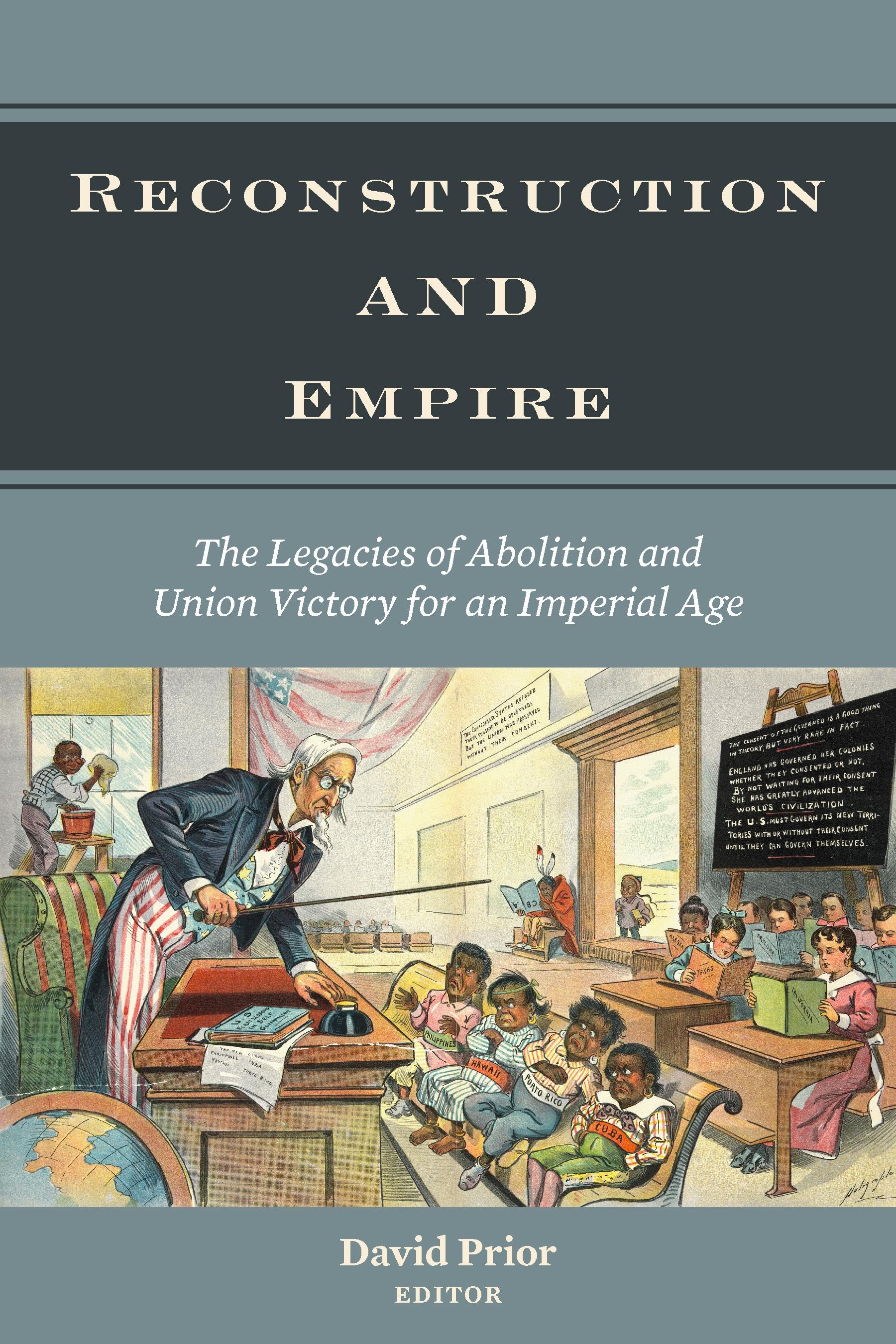
This volume examines the historical connections between the United States’ Reconstruction and the country’s emergence as a geopolitical power a few decades later. It shows how the processes at work during the postbellum decade variously foreshadowed, inhibited, and conditioned the development of the United States as an overseas empire and regional hegemon. In doing so, it links the diverse topics of abolition, diplomacy, Jim Crow, humanitarianism, and imperialism.
In 1935, the great African American intellectual W. E. B. Du Bois argued in his Black Reconstruction in America that these two historical moments were intimately related. In particular, Du Bois averred that the nation’s betrayal of the South’s fledgling interracial democracy in the 1870s put reactionaries in charge of a country on the verge of global power, with world-historical implications. Working with the same chronological and geographical parameters, the contributors here take up targeted case studies, tracing the biographical, ideological, and thematic linkages that stretch across the postbellum and imperial moments. With an Introduction, eleven chapters, and an Afterword, this volume offers multiple perspectives based on original primary source research. The resulting composite picture points to a host of countervailing continuities and changes. The contributors examine topics as diverse as diplomatic relations with Spain, the changing views of radical abolitionists, African American missionaries in the Caribbean, and the ambiguities of turn-of-the century political cartoons.
Collectively, the volume unsettles familiar assumptions about how we should understand the late nineteenth-century United States, conventionally framed as the Gilded Age and Progressive Era. It also advances transnational approaches to understanding America’s Reconstruction and the search for the ideological currents shaping American power abroad.
Before Memmo my notes were scattered across PDFs. Now a workspace pulls everything into one place — I see exactly what's still left to study.
Memmo's summaries are gold before exams. I don't have to re-read 800 pages two weeks before — just the important parts.
The AI chat has saved me the night before an exam more than once. I just keep asking until I get it — no waiting on a study group to reply.
The quizzes hit exactly what I need to know. Memmo tracks what I get stuck on — so I only practice what's worth it.
Flashcards with spaced repetition are magic. Memmo knows when I'm about to forget something and brings it back.
The AI podcasts are my favorite. I listen on my way to school and get a recap without sitting at a computer.

Handbok i kvalitativa metoder
281 kr

Hållbar utveckling: en introduktion för ingenjörer och andra problemlösare
334 kr

Brymans Samhällsvetenskapliga metoder
390 kr

Projektledning
491 kr

Den orättvisa hälsan: om socioekonomiska skillnader i hälsa och livslängd
326 kr

Vetenskapsteori för nybörjare
196 kr

Organizational Leadership
429 kr

På väg mot läraryrket
172 kr

Det sociala livet i skolan: Socialpsykologiska perspektiv
253 kr

Betygsättningens didaktik
151 kr

Personality
402 kr

Studying Leadership
404 kr

Managing Innovation
477 kr

Introduktion till samhällsvetenskaplig metod
347 kr

The Psychology of Sex and Gender
698 kr

Evidens och kunskap för socialt arbete
207 kr

Introduction to Leadership
605 kr