
Before Memmo my notes were scattered across PDFs. Now a workspace pulls everything into one place — I see exactly what's still left to study.
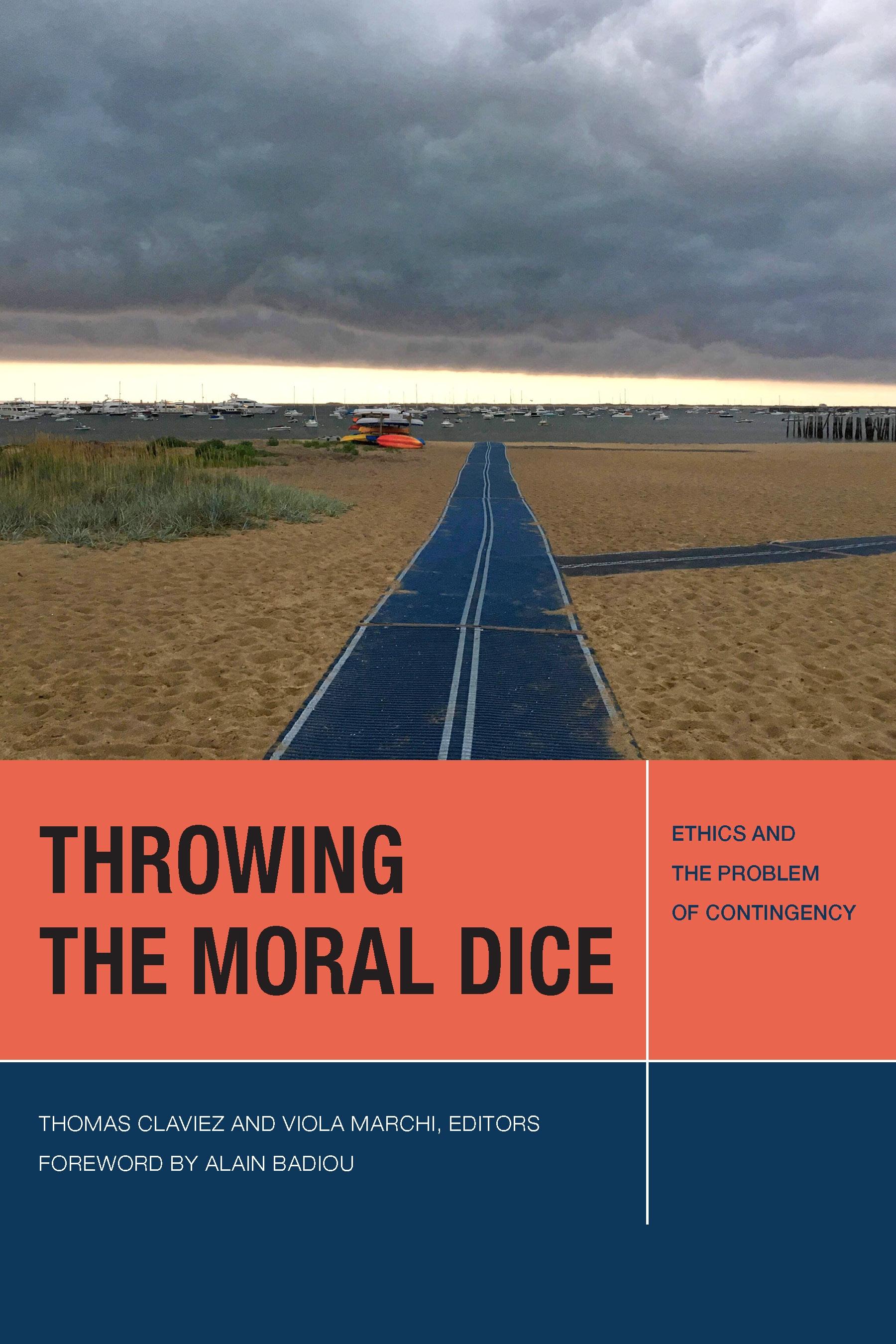
More than a purely philosophical problem, straddling the ambivalent terrain between necessity and impossibility, contingency has become the very horizon of everyday life. Often used as a synonym for the precariousness of working conditions under neoliberalism, for the unknown threats posed by terrorism, or for the uncertain future of the planet itself, contingency needs to be calculated and controlled in the name of the protection of life.
The overcoming of contingency is not only called upon to justify questionable mechanisms of political control; it serves as a central legitimating factor for Enlightenment itself. In this volume, nine major philosophers and theorists address a range of questions around contingency and moral philosophy. How can we rethink contingency in its creative aspects, outside the dominant rhetoric of risk and dangerous exposure? What is the status of contingency—as the unnecessary and law-defying—in or for ethics? What would an alternative “ethics of contingency”—one that does not simply attempt to sublate it out of existence—look like?
The volume tackles the problem contingency has always posed to both ethical theory and dialectics: that of difference itself, in the difficult mediation between the particular and the universal, same and other, the contingent singularity of the event and the necessary generality of the norms and laws.
From deconstruction to feminism to ecological thought, some of today’s most influential thinkers reshape many of the most debated concepts in moral philosophy: difference, agency, community, and life itself.
Contributors: Étienne Balibar, Rosi Braidotti, Thomas Claviez, Drucilla Cornell, Hans Ulrich Gumbrecht, Viola Marchi, Michael Naas, Cary Wolfe, Slavoj Žižek
Before Memmo my notes were scattered across PDFs. Now a workspace pulls everything into one place — I see exactly what's still left to study.
Memmo's summaries are gold before exams. I don't have to re-read 800 pages two weeks before — just the important parts.
The AI chat has saved me the night before an exam more than once. I just keep asking until I get it — no waiting on a study group to reply.
The quizzes hit exactly what I need to know. Memmo tracks what I get stuck on — so I only practice what's worth it.
Flashcards with spaced repetition are magic. Memmo knows when I'm about to forget something and brings it back.
The AI podcasts are my favorite. I listen on my way to school and get a recap without sitting at a computer.

Handbok i kvalitativa metoder
281 kr

Hållbar utveckling: en introduktion för ingenjörer och andra problemlösare
334 kr

Brymans Samhällsvetenskapliga metoder
390 kr

Projektledning
491 kr

Den orättvisa hälsan: om socioekonomiska skillnader i hälsa och livslängd
326 kr

Organizational Leadership
429 kr

Vetenskapsteori för nybörjare
196 kr

På väg mot läraryrket
172 kr

Det sociala livet i skolan: Socialpsykologiska perspektiv
253 kr

Betygsättningens didaktik
151 kr

Personality
402 kr

Studying Leadership
404 kr

Managing Innovation
477 kr

Introduktion till samhällsvetenskaplig metod
347 kr

The Psychology of Sex and Gender
698 kr

Evidens och kunskap för socialt arbete
207 kr

Introduction to Leadership
605 kr