
Before Memmo my notes were scattered across PDFs. Now a workspace pulls everything into one place — I see exactly what's still left to study.
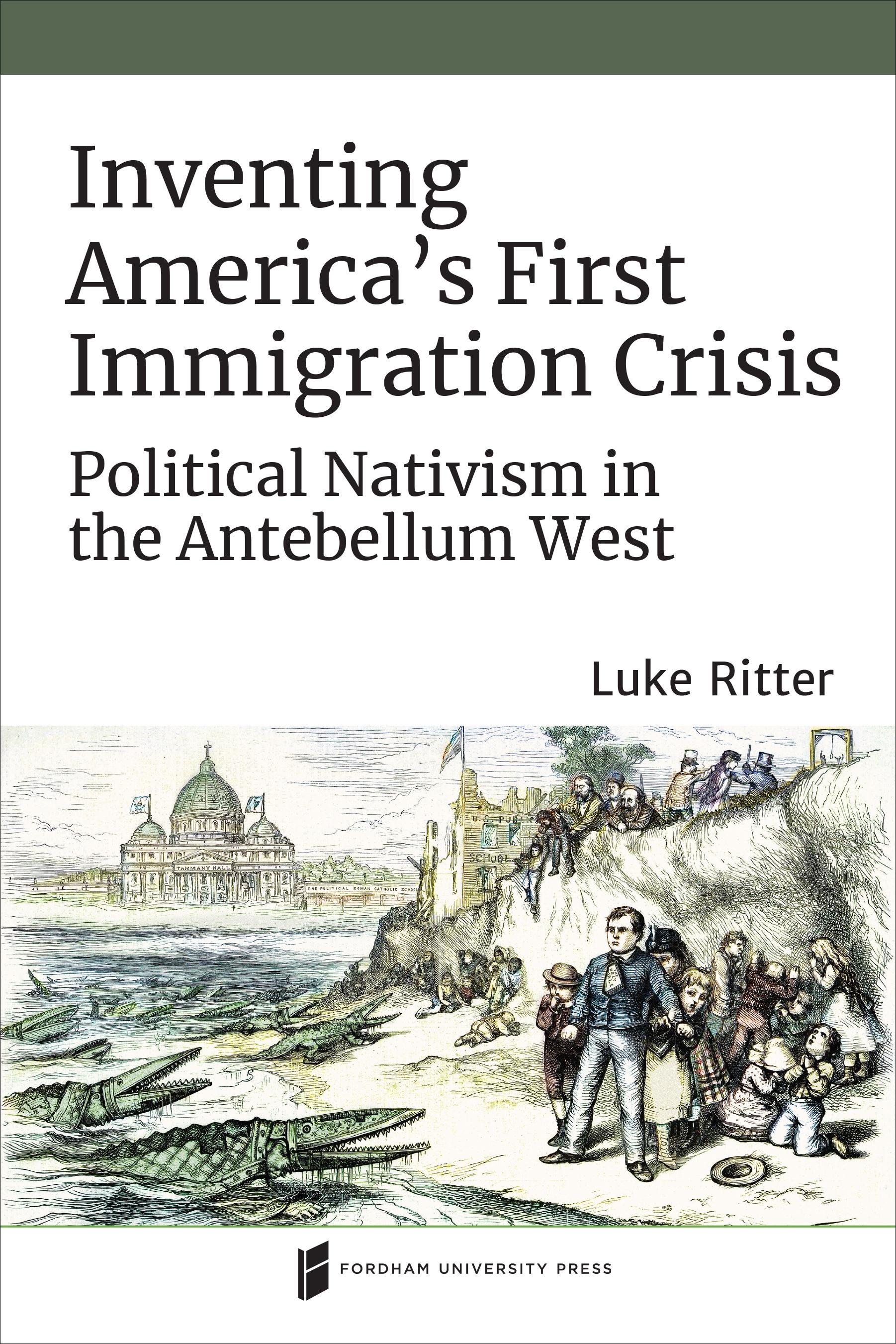
Why have Americans expressed concern about immigration at some times but not at others? In pursuit of an answer, this book examines America’s first nativist movement, which responded to the rapid influx of 4.2 million immigrants between 1840 and 1860 and culminated in the dramatic rise of the National American Party. As previous studies have focused on the coasts, historians have not yet completely explained why westerners joined the ranks of the National American, or “Know Nothing,” Party or why the nation’s bloodiest anti-immigrant riots erupted in western cities—namely Chicago, Cincinnati, Louisville, and St. Louis. In focusing on the antebellum West, Inventing America’s First Immigration Crisis illuminates the cultural, economic, and political issues that originally motivated American nativism and explains how it ultimately shaped the political relationship between church and state.
In six detailed chapters, Ritter explains how unprecedented immigration from Europe and rapid westward expansion re-ignited fears of Catholicism as a corrosive force. He presents new research on the inner sanctums of the secretive Order of Know-Nothings and provides original data on immigration, crime, and poverty in the urban West. Ritter argues that the country’s first bout of political nativism actually renewed Americans’ commitment to church–state separation. Native-born Americans compelled Catholics and immigrants, who might have otherwise shared an affinity for monarchism, to accept American-style democracy. Catholics and immigrants forced Americans to adopt a more inclusive definition of religious freedom.
This study offers valuable insight into the history of nativism in U.S. politics and sheds light on present-day concerns about immigration, particularly the role of anti-Islamic appeals in recent elections.
Before Memmo my notes were scattered across PDFs. Now a workspace pulls everything into one place — I see exactly what's still left to study.
Memmo's summaries are gold before exams. I don't have to re-read 800 pages two weeks before — just the important parts.
The AI chat has saved me the night before an exam more than once. I just keep asking until I get it — no waiting on a study group to reply.
The quizzes hit exactly what I need to know. Memmo tracks what I get stuck on — so I only practice what's worth it.
Flashcards with spaced repetition are magic. Memmo knows when I'm about to forget something and brings it back.
The AI podcasts are my favorite. I listen on my way to school and get a recap without sitting at a computer.

Handbok i kvalitativa metoder
281 kr

Hållbar utveckling: en introduktion för ingenjörer och andra problemlösare
334 kr

Brymans Samhällsvetenskapliga metoder
390 kr

Projektledning
491 kr

Den orättvisa hälsan: om socioekonomiska skillnader i hälsa och livslängd
326 kr

Vetenskapsteori för nybörjare
196 kr

Organizational Leadership
429 kr

På väg mot läraryrket
172 kr

Det sociala livet i skolan: Socialpsykologiska perspektiv
253 kr

Betygsättningens didaktik
151 kr

Personality
402 kr

Studying Leadership
404 kr

Managing Innovation
477 kr

Introduktion till samhällsvetenskaplig metod
347 kr

The Psychology of Sex and Gender
698 kr

Evidens och kunskap för socialt arbete
207 kr

Introduction to Leadership
605 kr