
Before Memmo my notes were scattered across PDFs. Now a workspace pulls everything into one place — I see exactly what's still left to study.
Audubon Park’s journey from farmland to cityscape
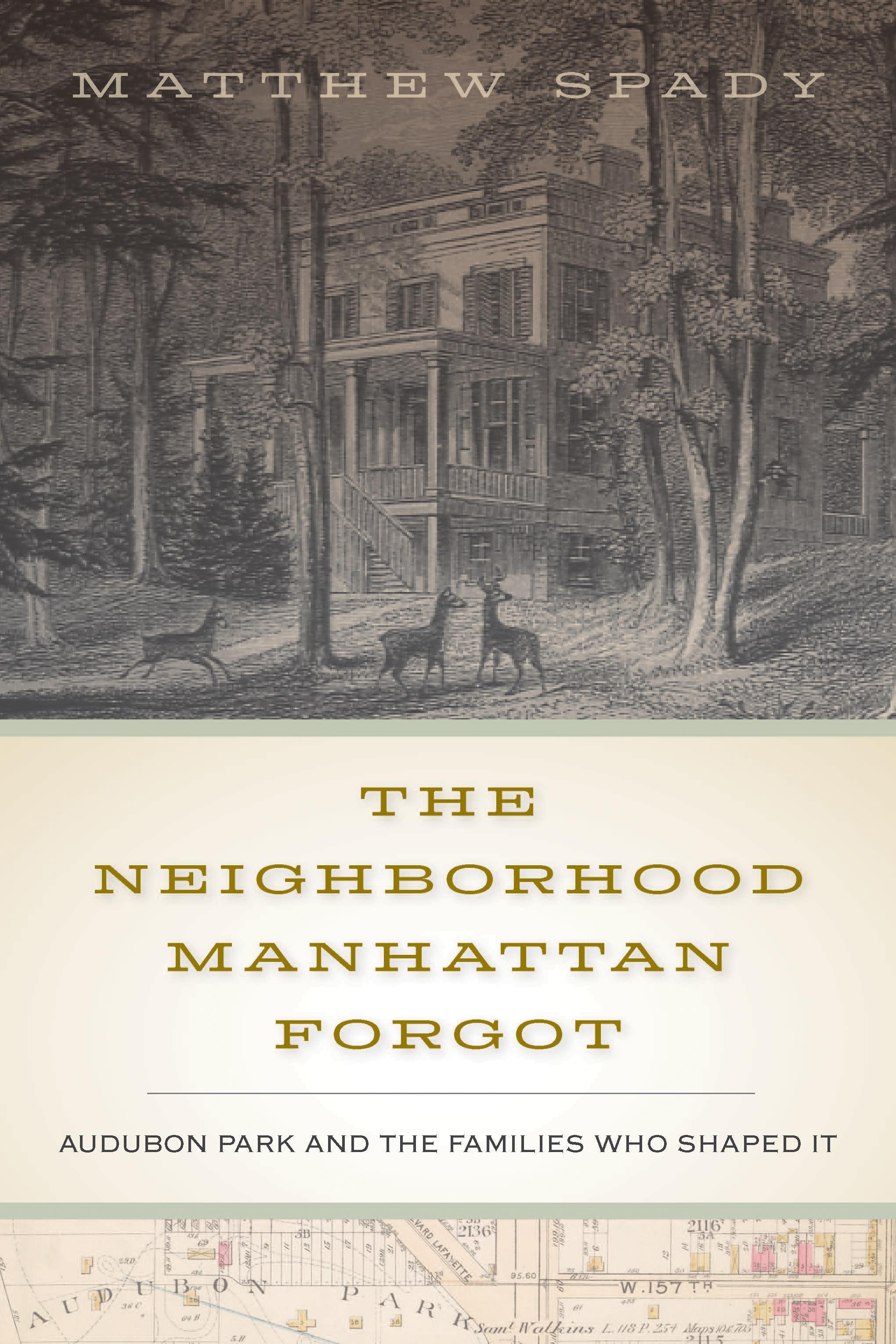
The study of Audubon Park’s origins, maturation, and disappearance is at root the study of a rural society evolving into an urban community, an examination of the relationship between people and the land they inhabit. When John James Audubon bought fourteen acres of northern Manhattan farmland in 1841, he set in motion a chain of events that moved forward inexorably to the streetscape that emerged seven decades later. The story of how that happened makes up the pages of The Neighborhood Manhattan Forgot: Audubon Park and the Families Who Shaped It.
This fully illustrated history peels back the many layers of a rural society evolving into an urban community, enlivened by the people who propelled it forward: property owners, tenants, laborers, and servants. The Neighborhood Manhattan Forgot tells the intricate tale of how individual choices in the face of family dysfunction, economic crises, technological developments, and the myriad daily occurrences that elicit personal reflection and change of course pushed Audubon Park forward to the cityscape that distinguishes the neighborhood today.
A longtime evangelist for Manhattan’s Audubon Park neighborhood, author Matthew Spady delves deep into the lives of the two families most responsible over time for the anomalous arrangement of today’s streetscape: the Audubons and the Grinnells. Buoyed by his extensive research, Spady reveals the darker truth behind John James Audubon (1785–1851), a towering patriarch who consumed the lives of his family members in pursuit of his own goals. He then narrates how fifty years after Audubon’s death, George Bird Grinnell (1849–1938) and his siblings found themselves the owners of extensive property that was not yielding sufficient income to pay taxes, insurance, and maintenance. Like the Audubons, they planned an exit strategy for controlled change that would have an unexpected ending.
Beginning with the Audubons’ return to America in 1839, The Neighborhood Manhattan Forgot follows the many twists and turns of the area’s path from forest to city, ending in the twenty-first century with the Audubon name re-purposed in today’s historic district, a multiethnic, multi-racial urban neighborhood far removed from the homogeneous, Eurocentric Audubon Park suburb.
Before Memmo my notes were scattered across PDFs. Now a workspace pulls everything into one place — I see exactly what's still left to study.
Memmo's summaries are gold before exams. I don't have to re-read 800 pages two weeks before — just the important parts.
The AI chat has saved me the night before an exam more than once. I just keep asking until I get it — no waiting on a study group to reply.
The quizzes hit exactly what I need to know. Memmo tracks what I get stuck on — so I only practice what's worth it.
Flashcards with spaced repetition are magic. Memmo knows when I'm about to forget something and brings it back.
The AI podcasts are my favorite. I listen on my way to school and get a recap without sitting at a computer.

Handbok i kvalitativa metoder
281 kr

Hållbar utveckling: en introduktion för ingenjörer och andra problemlösare
334 kr

Brymans Samhällsvetenskapliga metoder
390 kr

Projektledning
491 kr

Den orättvisa hälsan: om socioekonomiska skillnader i hälsa och livslängd
326 kr

Vetenskapsteori för nybörjare
196 kr

Organizational Leadership
429 kr

På väg mot läraryrket
172 kr

Det sociala livet i skolan: Socialpsykologiska perspektiv
253 kr

Betygsättningens didaktik
151 kr

Personality
402 kr

Studying Leadership
404 kr

Managing Innovation
477 kr

Introduktion till samhällsvetenskaplig metod
347 kr

The Psychology of Sex and Gender
698 kr

Evidens och kunskap för socialt arbete
207 kr

Introduction to Leadership
605 kr