
Before Memmo my notes were scattered across PDFs. Now a workspace pulls everything into one place — I see exactly what's still left to study.
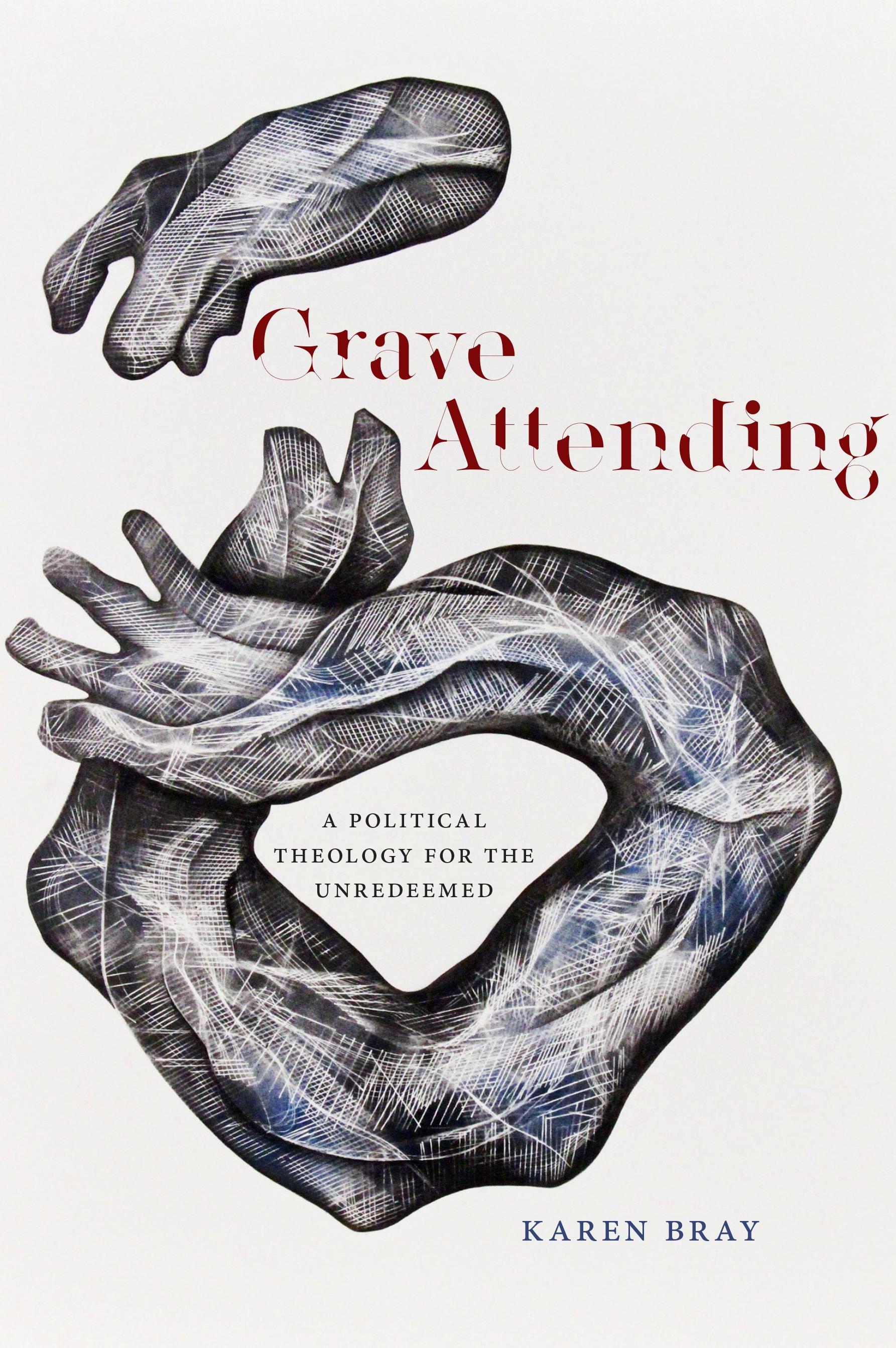
“This is a book about what it would mean to be a bit moody in the midst of being theological and political. Its framing assumption is that neoliberal economics relies on narratives in which not being in the right mood means a cursed existence.” So begins Grave Attending: A Political Theology for the Unredeemed, which mounts a challenge to neoliberal narratives of redemption. Mapping the contemporary state of political theology, Karen Bray brings it to bear upon secularism, Marxist thought, affect theory, queer temporality, and other critical modes as a way to refuse separating one’s personal mood from the political or philosophical. Introducing the concept of bipolar time, she offers a critique of neoliberal temporality by countering capitalist priorities of efficiency through the experiences of mania and depression. And it is here Bray makes her crucial critical turn, one that values the power of those who are unredeemed in the eyes of liberal democracy—those too slow, too mad, too depressed to be of productive worth—suggesting forms of utopia in the poetics of crip theory and ordinary habit. Through performances of what she calls grave attending—being brought down by the gravity of what is and listening to the ghosts of what might have been—Bray asks readers to choose collective care over individual overcoming.
Grave Attending brings critical questions of embodiment, history, and power to the fields of political theology, radical theology, secular theology, and the continental philosophy of religion. Scholars interested in addressing the lack of intersectional engagement within these fields will find this work invaluable. As the forces of neoliberalism demand we be productive, efficient, happy, and flexible in order to be deemed worthy subjects, Grave Attending offers another model for living politically, emotionally, and theologically. Instead of submitting to such a market-driven concept of salvation, this book insists that we remain mad, moody, and unredeemed. Drawing on theories of affect, temporality, disability, queerness, work, and race, Bray persuades us that embodying more just forms of sociality comes not in spite of irredeemable moods, but through them.
Before Memmo my notes were scattered across PDFs. Now a workspace pulls everything into one place — I see exactly what's still left to study.
Memmo's summaries are gold before exams. I don't have to re-read 800 pages two weeks before — just the important parts.
The AI chat has saved me the night before an exam more than once. I just keep asking until I get it — no waiting on a study group to reply.
The quizzes hit exactly what I need to know. Memmo tracks what I get stuck on — so I only practice what's worth it.
Flashcards with spaced repetition are magic. Memmo knows when I'm about to forget something and brings it back.
The AI podcasts are my favorite. I listen on my way to school and get a recap without sitting at a computer.

Handbok i kvalitativa metoder
281 kr

Hållbar utveckling: en introduktion för ingenjörer och andra problemlösare
334 kr

Brymans Samhällsvetenskapliga metoder
390 kr

Projektledning
491 kr

Den orättvisa hälsan: om socioekonomiska skillnader i hälsa och livslängd
326 kr

Organizational Leadership
429 kr

Vetenskapsteori för nybörjare
196 kr

På väg mot läraryrket
172 kr

Det sociala livet i skolan: Socialpsykologiska perspektiv
253 kr

Betygsättningens didaktik
151 kr

Personality
402 kr

Studying Leadership
404 kr

Managing Innovation
477 kr

Introduktion till samhällsvetenskaplig metod
347 kr

The Psychology of Sex and Gender
698 kr

Evidens och kunskap för socialt arbete
207 kr

Introduction to Leadership
605 kr