
Before Memmo my notes were scattered across PDFs. Now a workspace pulls everything into one place — I see exactly what's still left to study.
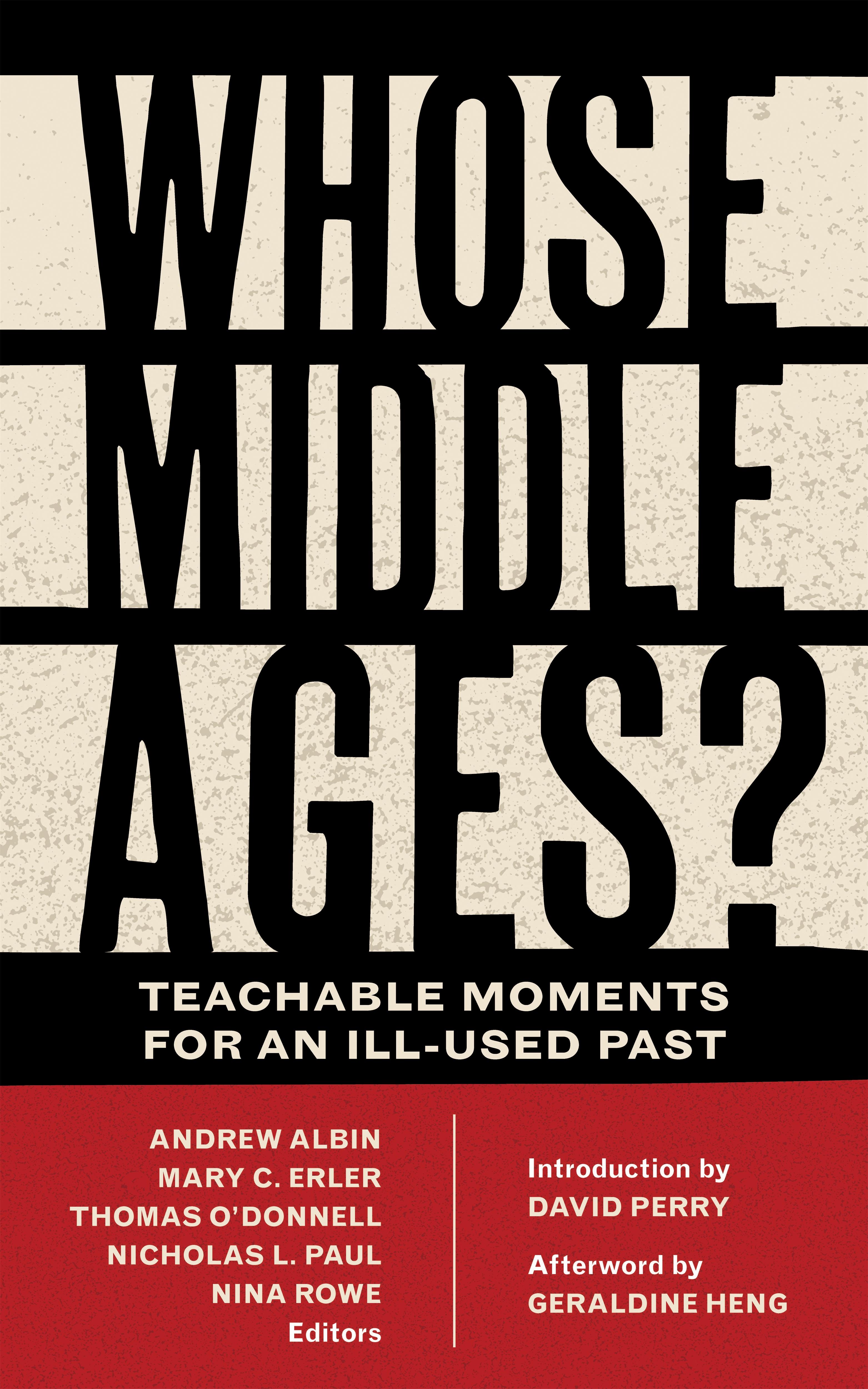
Whose Middle Ages? is an interdisciplinary collection of short, accessible essays intended for the nonspecialist reader and ideal for teaching at an undergraduate level. Each of twenty-two essays takes up an area where digging for meaning in the medieval past has brought something distorted back into the present: in our popular entertainment; in our news, our politics, and our propaganda; and in subtler ways that inform how we think about our histories, our countries, and ourselves. Each author looks to a history that has refused to remain past and uses the tools of the academy to read and re-read familiar stories, objects, symbols, and myths.
Whose Middle Ages? gives nonspecialists access to the richness of our historical knowledge while debunking damaging misconceptions about the medieval past. Myths about the medieval period are especially beloved among the globally resurgent far right, from crusading emblems on the shields borne by alt-right demonstrators to the on-screen image of a purely white European populace defended from actors of color by Internet trolls. This collection attacks these myths directly by insisting that readers encounter the relics of the Middle Ages on their own terms.
Each essay uses its author’s academic research as a point of entry and takes care to explain how the author knows what she or he knows and what kinds of tools, bodies of evidence, and theoretical lenses allow scholars to write with certainty about elements of the past to a level of detail that might seem unattainable. By demystifying the methods of scholarly inquiry, Whose Middle Ages? serves as an antidote not only to the far right’s errors of fact and interpretation but also to its assault on scholarship and expertise as valid means for the acquisition of knowledge.
Before Memmo my notes were scattered across PDFs. Now a workspace pulls everything into one place — I see exactly what's still left to study.
Memmo's summaries are gold before exams. I don't have to re-read 800 pages two weeks before — just the important parts.
The AI chat has saved me the night before an exam more than once. I just keep asking until I get it — no waiting on a study group to reply.
The quizzes hit exactly what I need to know. Memmo tracks what I get stuck on — so I only practice what's worth it.
Flashcards with spaced repetition are magic. Memmo knows when I'm about to forget something and brings it back.
The AI podcasts are my favorite. I listen on my way to school and get a recap without sitting at a computer.

Handbok i kvalitativa metoder
281 kr

Hållbar utveckling: en introduktion för ingenjörer och andra problemlösare
334 kr

Brymans Samhällsvetenskapliga metoder
390 kr

Projektledning
491 kr

Den orättvisa hälsan: om socioekonomiska skillnader i hälsa och livslängd
326 kr

Organizational Leadership
429 kr

Vetenskapsteori för nybörjare
196 kr

På väg mot läraryrket
172 kr

Det sociala livet i skolan: Socialpsykologiska perspektiv
253 kr

Betygsättningens didaktik
151 kr

Personality
402 kr

Studying Leadership
404 kr

Managing Innovation
477 kr

Introduktion till samhällsvetenskaplig metod
347 kr

The Psychology of Sex and Gender
698 kr

Evidens och kunskap för socialt arbete
207 kr

Introduction to Leadership
605 kr