
Before Memmo my notes were scattered across PDFs. Now a workspace pulls everything into one place — I see exactly what's still left to study.
WINNER, NEW JERSEY STUDIES ACADEMIC ALLIANCE BOOK AWARD
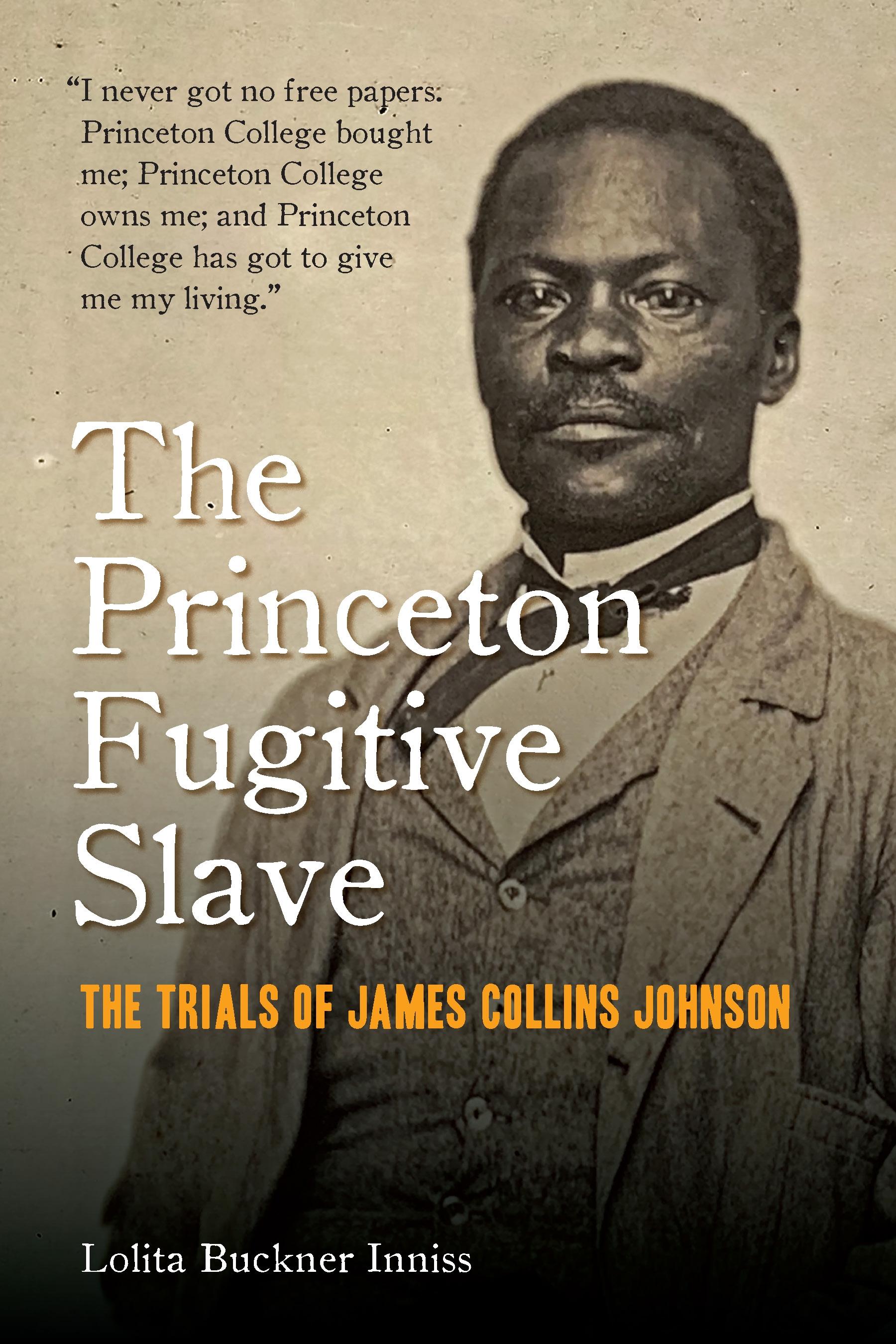
James Collins Johnson made his name by escaping slavery in Maryland and fleeing to Princeton, New Jersey, where he built a life in a bustling community of African Americans working at what is now Princeton University. After only four years, he was recognized by a student from Maryland, arrested, and subjected to a trial for extradition under the 1793 Fugitive Slave Act. On the eve of his rendition, after attempts to free Johnson by force had failed, a local aristocratic white woman purchased Johnson’s freedom, allowing him to avoid re-enslavement. The Princeton Fugitive Slave reconstructs James Collins Johnson’s life, from birth and enslaved life in Maryland to his daring escape, sensational trial for re-enslavement, and last-minute change of fortune, and through to the end of his life in Princeton, where he remained a figure of local fascination.
Stories of Johnson’s life in Princeton often describe him as a contented, jovial soul, beloved on campus and memorialized on his gravestone as “The Students Friend.” But these familiar accounts come from student writings and sentimental recollections in alumni reports—stories from elite, predominantly white, often southern sources whose relationships with Johnson were hopelessly distorted by differences in race and social standing. In interrogating these stories against archival records, newspaper accounts, courtroom narratives, photographs, and family histories, author Lolita Buckner Inniss builds a picture of Johnson on his own terms, piecing together the sparse evidence and disaggregating him from the other black vendors with whom he was sometimes confused.
By telling Johnson’s story and examining the relationship between antebellum Princeton’s black residents and the economic engine that supported their community, the book questions the distinction between employment and servitude that shrinks and threatens to disappear when an individual’s freedom is circumscribed by immobility, lack of opportunity, and contingency on local interpretations of a hotly contested body of law.
Before Memmo my notes were scattered across PDFs. Now a workspace pulls everything into one place — I see exactly what's still left to study.
Memmo's summaries are gold before exams. I don't have to re-read 800 pages two weeks before — just the important parts.
The AI chat has saved me the night before an exam more than once. I just keep asking until I get it — no waiting on a study group to reply.
The quizzes hit exactly what I need to know. Memmo tracks what I get stuck on — so I only practice what's worth it.
Flashcards with spaced repetition are magic. Memmo knows when I'm about to forget something and brings it back.
The AI podcasts are my favorite. I listen on my way to school and get a recap without sitting at a computer.

Handbok i kvalitativa metoder
281 kr

Hållbar utveckling: en introduktion för ingenjörer och andra problemlösare
334 kr

Brymans Samhällsvetenskapliga metoder
390 kr

Projektledning
491 kr

Den orättvisa hälsan: om socioekonomiska skillnader i hälsa och livslängd
326 kr

Vetenskapsteori för nybörjare
196 kr

Organizational Leadership
429 kr

På väg mot läraryrket
172 kr

Det sociala livet i skolan: Socialpsykologiska perspektiv
253 kr

Betygsättningens didaktik
151 kr

Personality
402 kr

Studying Leadership
404 kr

Managing Innovation
477 kr

Introduktion till samhällsvetenskaplig metod
347 kr

The Psychology of Sex and Gender
698 kr

Evidens och kunskap för socialt arbete
207 kr

Introduction to Leadership
605 kr