
Before Memmo my notes were scattered across PDFs. Now a workspace pulls everything into one place — I see exactly what's still left to study.
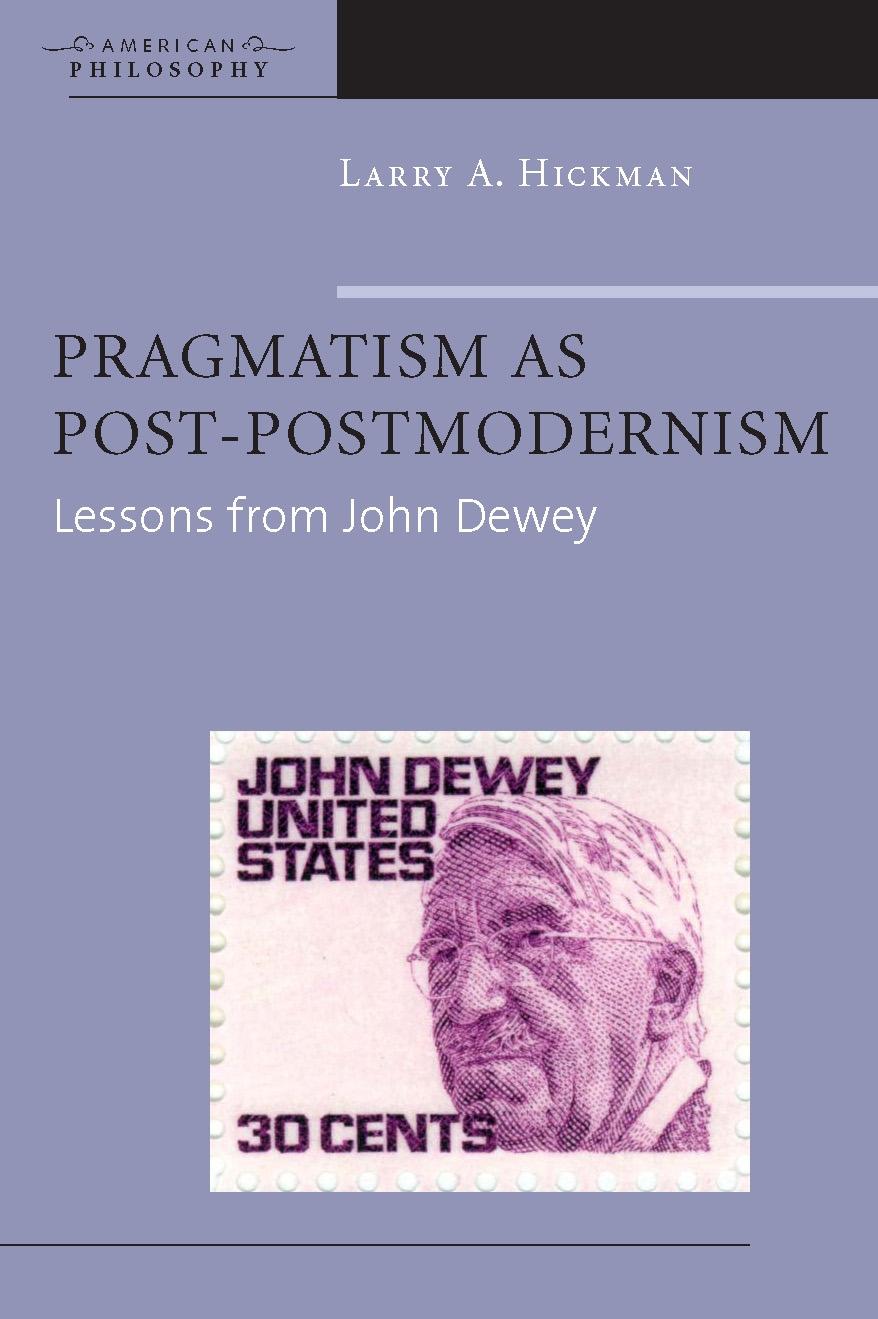
Larry A. Hickman presents John Dewey as very much at home in the busy mix of contemporary philosophy—as a thinker whose work now, more than fifty years after his death, still furnishes fresh insights into cutting-edge philosophical debates. Hickman argues that it is precisely the rich, pluralistic mix of contemporary philosophical discourse, with its competing research programs in French-inspired postmodernism, phenomenology, Critical Theory, Heidegger studies, analytic philosophy, and neopragmatism—all busily engaging, challenging, and informing one another—that invites renewed examination of Dewey’s central ideas.
Hickman offers a Dewey who both anticipated some of the central insights of French-inspired postmodernism and, if he were alive today, would certainly be one of its most committed critics, a Dewey who foresaw some of the most trenchant problems associated with fostering global citizenship, and a Dewey whose core ideas are often at odds with those of some of his most ardent neopragmatist interpreters.
In the trio of essays that launch this book, Dewey is an observer and critic of some of the central features of French-inspired postmodernism and its American cousin, neopragmatism. In the next four, Dewey enters into dialogue with contemporary critics of technology, including Jürgen Habermas, Andrew Feenberg, and Albert Borgmann. The next two essays establish Dewey as an environmental philosopher of the first rank—a worthy conversation partner for Holmes Ralston, III, Baird Callicott, Bryan G. Norton, and Aldo Leopold. The concluding essays provide novel interpretations of Dewey’s views of religious belief, the psychology of habit, philosophical anthropology, and what he termed “the epistemology industry.”
Pragmatism as Post-Postmodernism: Lessons from John Dewey is available from the publisher on an open-access basis.
Before Memmo my notes were scattered across PDFs. Now a workspace pulls everything into one place — I see exactly what's still left to study.
Memmo's summaries are gold before exams. I don't have to re-read 800 pages two weeks before — just the important parts.
The AI chat has saved me the night before an exam more than once. I just keep asking until I get it — no waiting on a study group to reply.
The quizzes hit exactly what I need to know. Memmo tracks what I get stuck on — so I only practice what's worth it.
Flashcards with spaced repetition are magic. Memmo knows when I'm about to forget something and brings it back.
The AI podcasts are my favorite. I listen on my way to school and get a recap without sitting at a computer.

Handbok i kvalitativa metoder
281 kr

Hållbar utveckling: en introduktion för ingenjörer och andra problemlösare
334 kr

Brymans Samhällsvetenskapliga metoder
390 kr

Projektledning
491 kr

Den orättvisa hälsan: om socioekonomiska skillnader i hälsa och livslängd
326 kr

Organizational Leadership
429 kr

Vetenskapsteori för nybörjare
196 kr

På väg mot läraryrket
172 kr

Det sociala livet i skolan: Socialpsykologiska perspektiv
253 kr

Betygsättningens didaktik
151 kr

Personality
402 kr

Studying Leadership
404 kr

Managing Innovation
477 kr

Introduktion till samhällsvetenskaplig metod
347 kr

The Psychology of Sex and Gender
698 kr

Evidens och kunskap för socialt arbete
207 kr

Introduction to Leadership
605 kr