
Before Memmo my notes were scattered across PDFs. Now a workspace pulls everything into one place — I see exactly what's still left to study.
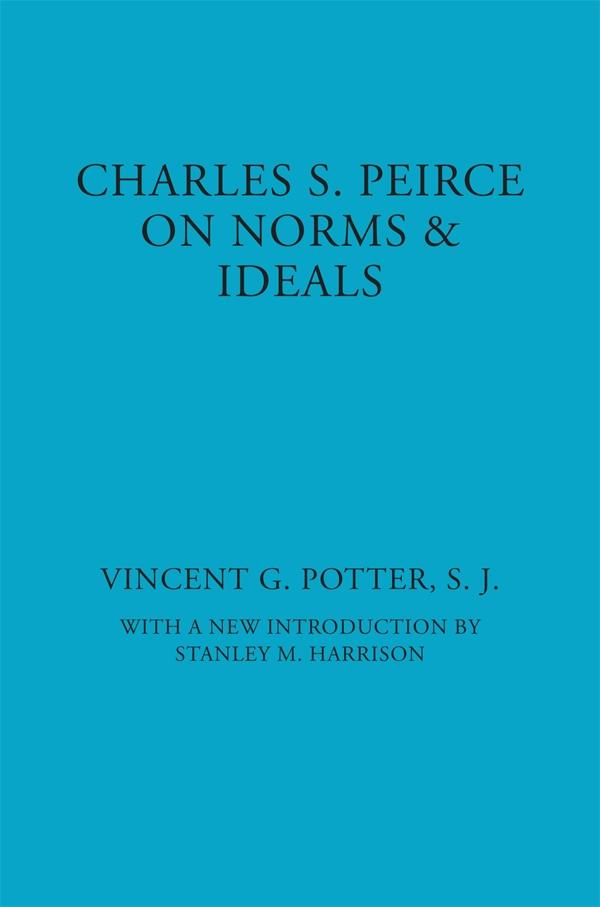
In recent years, Charles Sanders Peirce has emerged, in the eyes of philosophers both in America and abroad, as one of America’s major philosophical thinkers. His work has forced us back to philosophical reflection about those basic issues that inevitably confront us as human beings, especially in an age of science. Peirce’s concern for experience, for what is actually encountered, means that his philosophy, even in its most technical aspects, forms a reflective commentary on actual life and on the world in which it is lived.
In Charles S. Peirce: On Norms and Ideals, Potter argues that Peirce’s doctrine of the normative sciences is essential to his pragmatism. No part of Peirce’s philosophy is bolder than his attempt to establish esthetics, ethics, and logic as the three normative sciences and to argue for the priority of esthetics among the trio. Logic, Potter cites, is normative because it governs thought and aims at truth; ethics is normative because it analyzes the ends to which thought should be directed; esthetics is normative and fundamental because it considers what it means to be an end of something good in itself. This study shows that pierce took seriously the trinity of normative sciences and demonstrates that these categories apply both to the conduct of man and to the workings of the cosmos.
Professor Potter combines sympathetic and informed exposition with straightforward criticism and he deals in a sensible manner with the gaps and inconsistencies in Peirce’s thought. His study shows that Peirce was above all a cosmological and ontological thinker, one who combined science both as a method and as result with a conception of reasonable actions to form a comprehensive theory of reality. Peirce’s pragmatism, although it has to do with "action and the achievement of results, is not a glorification of action but rather a theory of the dynamic nature of things in which the "ideal" dimension of reality – laws, nature of things, tendencies, and ends – has genuine power for directing the cosmic order, including man, toward reasonable goals.
Charles S. Peirce: On Norms and Ideals is available from the publisher on an open-access basis.
Before Memmo my notes were scattered across PDFs. Now a workspace pulls everything into one place — I see exactly what's still left to study.
Memmo's summaries are gold before exams. I don't have to re-read 800 pages two weeks before — just the important parts.
The AI chat has saved me the night before an exam more than once. I just keep asking until I get it — no waiting on a study group to reply.
The quizzes hit exactly what I need to know. Memmo tracks what I get stuck on — so I only practice what's worth it.
Flashcards with spaced repetition are magic. Memmo knows when I'm about to forget something and brings it back.
The AI podcasts are my favorite. I listen on my way to school and get a recap without sitting at a computer.

Handbok i kvalitativa metoder
281 kr

Hållbar utveckling: en introduktion för ingenjörer och andra problemlösare
334 kr

Brymans Samhällsvetenskapliga metoder
390 kr

Projektledning
491 kr

Den orättvisa hälsan: om socioekonomiska skillnader i hälsa och livslängd
326 kr

Vetenskapsteori för nybörjare
196 kr

Organizational Leadership
429 kr

På väg mot läraryrket
172 kr

Det sociala livet i skolan: Socialpsykologiska perspektiv
253 kr

Betygsättningens didaktik
151 kr

Personality
402 kr

Studying Leadership
404 kr

Managing Innovation
477 kr

Introduktion till samhällsvetenskaplig metod
347 kr

The Psychology of Sex and Gender
698 kr

Evidens och kunskap för socialt arbete
207 kr

Introduction to Leadership
605 kr