
Before Memmo my notes were scattered across PDFs. Now a workspace pulls everything into one place — I see exactly what's still left to study.
Winner, Grand Prize, French Voices Award for Excellence in Publication and Translation
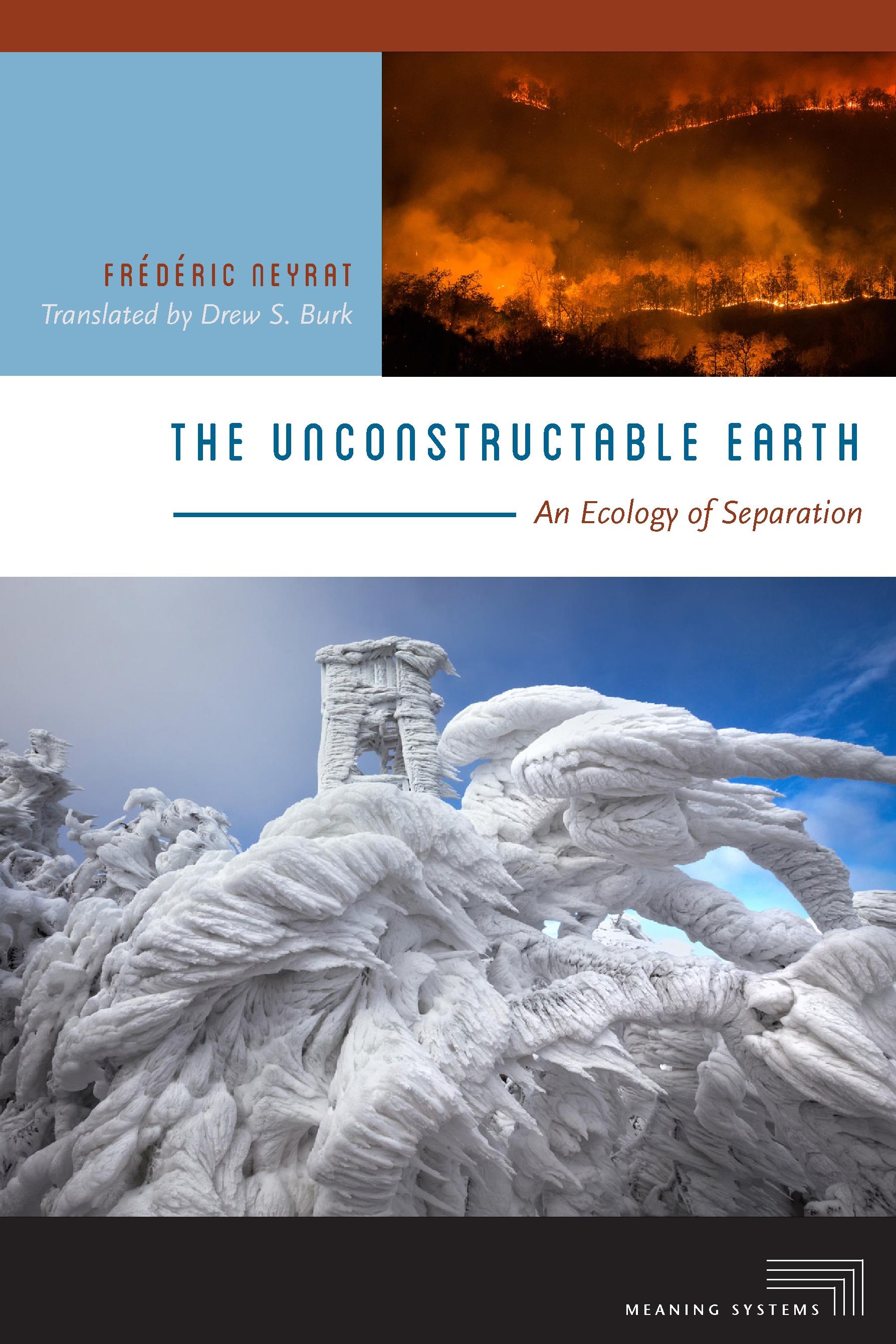
The Space Age is over? Not at all! A new planet has appeared: Earth. In the age of the Anthropocene, the Earth is a post-natural planet that can be remade at will, controlled and managed thanks to the prowess of geoengineering. This new imaginary is also accompanied by a new kind of power—geopower—that takes the entire Earth, in its social, biological and geophysical dimensions, as an object of knowledge, intervention, and governmentality. In short, our rising awareness that we have destroyed our planet has simultaneously provided us not with remorse or resolve but with a new fantasy: that the Anthropocene delivers an opportunity to remake our terrestrial environment thanks to the power of technology.
Such is the position we find ourselves in, when proposals for reengineering the earth’s ecosystems and geosystems are taken as the only politically feasible answer to ecological catastrophe. Yet far from being merely the fruit of geo-capitalism, this new grand narrative of geopower has also been activated by theorists of the constructivist turn—ecomodernist, postenvironmentalist, accelerationist—who have likewise called into question the great divide between nature and culture. With the collapse of this divide, a cyborg, hybrid, flexible nature has been built, an impoverished nature that does not exist without being performed by technologies that proliferate within the space of human needs and capitalist imperatives. Underneath this performative vision resides a hidden anaturalism denying all otherness to nature and the Earth, no longer by externalizing it as a thing to be dominated, but by radically internalizing it as something to be digested. Constructivist ecology thus finds itself in no position to confront the geoconstructivist project, with its claim that there is no nature and its aim to replace Earth with Earth 2.0.
Against both positions, Neyrat stakes out the importance of the unconstructable Earth. Against the fusional myth of technology over nature, but without returning to the division between nature and culture, he proposes an “ecology of separation” that acknowledges the wild, subtractive capacity of nature. Against the capitalist, technocratic delusion of earth as a constructible object, but equally against an organicism marked by unacknowledged traces of racism and sexism, Neyrat shows what it means to appreciate Earth as an unsubstitutable becoming: a traject that cannot be replicated in a laboratory. Underway for billions of years, withdrawing into the most distant past and the most inaccessible future, Earth escapes the hubris of all who would remake and master it.
This remarkable book, which will be of interest to those across the humanities, natural sciences, and social sciences, from theorists to shapers of policy, recasts the earth as a singular trajectory that invites humans to turn political ecology into a geopolitics.
Before Memmo my notes were scattered across PDFs. Now a workspace pulls everything into one place — I see exactly what's still left to study.
Memmo's summaries are gold before exams. I don't have to re-read 800 pages two weeks before — just the important parts.
The AI chat has saved me the night before an exam more than once. I just keep asking until I get it — no waiting on a study group to reply.
The quizzes hit exactly what I need to know. Memmo tracks what I get stuck on — so I only practice what's worth it.
Flashcards with spaced repetition are magic. Memmo knows when I'm about to forget something and brings it back.
The AI podcasts are my favorite. I listen on my way to school and get a recap without sitting at a computer.

Handbok i kvalitativa metoder
281 kr

Hållbar utveckling: en introduktion för ingenjörer och andra problemlösare
334 kr

Brymans Samhällsvetenskapliga metoder
390 kr

Projektledning
491 kr

Den orättvisa hälsan: om socioekonomiska skillnader i hälsa och livslängd
326 kr

Vetenskapsteori för nybörjare
196 kr

Organizational Leadership
429 kr

På väg mot läraryrket
172 kr

Det sociala livet i skolan: Socialpsykologiska perspektiv
253 kr

Betygsättningens didaktik
151 kr

Personality
402 kr

Studying Leadership
404 kr

Managing Innovation
477 kr

Introduktion till samhällsvetenskaplig metod
347 kr

The Psychology of Sex and Gender
698 kr

Evidens och kunskap för socialt arbete
207 kr

Introduction to Leadership
605 kr