
Before Memmo my notes were scattered across PDFs. Now a workspace pulls everything into one place — I see exactly what's still left to study.
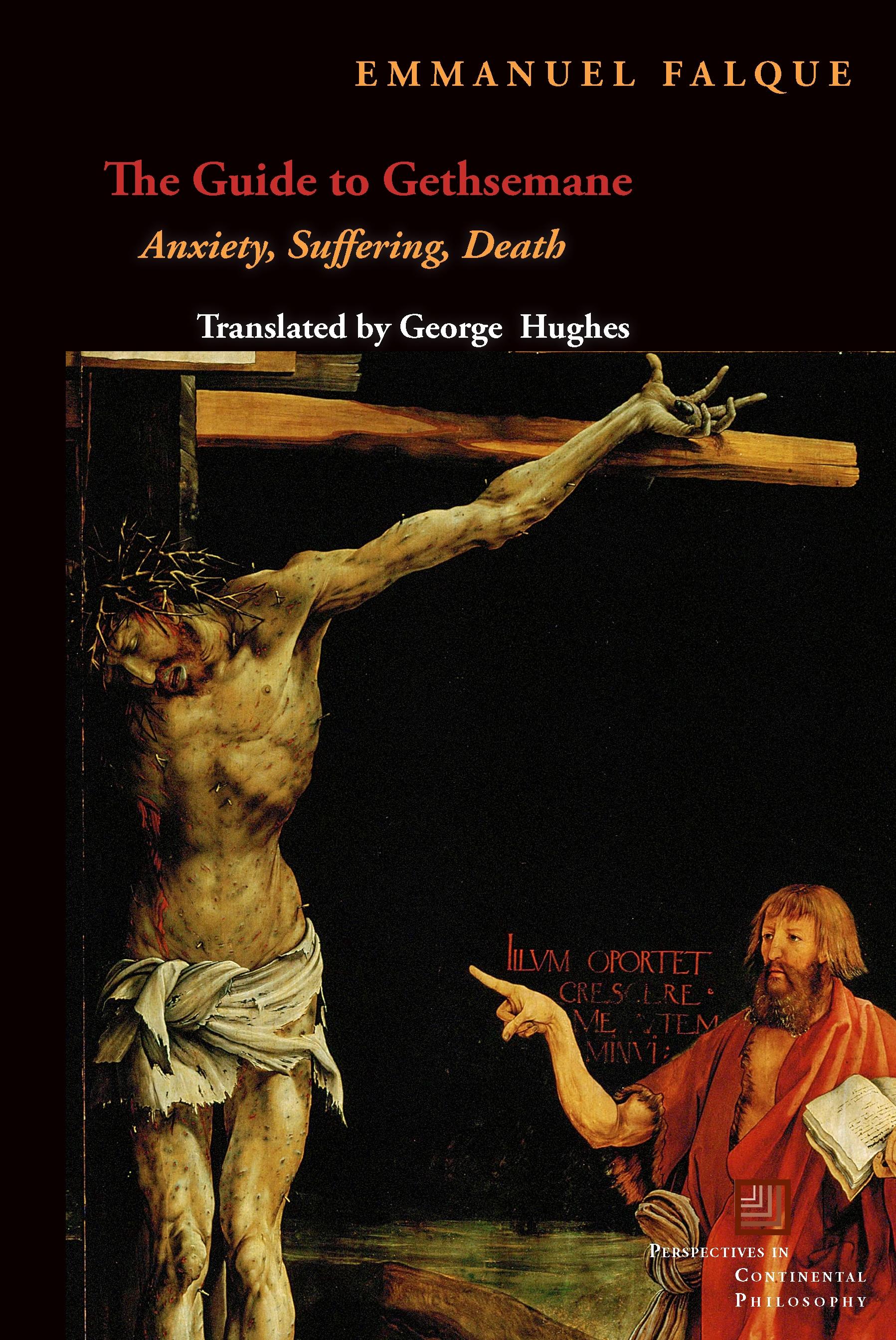
Anxiety, suffering and death are not simply the “ills” of our society, nor are they uniquely the product of a sick and sinful humanity. We must all some day confront them, and we continually face their implications long before we do. In that sense, the Garden of Gethsemane is not merely a garden “outside the walls” of Jerusalem but also the essential horizon for all of us, whether we are believers or not.
Emmanuel Falque explores, with no small measure of doubt, Heidegger’s famous statement that by virtue of Christianity’s claims of salvation and the afterlife, its believers cannot authentically experience anxiety in the face of death. In this theological development of the Passion, already widely debated upon its publication in French, Falque places a radical emphasis on the physicality and corporeality of Christ’s suffering and death, marking the continuities between Christ’s Passion and our own orientation to the mortality of our bodies. Beginning with an elaborate reading of the divine and human bodies whose suffering is masterfully depicted in the Isenheim Altarpiece, and written in the wake of the death of a close friend, Falques’s study is both theologically rigorous and marked by deeply human concerns.
Falque is at unusual pains to elaborate the question of death in terms not merely of faith, but of a “credible Christianity” that remains meaningful to non-Christians, holding, with Maurice Blondel, that “the important thing is not to address believers but to say something which counts in the eyes of unbelievers.” His account is therefore as much a work of philosophy as of theology—and of philosophy explicated not through abstractions but through familiar and ordinary experience. Theology’s task, for Falque, is to understand that human problems of the meaning of existence apply even to Christ, at least insofar as he lives in and shares our finitude. In Falque’s remarkable account, Christ takes upon himself the burden of suffering finitude, so that he can undertake a passage through it, or a transformation of it.
This book, a key text from one the most remarkable of a younger generation of philosophers and theologians, will be widely read and debated by all who hold that theology and philosophy has the most to offer when it eschews easy answers and takes seriously our most anguishing human experiences.
Before Memmo my notes were scattered across PDFs. Now a workspace pulls everything into one place — I see exactly what's still left to study.
Memmo's summaries are gold before exams. I don't have to re-read 800 pages two weeks before — just the important parts.
The AI chat has saved me the night before an exam more than once. I just keep asking until I get it — no waiting on a study group to reply.
The quizzes hit exactly what I need to know. Memmo tracks what I get stuck on — so I only practice what's worth it.
Flashcards with spaced repetition are magic. Memmo knows when I'm about to forget something and brings it back.
The AI podcasts are my favorite. I listen on my way to school and get a recap without sitting at a computer.

Handbok i kvalitativa metoder
281 kr

Hållbar utveckling: en introduktion för ingenjörer och andra problemlösare
334 kr

Brymans Samhällsvetenskapliga metoder
390 kr

Projektledning
491 kr

Den orättvisa hälsan: om socioekonomiska skillnader i hälsa och livslängd
326 kr

Vetenskapsteori för nybörjare
196 kr

Organizational Leadership
429 kr

På väg mot läraryrket
172 kr

Det sociala livet i skolan: Socialpsykologiska perspektiv
253 kr

Betygsättningens didaktik
151 kr

Personality
402 kr

Studying Leadership
404 kr

Managing Innovation
477 kr

Introduktion till samhällsvetenskaplig metod
347 kr

The Psychology of Sex and Gender
698 kr

Evidens och kunskap för socialt arbete
207 kr

Introduction to Leadership
605 kr