
Before Memmo my notes were scattered across PDFs. Now a workspace pulls everything into one place — I see exactly what's still left to study.
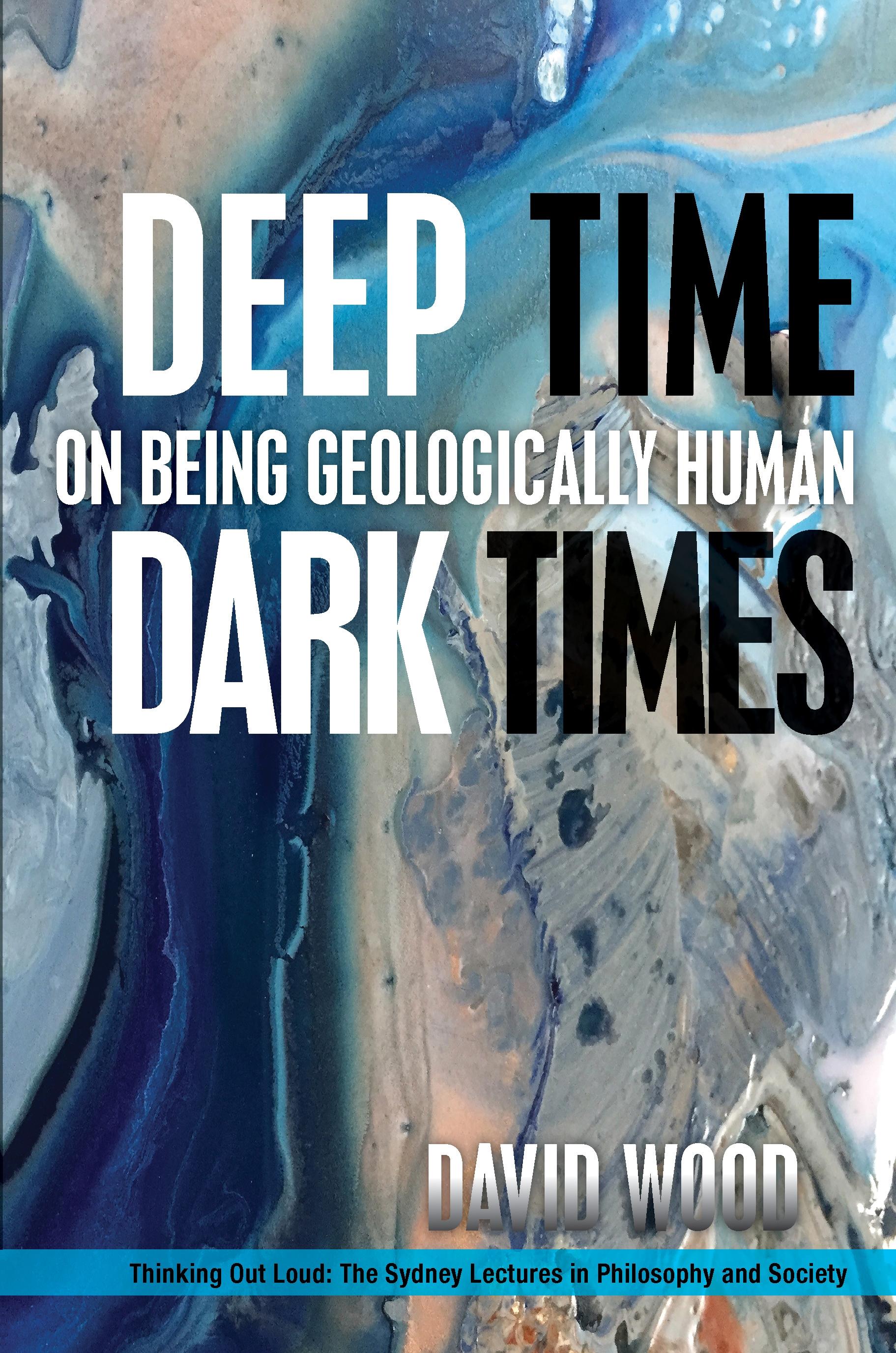
The new geological epoch we call the Anthropocene is not just a scientific classification. It marks a radical transformation in the background conditions of life on Earth, one taken for granted by much of who we are and what we hope for. Never before has a species possessed both a geological-scale grasp of the history of the Earth and a sober understanding of its own likely fate. Our situation forces us to confront questions both philosophical and of real practical urgency. We need to rethink who “we” are, what agency means today, how to deal with the passions stirred by our circumstances, whether our manner of dwelling on Earth is open to change, and, ultimately, “What is to be done?” Our future, that of our species, and of all the fellow travelers on the planet depend on it.
The real-world consequences of climate change bring new significance to some very traditional philosophical questions about reason, agency, responsibility, community, and man’s place in nature. The focus is shifting from imagining and promoting the “good life” to the survival of the species. Deep Time, Dark Times challenges us to reimagine ourselves as a species, taking on a geological consciousness. Drawing promiscuously on the work of Nietzsche, Heidegger, Foucault, Derrida, Deleuze, and other contemporary French thinkers, as well as the science of climate change, David Wood reflects on the historical series of displacements and de-centerings of both the privilege of the Earth, and of the human, from Copernicus through Darwin and Freud to the declaration of the age of the Anthropocene. He argues for the need to develop a new temporal phronesis and to radically rethink who “we” are in respect to solidarity with other humans, and responsibility for the nonhuman stakeholders with which we share the planet. In these brief, lively chapters, Wood poses a range of questions centered on our individual and collective political agency. Might not human exceptionalism be reborn as a sort of hyperbolic responsibility rather than privilege?
Before Memmo my notes were scattered across PDFs. Now a workspace pulls everything into one place — I see exactly what's still left to study.
Memmo's summaries are gold before exams. I don't have to re-read 800 pages two weeks before — just the important parts.
The AI chat has saved me the night before an exam more than once. I just keep asking until I get it — no waiting on a study group to reply.
The quizzes hit exactly what I need to know. Memmo tracks what I get stuck on — so I only practice what's worth it.
Flashcards with spaced repetition are magic. Memmo knows when I'm about to forget something and brings it back.
The AI podcasts are my favorite. I listen on my way to school and get a recap without sitting at a computer.

Handbok i kvalitativa metoder
281 kr

Hållbar utveckling: en introduktion för ingenjörer och andra problemlösare
334 kr

Brymans Samhällsvetenskapliga metoder
390 kr

Projektledning
491 kr

Den orättvisa hälsan: om socioekonomiska skillnader i hälsa och livslängd
326 kr

Vetenskapsteori för nybörjare
196 kr

Organizational Leadership
429 kr

På väg mot läraryrket
172 kr

Det sociala livet i skolan: Socialpsykologiska perspektiv
253 kr

Betygsättningens didaktik
151 kr

Personality
402 kr

Studying Leadership
404 kr

Managing Innovation
477 kr

Introduktion till samhällsvetenskaplig metod
347 kr

The Psychology of Sex and Gender
698 kr

Evidens och kunskap för socialt arbete
207 kr

Introduction to Leadership
605 kr