
Before Memmo my notes were scattered across PDFs. Now a workspace pulls everything into one place — I see exactly what's still left to study.
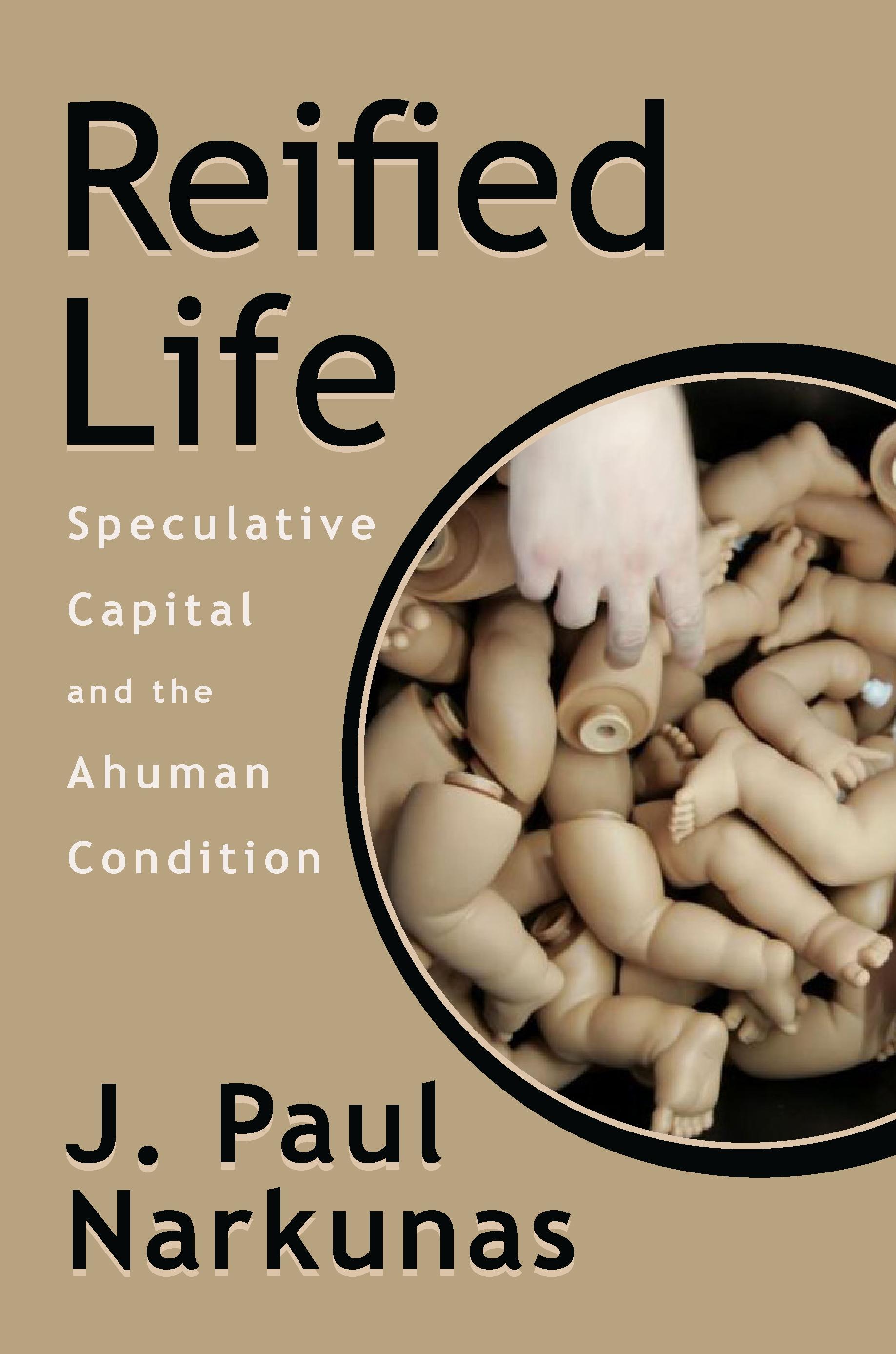
Reified Life addresses the most pressing political question of the 21st century: what forms of life are free and what forms are perceived legally and economically as surplus or expendable, human and otherwise. The 2008 economic crisis solidified the dominion of neoliberal and financial capital to organize human societies much to the detriment of the world’s populations. Reified Life theorizes the dangerous social implications of a posthuman future, whereby human agency is secondary to algorithmic processes, digital protocols, speculative financial instruments, and nonhuman market and technological forces.
Employing new readings of Deleuze, Guattari, Foucault, Marx, Vico, Gramsci, Berardi, and Gilbert Simondon, Narkunas contends that it is premature to speak of a posthuman or inhuman future, or employ an ‘ism, given how dynamic and contingent human practices and their material figurations can be. Over several chapters he diagnoses the rise of “market humans,” the instrumentalization of culture to decide the life worth living along utilitarian categories, and the varied ways human rights and humanitarianism actually throw members of the species like refugees outside the human order. To combat this, Reified Life argues against Reified Life calls to abandon the human and humanism, and instead proposes the ahuman to think alongside the human, what philosopher Gilbert Simondon calls the transindividuation of ontogentic processes rather than subjectivity. To aid the “figurating animal,” Reified Life elaborates speculative fictions as critical mechanisms for envisioning alternative futures and freedoms from the domineering forces of speculative capital, whose fictions have become our realities. Narkunas offers, to that end, a novel interpretation of the post-anthropocentric turn in the humanities by linking the diminished centrality of humanism to the waning dominion of nation-states over their populations and the intensification of financial capitalism, which reconfigures politics along economic categories of risk management.
Before Memmo my notes were scattered across PDFs. Now a workspace pulls everything into one place — I see exactly what's still left to study.
Memmo's summaries are gold before exams. I don't have to re-read 800 pages two weeks before — just the important parts.
The AI chat has saved me the night before an exam more than once. I just keep asking until I get it — no waiting on a study group to reply.
The quizzes hit exactly what I need to know. Memmo tracks what I get stuck on — so I only practice what's worth it.
Flashcards with spaced repetition are magic. Memmo knows when I'm about to forget something and brings it back.
The AI podcasts are my favorite. I listen on my way to school and get a recap without sitting at a computer.

Handbok i kvalitativa metoder
281 kr

Hållbar utveckling: en introduktion för ingenjörer och andra problemlösare
334 kr

Brymans Samhällsvetenskapliga metoder
390 kr

Projektledning
491 kr

Den orättvisa hälsan: om socioekonomiska skillnader i hälsa och livslängd
326 kr

Organizational Leadership
429 kr

Vetenskapsteori för nybörjare
196 kr

På väg mot läraryrket
172 kr

Det sociala livet i skolan: Socialpsykologiska perspektiv
253 kr

Betygsättningens didaktik
151 kr

Personality
402 kr

Studying Leadership
404 kr

Managing Innovation
477 kr

Introduktion till samhällsvetenskaplig metod
347 kr

The Psychology of Sex and Gender
698 kr

Evidens och kunskap för socialt arbete
207 kr

Introduction to Leadership
605 kr