
Before Memmo my notes were scattered across PDFs. Now a workspace pulls everything into one place — I see exactly what's still left to study.
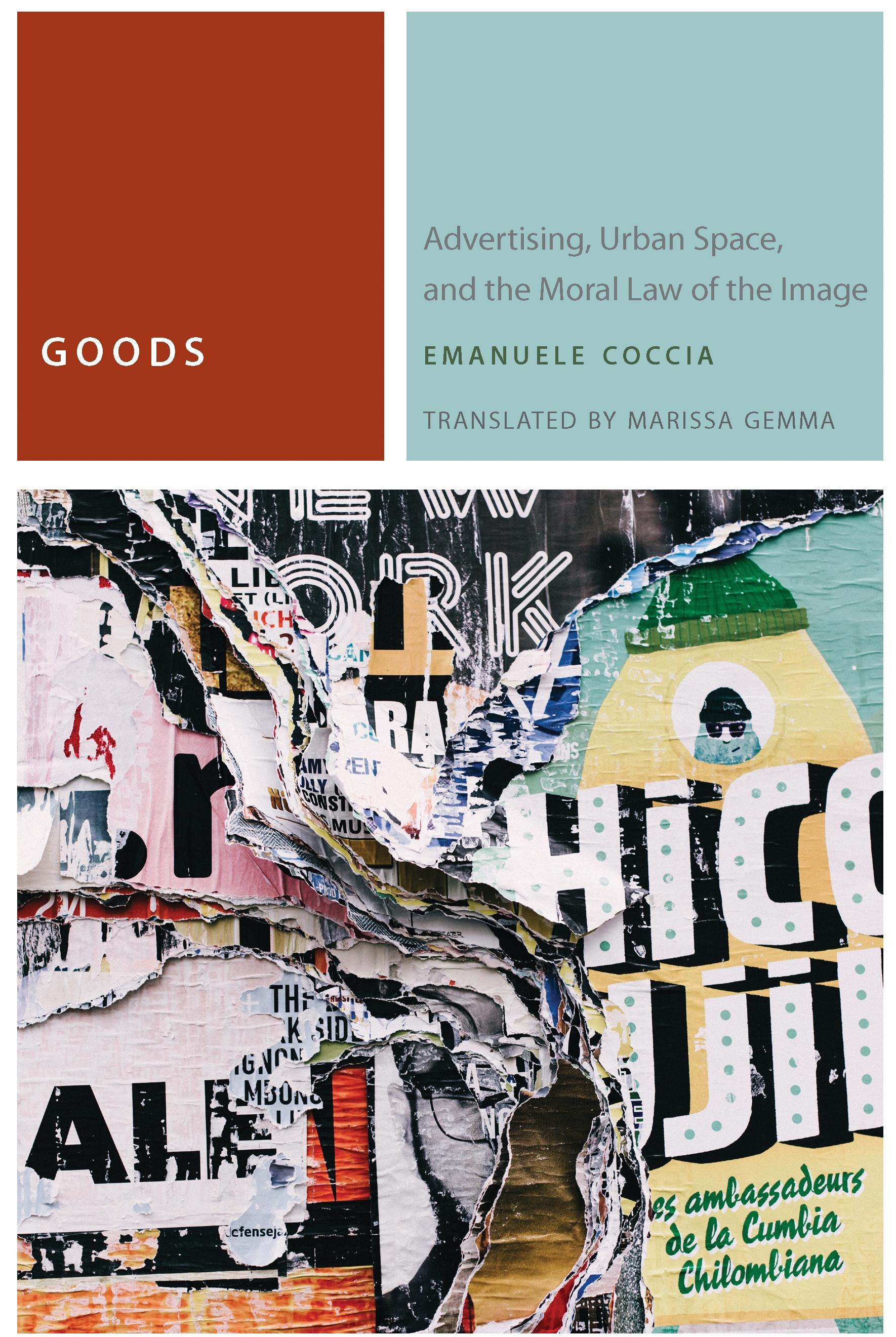
Objects are all around us – and images of objects, advertisements for objects. Things are no longer merely purely physical or economic entities: within the visual economy of advertising, they are inescapably moral. Any object, regardless of its nature, can for at least a moment aspire to be “good,” can become not just an object of value but a complex of possible happiness, a moral source of perfection for any one of us.
Our relation to things, Coccia, argues in this provocative book, is what makes us human, and the object world must be conceived as an ultimate artifact in order for it to be the site of what the philosophical tradition has considered "the good." Thinking a radical political praxis against a facile materialist critique of things, Coccia shows how objects become the medium through which a city enunciates its ethos, making available an ethical life to those who live among them.
When we acknowledge that our notion of “the good” resides within a world of things, we must grant that in advertising, humans have revealed themselves as organisms that are ethically inseparable from the very things they produce, exchange, and desire. In the advertising imaginary, to be human is to be a moral cyborgs whose existence attains ethical perfection only via the universe of things. The necessary alienation which commodities cause and express is moral rather than economic or social; we need our own products not just to survive biologically or to improve the physical conditions of our existence, but to live morally.
Ultimately, Coccia’s provocative book offers a radically political rethinking of the power of images. The problem of contemporary politics is not the anesthetization of words but the excess power we invest in them. Within images, we already live in another form of political life, which has very little to do with the one invented and formalized by the ancient and modern legal tradition. All we need to do is to recognize it. Advertising and fashion are just the primitive, sometimes grotesque, but ultimately irrepressible prefiguration of the new politics to come.
Before Memmo my notes were scattered across PDFs. Now a workspace pulls everything into one place — I see exactly what's still left to study.
Memmo's summaries are gold before exams. I don't have to re-read 800 pages two weeks before — just the important parts.
The AI chat has saved me the night before an exam more than once. I just keep asking until I get it — no waiting on a study group to reply.
The quizzes hit exactly what I need to know. Memmo tracks what I get stuck on — so I only practice what's worth it.
Flashcards with spaced repetition are magic. Memmo knows when I'm about to forget something and brings it back.
The AI podcasts are my favorite. I listen on my way to school and get a recap without sitting at a computer.

Handbok i kvalitativa metoder
281 kr

Hållbar utveckling: en introduktion för ingenjörer och andra problemlösare
334 kr

Brymans Samhällsvetenskapliga metoder
390 kr

Projektledning
491 kr

Den orättvisa hälsan: om socioekonomiska skillnader i hälsa och livslängd
326 kr

Vetenskapsteori för nybörjare
196 kr

Organizational Leadership
429 kr

På väg mot läraryrket
172 kr

Det sociala livet i skolan: Socialpsykologiska perspektiv
253 kr

Betygsättningens didaktik
151 kr

Personality
402 kr

Studying Leadership
404 kr

Managing Innovation
477 kr

Introduktion till samhällsvetenskaplig metod
347 kr

The Psychology of Sex and Gender
698 kr

Evidens och kunskap för socialt arbete
207 kr

Introduction to Leadership
605 kr